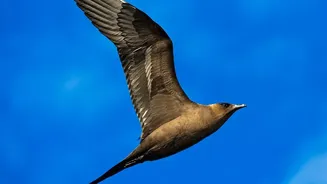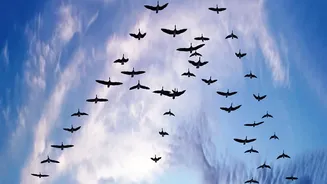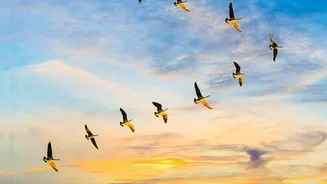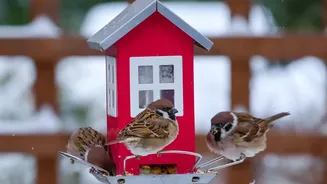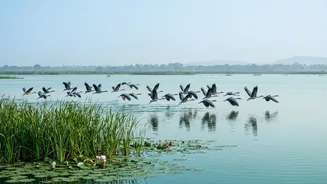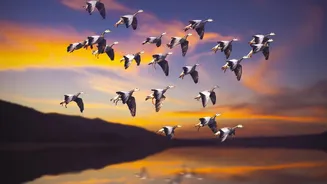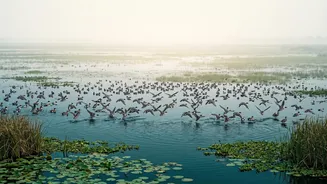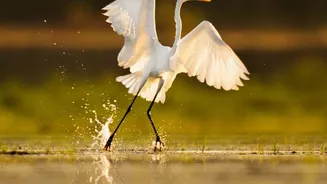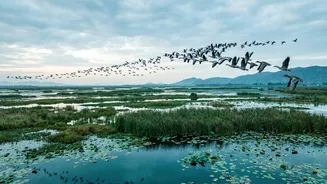




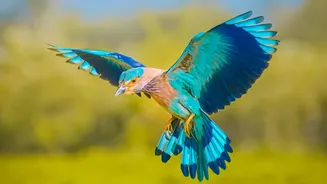

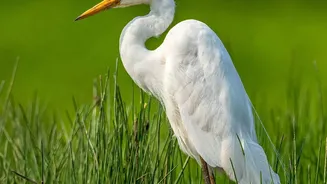
As winter settles across India, the skies fill with the sights and sounds of a breathtaking natural spectacle. Millions of winged travellers are completing their arduous journeys from as far as Siberia and Europe to find refuge in our wetlands.
The Great Arrival
Each year,
as the northern hemisphere succumbs to freezing temperatures, India’s warmer climate and resource-rich wetlands become a sanctuary for countless migratory birds. From late October, these avian visitors begin to descend upon the country's lakes, lagoons, and marshes, turning them into vibrant, noisy spectacles of biodiversity. Species like the Northern Pintail, Greater Flamingo, and various sandpipers travel thousands of kilometres, a testament to their incredible endurance and instinct. This annual migration is not just a beautiful event for birdwatchers; it’s a vital sign of the health of our planet’s ecosystems. India plays a strategic role, providing critical stopover sites for over 90% of bird species that use the Central Asian Flyway, a major migratory route.
An Epic Journey Across Continents
The journeys these birds undertake are nothing short of extraordinary. The Bar-headed Goose, for instance, is famous for being one of the world's highest-flying birds, crossing the formidable Himalayas to reach its wintering grounds in India. Scientists have tracked these geese flying at altitudes over 6,000 metres, where oxygen levels are perilously low, completing the mountain crossing in as little as seven to eight hours. They travel from breeding grounds in Central Asia, Mongolia, and Russia. Other long-distance travellers include Amur Falcons, which journey from eastern Russia and China to Africa, making a crucial stopover in Nagaland. These migrations are feats of navigation and stamina, guided by an internal clock and the Earth’s magnetic fields, honed over millennia.
India's Premier Winter Homes
Several wetlands across India are renowned for hosting these winter guests. Chilika Lake in Odisha, Asia’s largest brackish water lagoon, welcomes over a million birds each year, including vast flocks of flamingos and Northern Pintails. Keoladeo National Park in Rajasthan, a UNESCO World Heritage Site, becomes a bustling hub for over 370 bird species, with cranes, pelicans, and ducks arriving from Siberia and Central Asia. Other vital sanctuaries include Sultanpur National Park in Haryana, Pong Dam Lake in Himachal Pradesh, and Nal Sarovar in Gujarat. These sites offer abundant food in the form of fish, insects, and aquatic plants, along with relative safety from the harsh northern winters, allowing the birds to rest and build up energy for their return journey in the spring.
A Barometer of Environmental Health
The arrival and population of migratory birds serve as a crucial indicator of environmental health. A healthy, thriving population of visiting birds suggests that the wetland ecosystems are stable and wellmaintained. However, these vital habitats are under increasing threat. Pollution from industrial and agricultural runoff, encroachment for urban development, and changing water levels due to climate change are degrading many of India's wetlands. The decline in bird numbers at certain sites, or shifts in their arrival times, can be an early warning sign of ecological distress. For example, some wetlands are now choked with invasive species like water hyacinth, which depletes oxygen and destroys the food sources the birds rely on.
Conservation and Our Role
Protecting these migratory birds requires a concerted effort to preserve their habitats. The Indian government has established a National Action Plan for the Conservation of Migratory Birds, which aims to monitor populations, protect habitats, and reduce threats. Conservation bodies and local communities are also playing a crucial role. Efforts to curb poaching, manage tourism responsibly, and restore degraded wetlands have shown positive results in places like Chilika Lake, where antipoaching camps have helped secure a safe refuge for the birds. For the public, the arrival of these birds offers a wonderful opportunity for ecotourism and birdwatching, fostering a deeper connection with nature. By supporting conservation initiatives and practicing responsible tourism, we can all help ensure that these incredible journeys continue for generations to come.