

The Robot-First Reality
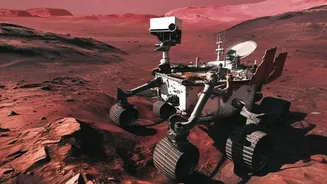
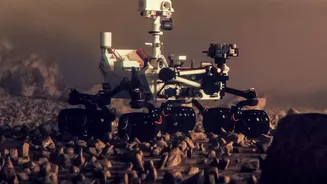
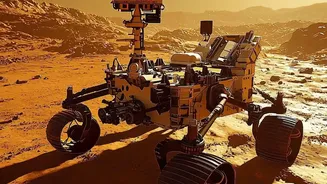
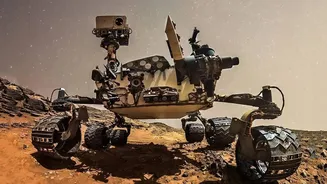
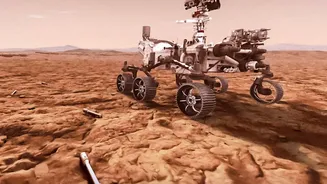
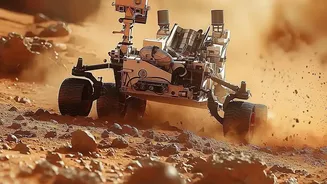
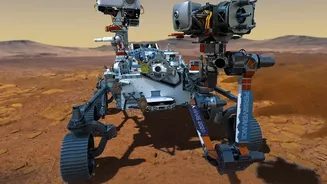
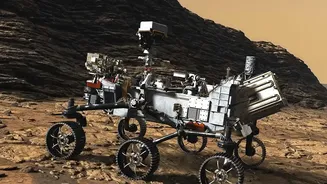
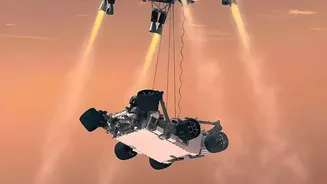
For decades, robots have been our surrogates on the Red Planet, and for good reason. The argument for robotic exploration is built on two unassailable pillars: cost and safety. A mission like the Perseverance rover, which landed in 2021, cost roughly
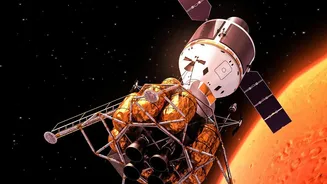
$2.7 billion. In contrast, estimates for a single crewed mission to Mars start at over $100 billion and can reach as high as half a trillion dollars. The enormous expense of human missions is due to the complex life support, radiation shielding, and redundant safety systems required to keep astronauts alive. Robots don't need food, water, or a return ticket, and they can endure the harsh Martian environment for years beyond their expected lifespans. This cost-effectiveness allows for a greater number of missions, spreading the scientific investment across more targets and delivering a continuous stream of data.
The Power of Autonomous Science
Modern rovers are far more than remote-controlled cars. They are mobile geological laboratories equipped with sophisticated autonomous instruments. NASA's Perseverance rover, for example, carries a suite of seven primary instruments. Its SuperCam uses a laser to vaporize rock from a distance to analyze its chemical makeup, while the PIXL (Planetary Instrument for X-ray Lithochemistry) provides fine-scale elemental composition. The SHERLOC instrument uses an ultraviolet laser to search for organic compounds—potential biosignatures. These systems are enhanced by an AI called AEGIS (Autonomous Exploration for Gathering Increased Science), which allows the rover to identify scientifically interesting targets on its own and collect data without waiting for commands from Earth. This level of automation has dramatically increased efficiency, enabling rovers like Perseverance to travel farther and faster than any before.
The Irreplaceable Human Element
Despite the incredible advancements in robotics, there are tasks machines still cannot replicate. The primary advantage of a human explorer is adaptability and intuition. A human geologist can survey a landscape, spot an unusual rock formation, and make an on-the-spot decision to investigate—a process that can take a rover days or weeks of communication with its team on Earth. The communication delay between Earth and Mars can be up to 40 minutes for a round trip, making real-time control impossible. A human on the surface can pivot instantly, fix broken equipment, and apply a lifetime of experience to interpret complex geological contexts in ways that are far beyond any current AI. As former astronaut Tony Antonelli puts it, 'Robots don't explore, humans explore'. The speed of discovery would also be vastly different; a human with a simple shovel could accomplish in minutes what took the InSight lander's probe nearly two years of effort.
A Symbiotic Future: Robots as Partners
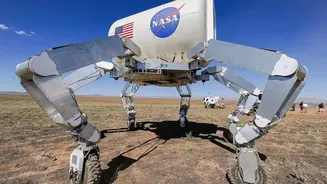
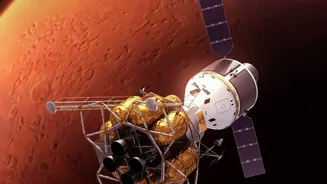
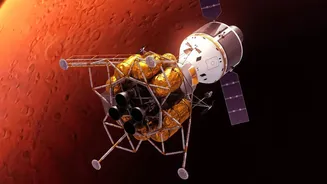
Ultimately, the 'robotic versus human' framing may be a false choice. The most effective strategy for Mars exploration is not one or the other, but a partnership between both. Future mission architectures envision robots as the vanguard, sent ahead to perform precursor tasks. They can map terrain, identify hazards, test technologies like oxygen production from the Martian atmosphere (as Perseverance's MOXIE instrument has successfully done), and even begin constructing habitats before humans arrive. Once on the surface, astronauts would work alongside a new generation of robotic assistants. These machines could serve as 'robotic mules' to carry equipment, explore dangerous areas deemed too risky for humans, and perform repetitive tasks, freeing up the astronauts' time for high-level scientific investigation and decision-making. This collaborative model leverages the strengths of each: the resilience and precision of machines with the intellect and adaptability of humans.