


The Living Root Bridges of Meghalaya
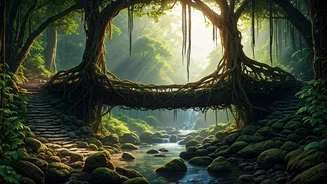
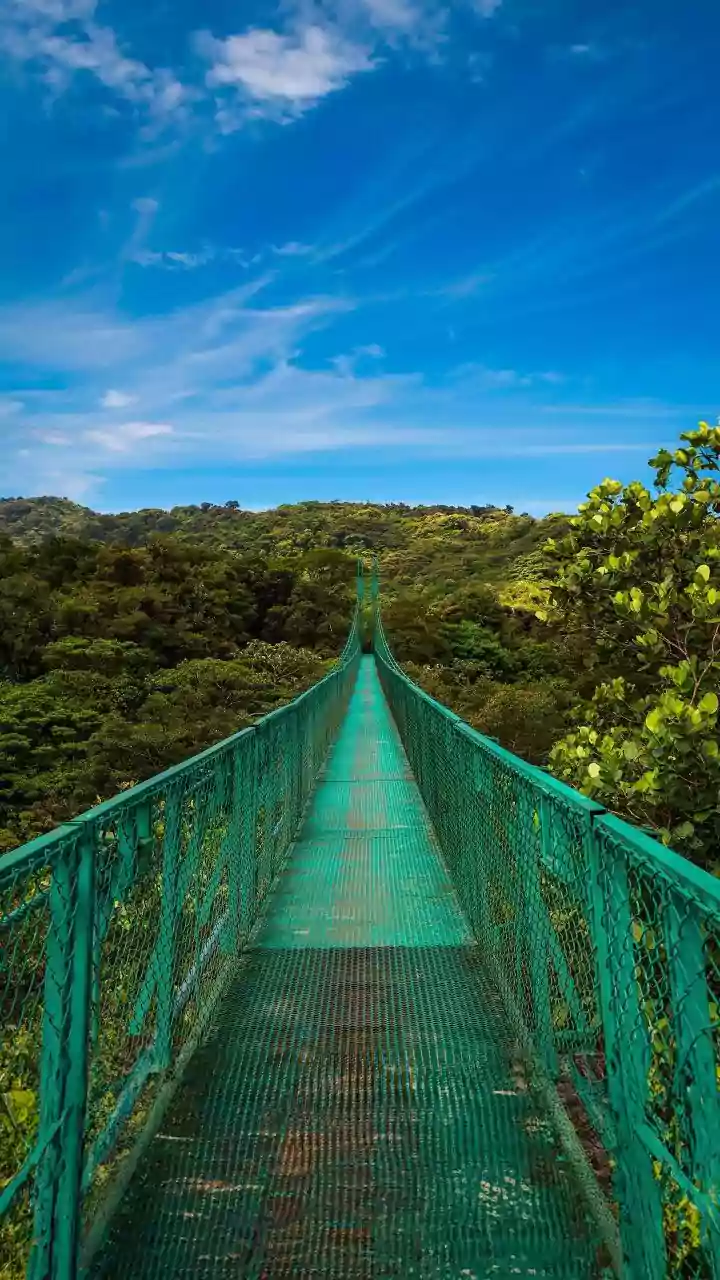
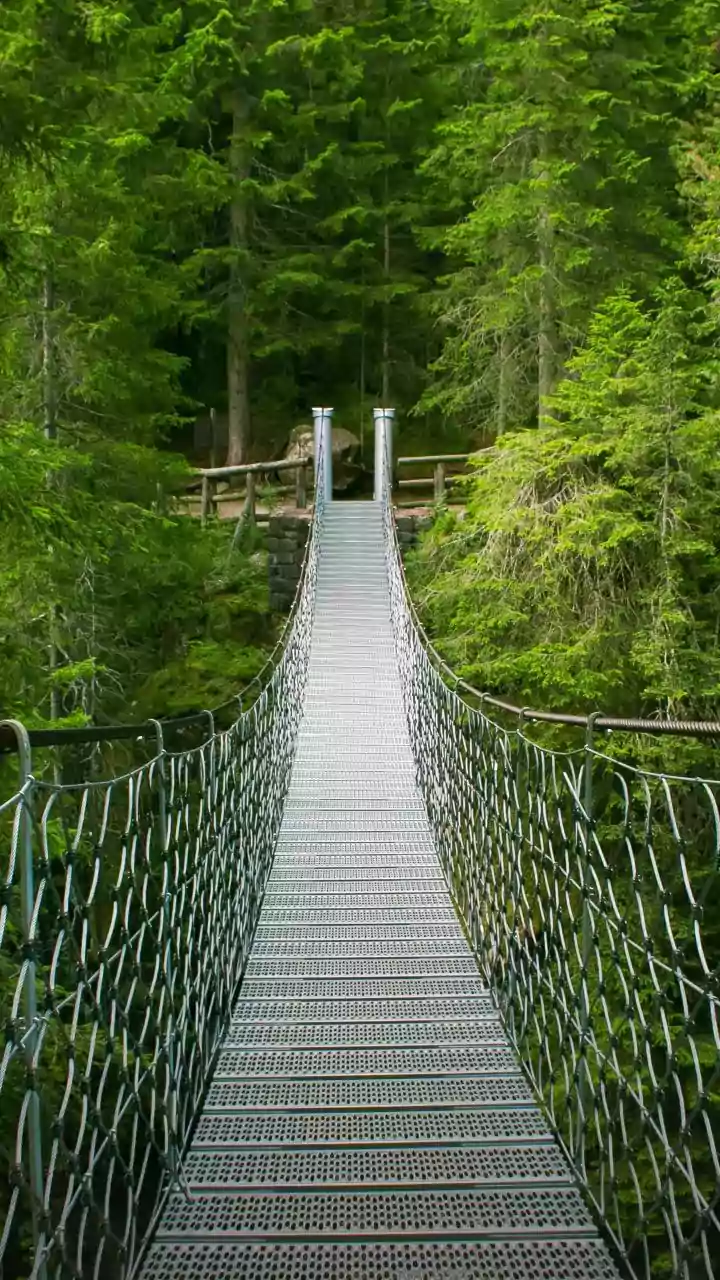
In the rain-soaked hills of Meghalaya, home to some of the wettest places on Earth, human ingenuity and nature have formed a breathtaking partnership. The living root bridges, found primarily around Cherrapunji and Mawsynram, are not carved by rain but
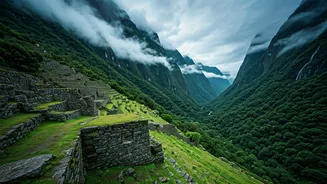
are a direct, brilliant response to it. The indigenous Khasi and Jaintia peoples learned centuries ago that conventional bamboo or wooden bridges would rot and wash away in the fierce monsoon torrents. Instead, they began guiding the aerial roots of the Ficus elastica (rubber fig) tree across rivers and streams. Over decades, these roots grow, strengthen, and intertwine to form sturdy, living structures that become more resilient with time. These bridges are a powerful symbol of adapting to, rather than fighting against, the formidable power of the monsoon rains.
The Marble Rocks of Bhedaghat, Madhya Pradesh
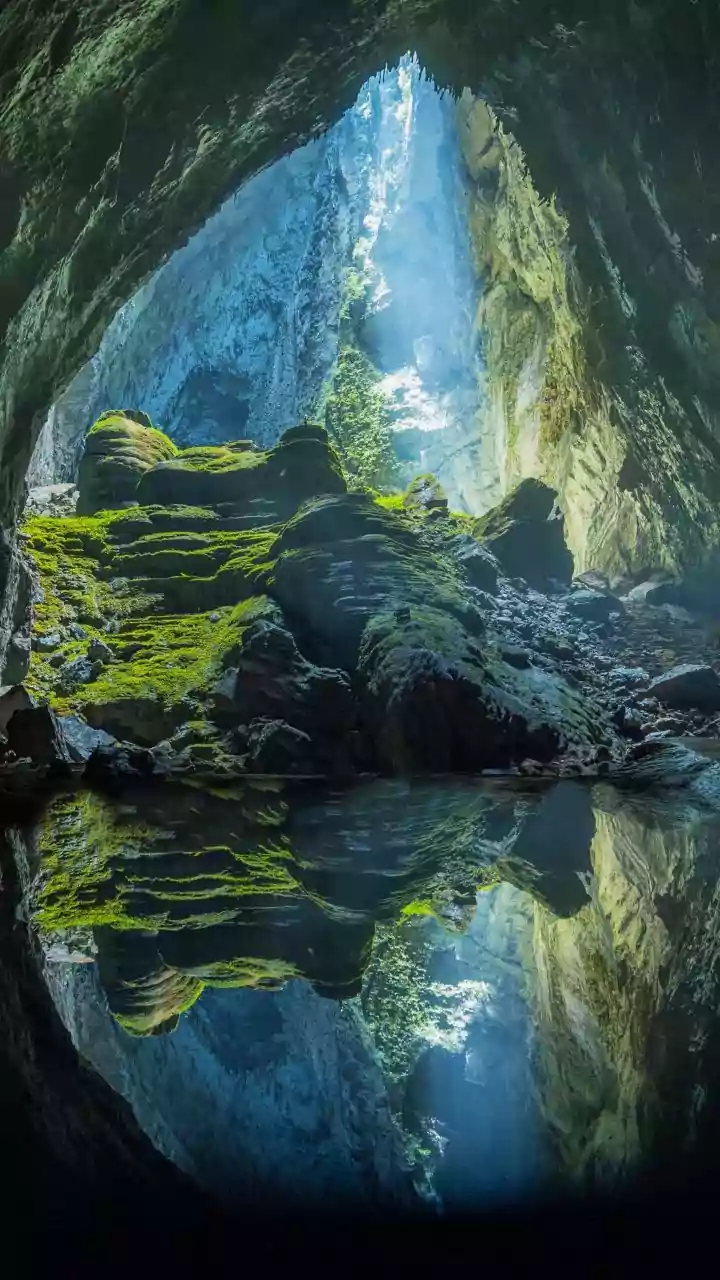
Imagine sailing down a river flanked by towering, hundred-foot cliffs of shimmering marble. This isn't a fantasy; it's the reality at Bhedaghat, near Jabalpur. Here, the mighty Narmada River, swelled and strengthened by monsoon rains, has spent millions of years carving a spectacular gorge through soft marble stone. The result is a surreal landscape where sunlight reflects off the white, pink, and grey rock faces, creating a magical glow. A boat ride through the Bhedaghat gorge, especially on a moonlit night, is an unforgettable experience. The river, acting as a liquid chisel powered by the annual rains, has sculpted a masterpiece, revealing the earth’s hidden beauty one layer at a time. The powerful flow during the monsoon season continues this slow, artistic process even today.
The Roaring Spectacle of Dudhsagar Falls, Goa
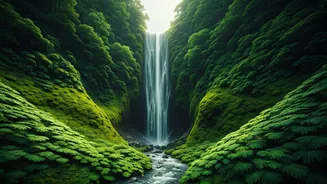
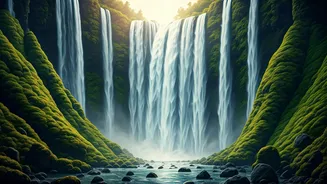
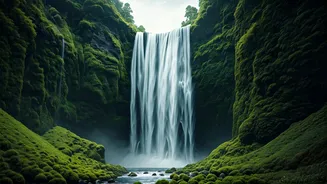
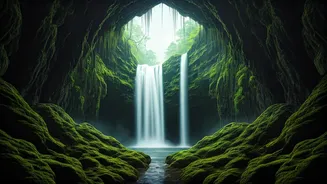
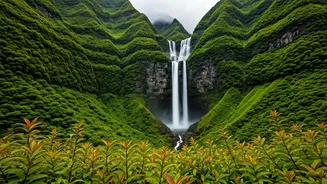
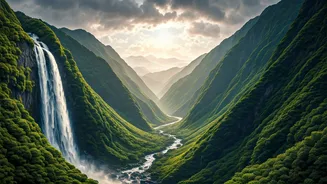
While many waterfalls are impressive, few transform as dramatically as Dudhsagar Falls during the monsoon. Located on the Mandovi River on the border of Goa and Karnataka, its name translates to "Sea of Milk." Outside the rainy season, it's a lovely tiered waterfall. But once the monsoon arrives, it becomes an awe-inspiring behemoth. Fed by torrential rains in the Western Ghats, the river swells into a furious, four-tiered cascade of white water that crashes down from a height of over 310 metres. The sheer volume and force of the water create a misty, milky spray that gives the falls its name and fame. The sight of a train crossing the railway bridge that spans the falls is one of India’s most iconic travel images, perfectly capturing the raw power that the rains unleash.
The Gandikota Canyon of Andhra Pradesh
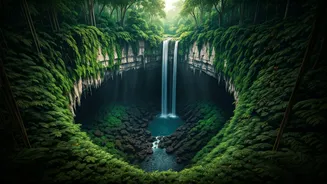
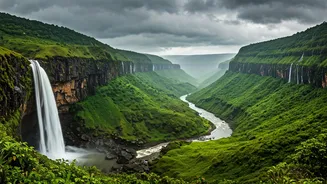
Often called the "Grand Canyon of India," Gandikota is a stunning gorge carved by the Pennar River in Andhra Pradesh. The landscape is a magnificent tableau of deep valleys and formidable granite cliffs with mesmerising layers of reddish rock. This immense natural structure was formed over thousands of years as the Pennar River, its flow dictated by the region's wet and dry seasons, cut its way through the Erramala hills. The monsoon is the engine of this erosive force, feeding the river the water it needs to deepen and widen the canyon. Standing on the edge of the gorge, looking down at the river far below, you get a profound sense of geological time and the persistent, shaping force of water. The surrounding Gandikota fort adds a layer of history to this natural wonder, making it a destination for both nature lovers and history buffs.