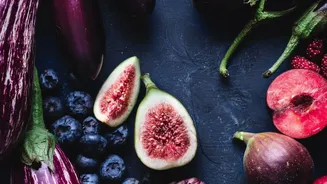







Jamun (Indian Blackberry)
This deep-purple fruit is a quintessential monsoon delight. Jamun is packed with Vitamin C and antioxidants like anthocyanins, which help bolster the immune system against common seasonal infections like colds and flu. Its astringent properties and fibre
content also aid in digestion, which can be sluggish during the humid months. Being low on the glycaemic index, it's a healthy choice for managing blood sugar levels while satisfying sweet cravings. Enjoy them fresh with a sprinkle of black salt or blend them into a smoothie.
Ginger and Garlic
No Indian kitchen is complete without ginger (adrak) and garlic (lahsun), and they become even more crucial during the monsoon. Ginger is renowned for its anti-inflammatory properties and its ability to soothe sore throats and fight off respiratory infections. Garlic contains allicin, a powerful compound with potent antibacterial and antiviral effects. Together, they form a formidable duo against seasonal ailments. Add them generously to your soups, dals, and vegetable stir-fries for both flavour and protection.
Turmeric (Haldi)
The golden spice, turmeric, is a celebrated immunity booster in Ayurveda and modern science alike. Its active compound, curcumin, has powerful anti-inflammatory, antifungal, and antibacterial properties. A glass of warm turmeric milk, or 'haldi doodh', before bed is a timeless Indian remedy for fighting inflammation and keeping infections at bay during the damp monsoon weather. Adding a pinch of black pepper with turmeric can enhance the absorption of curcumin, making it even more effective.
Pomegranate (Anar)
These ruby-red jewels are more than just a garnish. Pomegranates are an excellent source of Vitamin C and powerful antioxidants that strengthen your body's defences against viruses. The high fibre content supports gut health, which is vital for overall immunity, especially during a season known for digestive troubles. The seeds can be added to salads, and raita, or simply eaten on their own for a refreshing and healthy snack.
Gourds like Lauki and Karela
The monsoon brings an abundance of gourds, and for good reason. Vegetables like bottle gourd (lauki) and bitter gourd (karela) are light, easy to digest, and have high water content. This makes them ideal for the monsoon when the digestive system can be weak. Lauki is cooling and hydrating, while karela, despite its bitter taste, is an excellent detoxifier and is known to boost immunity. Well-cooked soups and curries made from these vegetables are both nourishing and seasonally appropriate.
Corn (Bhutta)
The sight of a streetside vendor roasting corn over hot coals is an iconic monsoon image in India. Bhutta is not just a nostalgic snack; it is also a nutritious one. It's a good source of fibre, which aids digestion, and contains B vitamins and folic acid. Its antioxidants help protect your body's cells from damage. Whether you enjoy it roasted with lime and masala or boiled at home, corn is a wholesome and enjoyable monsoon treat.