





What is a Triple Alignment?
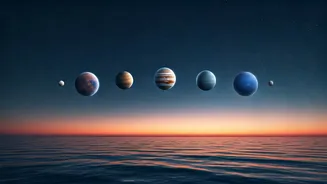
A planetary alignment isn't what you might see in science fiction films, with planets forming a perfectly straight line in space. In reality, it’s an amazing line-of-sight phenomenon. From our vantage point on Earth, multiple planets appear to cluster
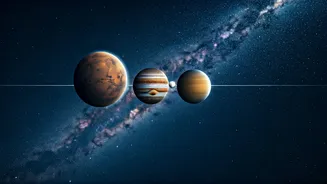
together in a small section of the sky. In this case, we’re talking about a ‘triple alignment’ where three planets—often the bright and easily recognisable Mars, Jupiter, and Saturn—form a striking triangle or a close-knit group. Their orbits, which all circle the Sun at different speeds and on different planes, occasionally bring them into the same celestial neighbourhood from our perspective. It’s a beautiful, temporary illusion created by the grand orbital dance of our solar system.
Why This Event is 'Rare'
While planets frequently pass each other in the sky, a close gathering of three bright planets is not a yearly occurrence. The orbits of Mars, Jupiter, and Saturn are vast. Mars takes about two years to circle the sun, Jupiter takes nearly 12, and Saturn takes a lengthy 29.5 years. For all three to appear close together in our sky requires a specific configuration that only happens every several years. The exact tightness and shape of the grouping vary each time, making each alignment a unique visual event. This rarity is what makes it a must-see for amateur astronomers and casual sky-gazers alike. It’s a fleeting reminder of the immense and dynamic solar system we are part of.
How to See It From India
The best time to view most planetary alignments is either just before sunrise or just after sunset. For this triple alignment, you’ll want to be an early bird. The celestial trio will be most prominent in the pre-dawn sky, roughly 60 to 90 minutes before the sun comes up. Look towards the eastern horizon. The planets will be bright enough to be unmistakable. Jupiter typically shines as the brightest, most steadfast point of light. Saturn will appear slightly dimmer with a yellowish tint, while Mars will be recognisable by its distinct reddish hue. To find the exact timings for your city, consult a stargazing app like Stellarium, SkyView, or Star Walk, which will give you a real-time map of the sky above you.
Do You Really Need a Telescope?
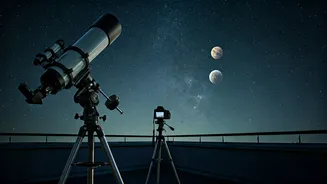
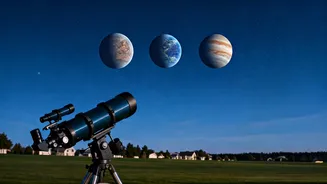
The great news is, no, you don't! The headline mentions telescopes, but the beauty of an alignment involving bright planets is its accessibility. Here’s what you can expect with different equipment:
• Naked Eye: You will easily be able to see three bright ‘stars’ that aren’t twinkling as much as the others. Their steady light is the giveaway that you're looking at planets. You can appreciate the geometry of the alignment and their different colours with just your eyes.
• Binoculars: This is a fantastic step up. A standard pair of binoculars will make the planets appear as distinct, bright discs rather than just points of light. You might even be able to spot Jupiter's four largest moons (the Galilean moons) appearing as tiny pinpricks of light in a line around the giant planet.
• Backyard Telescope: This is where the magic happens. A basic telescope will transform the view. You will clearly see Saturn’s magnificent rings, the cloud bands of Jupiter, and possibly a hint of the polar ice cap on Mars. It turns a beautiful sight into a breathtaking one.
Pro Tips for the Best View
To make the most of this celestial event, follow a few simple steps. First, escape light pollution. The darker your sky, the more brilliant the planets will appear. Even moving to a local park or the edge of town can make a huge difference. Second, give your eyes time to adjust. It takes about 15-20 minutes for your eyes to become fully dark-adapted, which will allow you to see much fainter objects. Avoid looking at your phone screen during this time; if you must, use a red-light filter app. Finally, check the weather forecast. Clouds are the ultimate enemy of the astronomer. Aim for a clear night to guarantee a perfect view of the cosmic trio.