


Another Golden Day for Mirabai
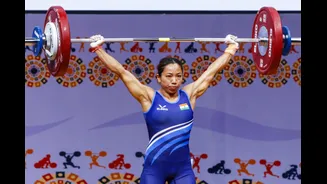
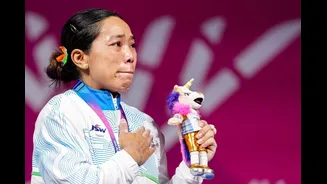
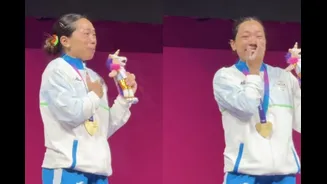
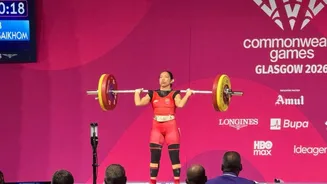
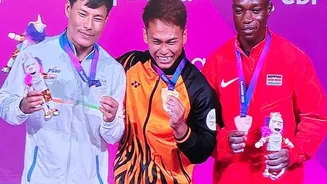
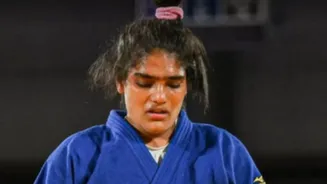
Saikhom Mirabai Chanu has done it again. Lifting a staggering total of 190kg in the 48kg category, she didn't just win a gold medal at the Glasgow 2026 Commonwealth Games; she completed a historic hat-trick of titles. This latest victory follows her gold-winning
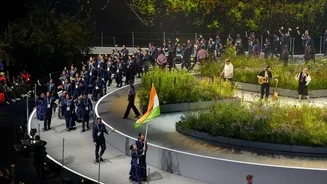
performances at the Gold Coast in 2018 and Birmingham in 2022. Her performance in Glasgow was a masterclass in dominance, setting new Games records in the snatch (85kg), the clean and jerk (105kg), and the overall total. For the Olympic silver medallist, this fourth career CWG medal—which includes a silver from 2014—cements her status as a legend of the sport. Her win was not just a personal triumph but also India's first gold of the 2026 Games, setting a triumphant tone for the entire contingent.
A Tradition of Strength
Mirabai’s success is the glittering tip of a very large iceberg. For decades, weightlifting has been one of India’s most dependable medal-producing sports at the Commonwealth Games. The numbers speak for themselves. India has consistently been a top performer, finishing as the best nation in the sport in 1990, 2002, 2018, and 2022. Overall, India is the second-most successful country in the history of Commonwealth weightlifting, with a total of 133 medals before the 2026 Games began, including 46 golds. This incredible record is no accident. It is the result of a concerted effort, a deep-rooted culture of strength, and a strategic understanding of the sport’s dynamics on the world stage.
The Manipur Connection
To understand Indian weightlifting, one must look to the northeastern state of Manipur. Like Mirabai Chanu, a disproportionate number of India's top lifters have emerged from this region. This is not a coincidence. Manipur has a rich culture of sports, and weightlifting, in particular, has flourished due to its accessibility. It is a sport that doesn't require sprawling fields or expensive equipment, making it a viable path to excellence for many aspiring athletes. The state has produced a lineage of champions, from Kunjarani Devi, Indian weightlifting's first superstar, to Sanjita Chanu, who won gold ahead of Mirabai in 2014. This regional concentration creates a self-perpetuating cycle of inspiration and mentorship, where local heroes inspire the next generation to take up the sport.
Strategic Focus and Federation Support
The Indian Weightlifting Federation (IWLF), formed in 1935, has played a crucial role in this success story. Over the years, the federation has helped build a structured system for identifying and nurturing talent. There is also a strategic element at play. While an Olympic medal remains the ultimate prize, the Commonwealth Games presents a more achievable arena for medal dominance. The absence of weightlifting powerhouses like China and North Korea from the Commonwealth creates a significant opportunity for Indian lifters to shine. The federation and coaches have astutely focused on the CWG as a platform for building confidence, securing medals, and raising the sport's profile nationally. This strategic focus ensures that athletes are well-prepared and peaked for the quadrennial event, often resulting in the medal hauls we have come to expect.
The Legacy of Icons
Success breeds success. Before Mirabai Chanu became the face of Indian weightlifting, there were others who paved the way. The journey arguably began with women leading the charge. Kunjarani Devi won a staggering seven silver medals at the World Championships through the 1990s. Then came Karnam Malleswari, whose bronze at the Sydney 2000 Olympics made her the first Indian woman to win an Olympic medal and turned her into a national icon. These pioneers broke barriers and created a belief that Indian athletes could compete with the world's best. Lifters like two-time Commonwealth Games champion Sathish Sivalingam carried the torch for the men. This continuous line of role models, from Devi and Malleswari to Chanu, has created a powerful legacy that fuels the ambitions of young lifters across the country, ensuring the supply of champions never runs dry.