


Seeing the Unseen Universe
When we look at the night sky, we are only seeing a fraction of what is actually out there. Our eyes are tuned to a narrow band of light known as the visible spectrum. But the universe is awash in other forms of light, including infrared, which is invisible
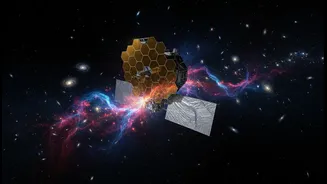
to humans but carries a wealth of information. Every object with a temperature radiates in the infrared, from cool planets to the vast, cold clouds of gas and dust that drift between stars. By building telescopes that can detect this infrared light, astronomers can study objects and phenomena that would otherwise remain completely hidden from view. Telescopes like the James Webb Space Telescope (JWST) are designed specifically to operate in the infrared, opening a new window onto the cosmos.
Piercing Through Cosmic Dust
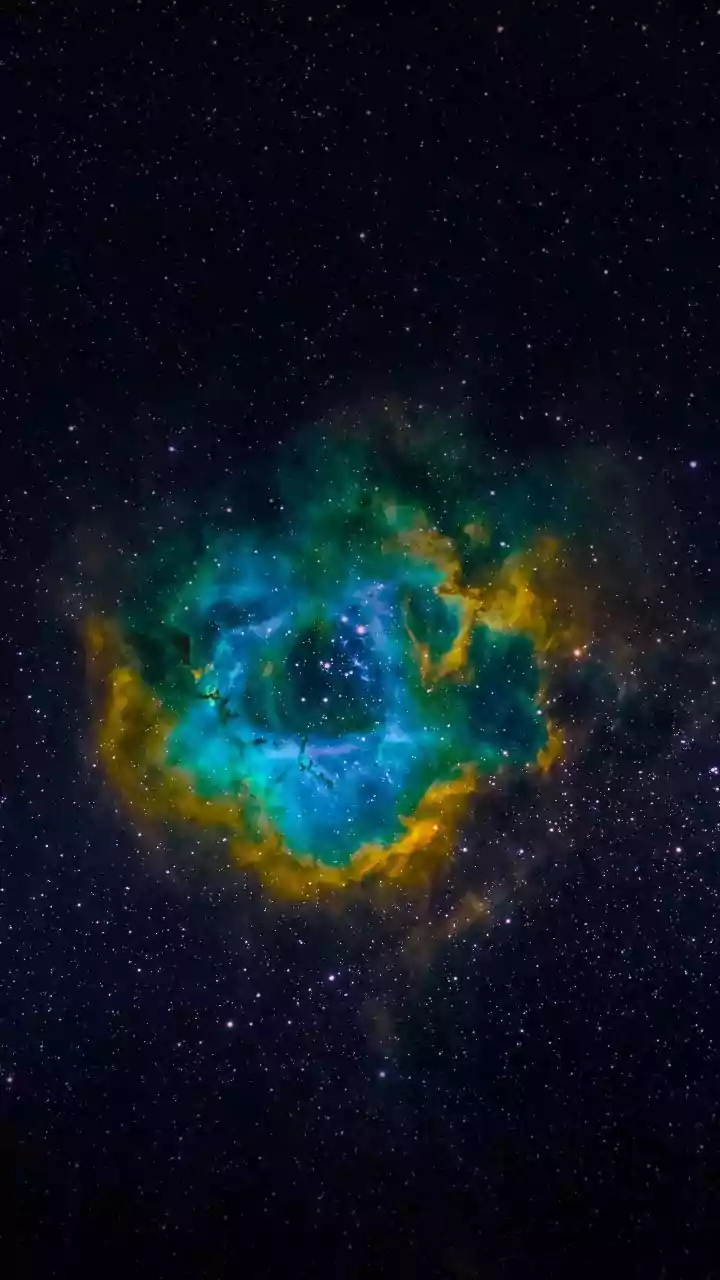
One of the biggest challenges in astronomy is cosmic dust. These tiny particles, smaller than grains of sand, fill the space between stars and clump together in dense clouds. While beautiful in images from telescopes like Hubble, this dust acts like a thick fog, scattering and absorbing visible light. This makes it impossible to see what lies within or behind these dusty regions, such as the centers of galaxies or areas where new stars are forming. Infrared light, however, has longer wavelengths that can pass through these dust clouds much more easily. It's similar to how specialized goggles can help firefighters see through a smoke-filled room. This ability allows infrared telescopes to peer into the heart of stellar nurseries and galactic cores, revealing the intricate processes of star birth and galaxy growth that are obscured in visible light.
A Telescope as a Time Machine
Observing in the infrared spectrum offers another profound advantage: it allows us to look back in time. The universe has been expanding since the Big Bang, and this expansion stretches the light that travels through it. Light from the most distant objects in the cosmos, which was emitted as visible or ultraviolet light billions of years ago, has been stretched so much that by the time it reaches us, it has shifted into the infrared part of the spectrum. This phenomenon, known as cosmological redshift, means that to see the first stars and galaxies that formed in the early universe, we must look for them in infrared light. Telescopes like the JWST are essentially time machines, capturing photons that have been traveling for over 13 billion years and allowing us to witness the universe in its infancy.
Rewriting the Story of Galaxies
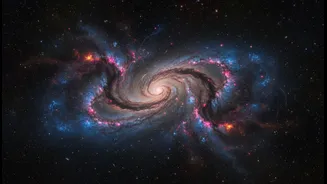
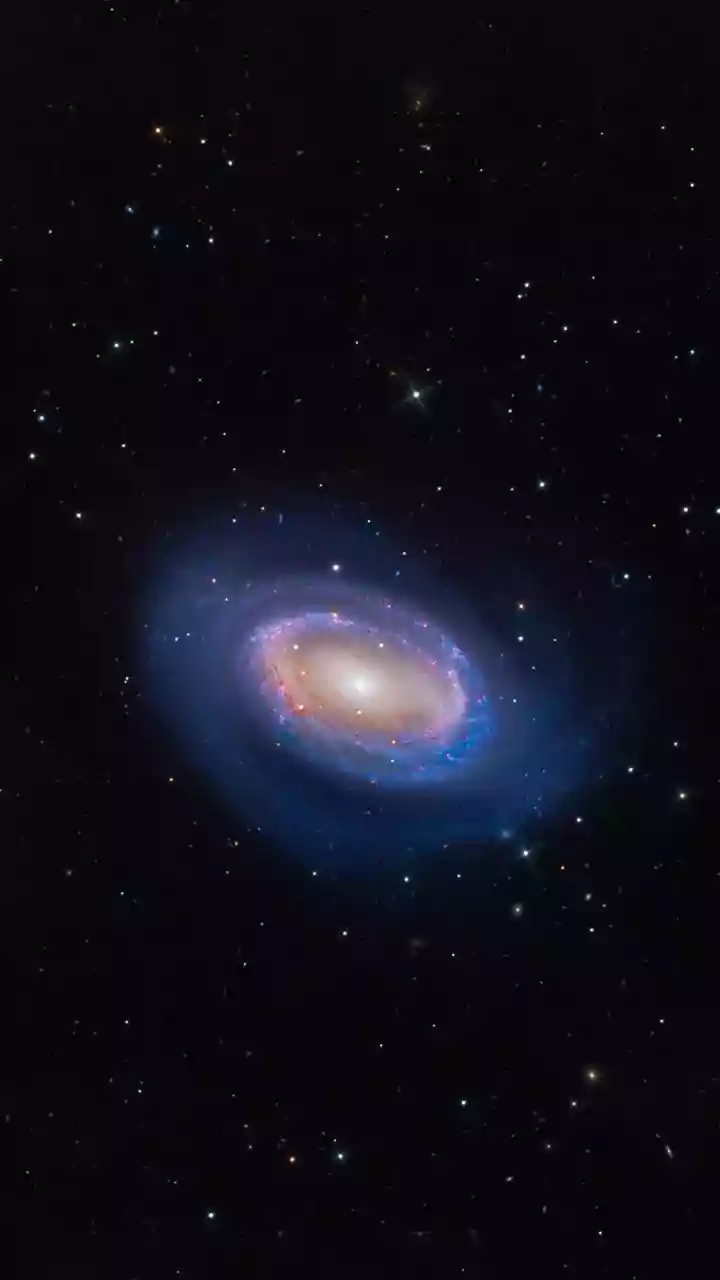
Thanks to the clarity and depth provided by infrared observatories, scientists are making groundbreaking discoveries that are reshaping our understanding of galaxy evolution. JWST has revealed that the early universe was teeming with galaxies that were more structured and complex than previously thought. Astronomers are finding spiral galaxies at earlier cosmic times than expected and are getting their first clear look at the relationship between dust, star formation, and galaxy growth in the universe's first billion years. By studying nearby galaxies like Centaurus A, infrared images are cutting through dust to reveal individual stars, allowing for a kind of 'galactic archaeology' that reconstructs the galaxy's history of mergers and star formation. These new, detailed observations are providing the real data needed to test and refine the theories of how the massive, complex galaxies we see today, including our own Milky Way, came to be.