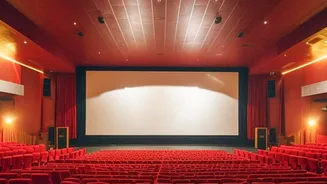








An Experience, Not Just Content
The fundamental difference between watching a film at home and in in a theatre lies in the intention. At home, entertainment is convenient, fitting into the gaps of our lives. A trip to the cinema, however, is an event. It’s a conscious decision to leave
the house, travel, and dedicate a few hours of uninterrupted attention to a single story. This act of participation transforms viewing from a passive activity into an active experience. From the hushed anticipation as the lights dim to the collective gasp during a plot twist, the theatre provides a shared emotional journey that streaming cannot replicate. This communal aspect is a core part of cinema's appeal in a country where movie-going has long been a social ritual.
The Power of Spectacle
Indian filmmakers, particularly in recent years, have leaned into creating larger-than-life spectacles designed explicitly for the big screen. The stunning visuals of a historical epic, the bone-rattling sound design of an action sequence, and the immersive quality of 3D and IMAX formats are experiences that a television or smartphone simply cannot match. These technical advantages are not just gimmicks; they are storytelling tools that enhance the emotional impact and grandeur of a film. For many major releases, especially those driven by superstars, the theatrical experience is the definitive way to see the film as the creators intended, turning a movie release into a nationwide celebration.
A Shared Cultural Campfire
Since their inception, cinema halls in India have been more than just buildings; they have been vital public spaces where people from all walks of life gather for a unified experience. In a highly stratified society, the cinema hall was one of the first places to offer a homogenized experience, bringing diverse audiences together under one roof. This tradition continues today. The shared applause for a hero's entry, the laughter that ripples through the audience, and the post-film debates with friends are all part of a cultural fabric woven over decades. This shared experience creates a buzz and a cultural moment that a fragmented, individualised streaming release rarely achieves. It’s the difference between watching a story and being part of one.
A Forced Digital Detox
One of the most underrated aspects of the theatrical experience is its ability to command our undivided attention. In a world of constant notifications and second-screen viewing, the cinema is one of the last remaining spaces where you are encouraged—and expected—to put your phone away. This enforced focus allows for deeper immersion in the narrative, fostering a stronger connection to the characters and their journey. By removing the distractions of daily life, the theatre creates a temporary sanctuary dedicated solely to the art of storytelling, making the experience more memorable and impactful.
Coexistence, Not Competition
The debate is often framed as a battle between cinemas and OTT platforms, but the future points towards coexistence. Theatrical releases and streaming serve different purposes. Theatres are for event films, blockbusters, and communal celebration, while OTT excels at providing a home for niche stories, documentaries, and long-form series that might not find a wide theatrical audience. The industry is adapting, with theatrical windows shifting to accommodate both platforms. Recent box office numbers show that when a film offers a compelling reason to leave the house, audiences will show up in droves, proving that the demand for the big-screen experience remains robust.