




What Exactly Are 'Private' AI Models?
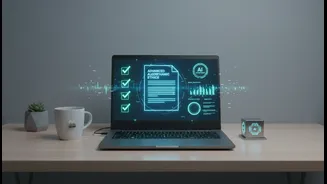
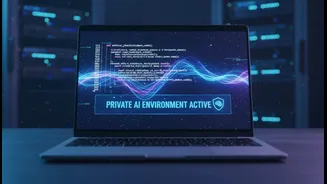
When we talk about AI, names like ChatGPT and Gemini come to mind. These are public, cloud-based services where your queries are sent to company servers. A 'private' or 'local' AI is different. Using open-source models like Llama or Mistral and tools
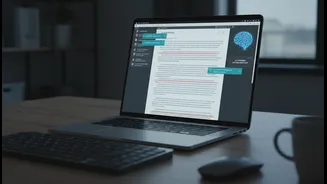
like Ollama, students can run these powerful language models directly on their own computers. This means nothing they write, check, or generate is sent over the internet, keeping it away from the prying eyes of university-wide plagiarism and AI detection software. This approach offers complete privacy and control, making it a tempting tool for students navigating the pressures of modern academia. The key attraction is that the work stays on their machine, leaving no digital trail for standard detection tools to follow.
The Ultimate Proofreader or an Unfair Advantage?
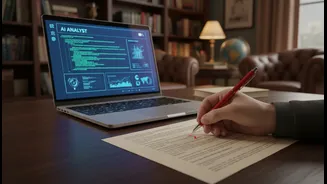
Students who use these tools often see them as an advanced proofreader. They can use AI to check for grammatical errors, improve sentence structure, clarify confusing passages, and even brainstorm ideas. For many, especially those for whom English is a second language or who struggle with writing, these tools can feel like a great equaliser, helping them produce cleaner, more coherent work. The problem arises when this assistance crosses the line into academic dishonesty. Generating entire paragraphs, summarising articles one hasn't read, or passing off AI-generated analysis as original thought moves from support to substitution. This has created a significant ethical grey area, leaving both students and educators struggling to define the boundary between an acceptable tool and an act of cheating.
The Arms Race: Detection vs. Evasion
Educational institutions have responded to the rise of AI with detection software, most notably Turnitin, which now includes an AI detection score alongside its traditional plagiarism check. However, these detectors are far from perfect. While they can often catch text copied directly from an AI, they are less reliable when the text has been edited or paraphrased. Students have quickly learned to use AI to generate a first draft and then rewrite it in their own voice, a method that often bypasses detection. Some even use one AI tool to write an essay and another (like GPTZero) to check if it will be flagged, making adjustments until it passes. This cat-and-mouse game has led some universities to question the reliability of AI detectors altogether, noting high false positive rates, especially for non-native English speakers.
University Policies in India: A Work in Progress
In India, universities are grappling with how to address this new reality. The University Grants Commission (UGC) has issued advisory guidelines, recommending that institutions develop their own policies. The general consensus is that AI can be used as a support tool, but it cannot replace a student's original intellectual contribution, and any use must be disclosed. Some institutions, like a prominent Chennai college, have already implemented frameworks requiring students to declare their AI usage. However, many universities still lack clear, formal policies, leaving students in a confusing position. Without explicit rules, it becomes difficult to enforce academic integrity, as students can argue that they were not breaking any specific regulation.
The Road Ahead for Education
The rise of private AI use signals a fundamental shift that requires more than just better detection tools. Educators are realizing that assessment methods themselves may need to change. There is a growing conversation about moving away from traditional essays and toward formats that are harder to fake, such as in-class assignments, oral exams, and project-based assessments that focus on the student's process and critical thinking. The challenge for universities is not just about catching cheaters. It's about redefining what academic work looks like in an age where AI is a ubiquitous tool. The focus is slowly shifting from outright prohibition to teaching AI literacy—guiding students on how to use these powerful tools ethically and effectively as assistants, not as authors.