




The Sun’s Invisible Threat
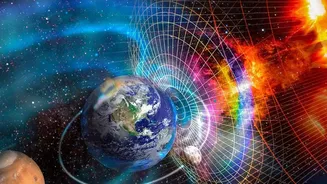
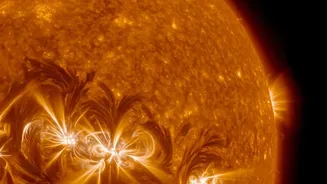
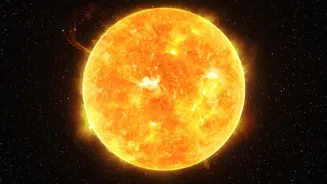
High-energy solar storms, known as Coronal Mass Ejections (CMEs), are colossal explosions of plasma and magnetic fields from the Sun's outer atmosphere, the corona. While they can produce beautiful auroras, CMEs that hit Earth can have devastating consequences.
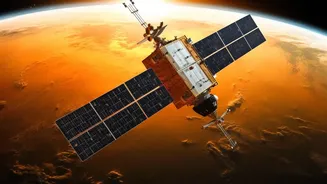
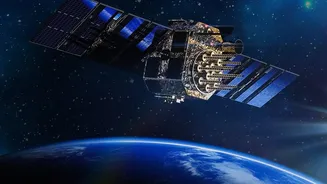
These storms can induce powerful electrical currents in our power grids, potentially causing widespread blackouts and damaging critical transformers. They also pose a significant risk to the satellites that form the backbone of our communication, navigation (GPS), and financial systems, as well as disrupting radio communications for aviation and maritime services. With society's increasing reliance on this technology, the ability to predict these cosmic weather events has become a matter of national and economic security.
Creating an Artificial Eclipse in Space
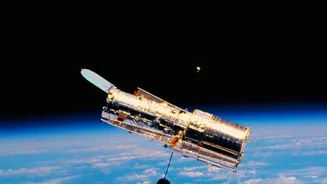
The great challenge in spotting a CME as it leaves the Sun is the star's own blinding light. The corona is a million times fainter than the Sun's surface, making it impossible to see under normal conditions. This is where coronagraphs come in. A coronagraph is a specialized telescope that uses an occulting disk to block the bright light from the Sun's main body, creating a sort of artificial, permanent eclipse. This technique allows scientists to continuously monitor the faint, ethereal corona and, crucially, to see the massive plumes of a CME as they erupt and begin their journey through space. Early coronagraphs were ground-based, but placing them on satellites provides a much clearer, uninterrupted view.
From Satellite Image to Storm Warning
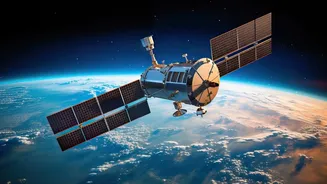
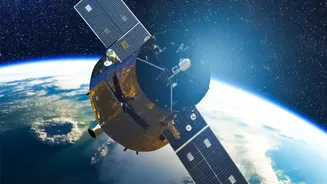
Satellites equipped with coronagraphs, like the long-serving SOHO and the newer GOES series, capture a stream of images of the Sun's corona. By comparing these images, forecasters can detect a CME as a moving blob of light expanding outwards. They can then determine its size, speed, and direction to assess if it's aimed at Earth. This data is fed into sophisticated computer models, like the WSA-Enlil model used by space weather prediction agencies, which simulate the CME's journey through the solar system. This provides an estimated arrival time and potential severity, giving a precious warning period of anywhere from 15-60 minutes to a few days. This lead time allows satellite operators to put their craft into a safe mode and power grid managers to take protective measures to prevent catastrophic failures.
India’s Eye on the Sun: Aditya-L1
India has firmly established itself as a key player in this global effort with the Aditya-L1 mission. Launched by ISRO, Aditya-L1 is positioned at Lagrange point 1, a stable spot 1.5 million kilometres from Earth, giving it a constant, uninterrupted view of the Sun. Its primary instrument, the Visible Emission Line Coronagraph (VELC), is uniquely designed to observe the corona closer to the Sun's edge than many previous instruments. This provides crucial data on how CMEs are initiated. By studying solar storms, Aditya-L1 is already providing groundbreaking insights into how these events interact with Earth's magnetic field and improving our ability to forecast their impact, which is vital for protecting India's growing network of over 50 operational satellites and its terrestrial infrastructure.