






The Health Halo: A Halo of Deception
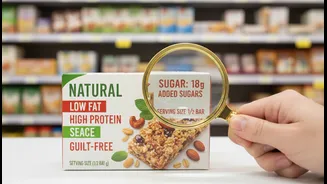
The 'health halo' effect is a cognitive bias where we over-generalise from one positive attribute of a food to its overall nutritional profile. When a snack is labelled 'organic', 'low-fat', 'gluten-free', or 'high-protein', our brains tend to perceive
the entire product as being healthier than it actually is. This single positive claim casts a 'halo' that can obscure other, less desirable qualities, like high sugar, sodium, or calorie content. Marketers are well aware of this psychological shortcut. They use appealing buzzwords and green, earthy packaging to signal health, knowing it can distract consumers from scrutinising the full ingredients list or nutrition panel.
The Psychology of Permission
The health halo doesn't just influence what we buy; it dramatically affects how much we eat. This is driven by another psychological phenomenon called the 'licensing effect'. When we choose a 'healthy' snack, our brain gives us a license to indulge more freely. The reasoning goes: "Because this snack is good for me, it's okay to have a larger portion." Studies have consistently shown that people serve themselves significantly more of a food when they believe it is a healthier option. This mental permission slip makes us underestimate calories and ignore serving sizes, leading directly to overconsumption.
Common Culprits in the Snack Aisle
This effect is widespread in Indian supermarkets. Consider 'digestive' or 'multigrain' biscuits. While they may contain some whole grains, they are often still high in refined flour, sugar, and fat. 'Baked' chips are another classic example. The 'baked, not fried' claim creates a powerful health halo, yet they can be nearly as high in sodium and calories as their fried counterparts. Similarly, fruit juices labelled 'no added sugar' might sound healthy, but they can contain as much natural sugar as a sweetened beverage, while lacking the fibre of whole fruit. Recent actions by the Food Safety and Standards Authority of India (FSSAI) have highlighted how many brands use misleading terms like 'healthy' or 'zero maida' on products that don't fully support the claims.
Your Brain on 'Diet' Food
Our brains are wired to seek efficiency, and these marketing claims offer a convenient mental shortcut. In a world saturated with complex nutritional information, a simple claim like 'natural' or 'high-fibre' feels like an easy, trustworthy guide. This is especially true for ultra-processed foods, which are engineered to be hyper-palatable by combining fat, sugar, and salt in ways that can stimulate the brain's reward centre, making them harder to stop eating. The health halo gives us the justification we need to consume these highly rewarding foods without the accompanying guilt, creating a cycle of overeating.
How to Break the Halo Effect
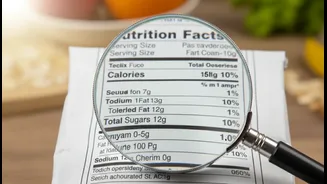
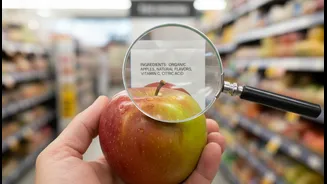
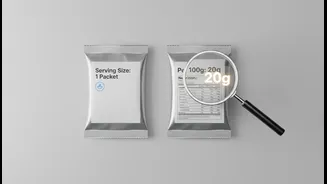
Becoming a more mindful consumer is the key to counteracting these psychological tricks. The first step is to cultivate a healthy scepticism towards front-of-package claims. Always turn the packet over and read the nutrition information and ingredients list. Pay close attention to serving sizes, which are often surprisingly small. Look at the total calories, sugar, and sodium content, not just the one highlighted nutrient. Finally, instead of eating directly from the bag, which encourages mindless consumption, portion out your snack into a bowl. This simple act forces you to consciously acknowledge the amount you're eating, breaking the spell of the health halo.