



Forests That Glow in the Dark
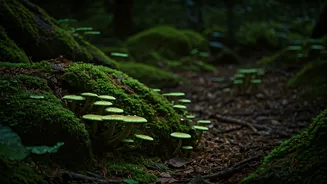
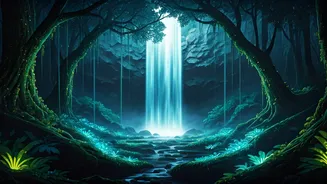
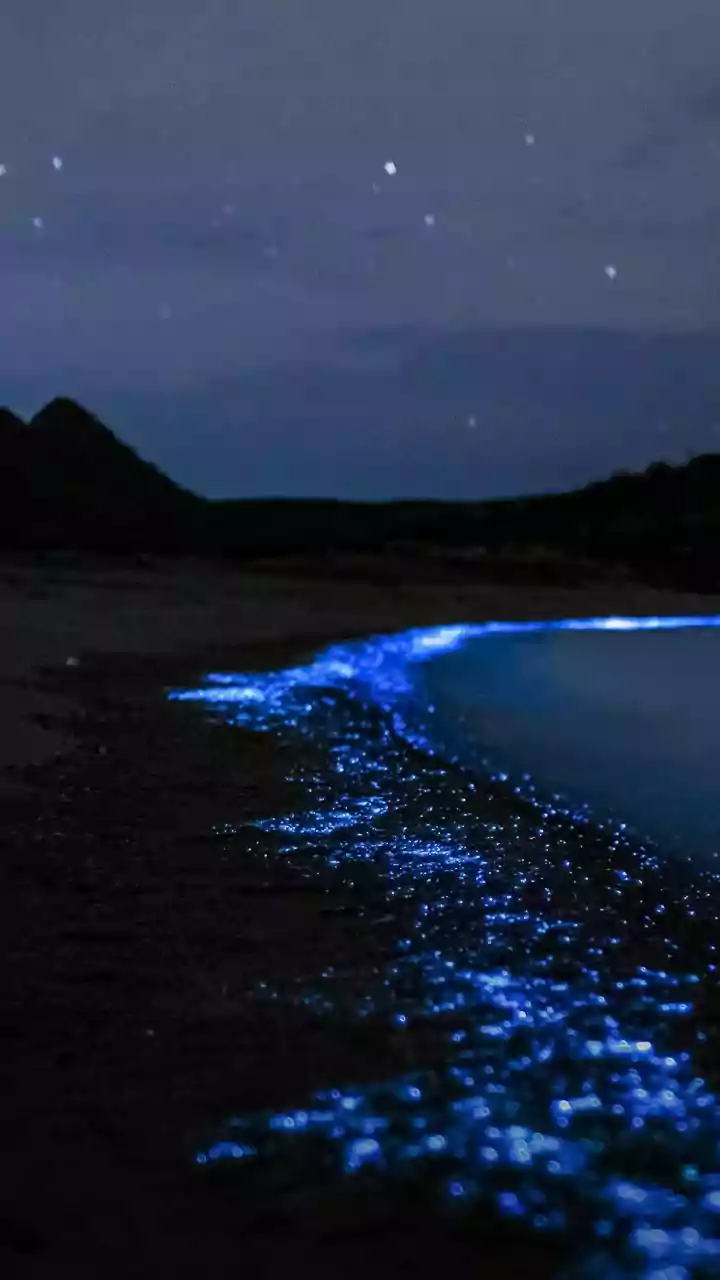
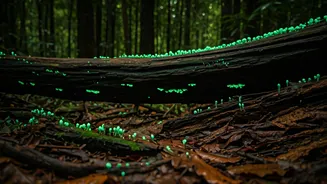
Imagine trekking through the Western Ghats on a moonless night, when suddenly the forest floor and decaying branches begin to emit an eerie, ethereal green light. This is not fantasy; it’s bioluminescence. The culprit is a type of fungus, often from the Mycena
genus, which thrives in the damp, decaying wood brought to life by the monsoon rains. This phenomenon, known as 'foxfire,' is the result of a chemical reaction involving an enzyme called luciferase. While it serves to attract insects that help spread the fungal spores, for any human witness, it transforms a familiar forest trail into a scene straight out of a fairy tale. The forests of Maharashtra, Goa, and parts of Meghalaya become hotspots for this otherworldly glow.
Waterfalls That Flow Upwards
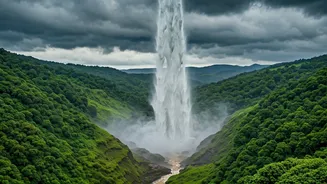
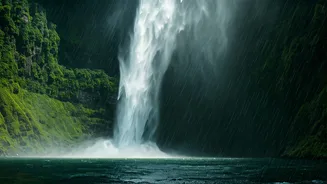
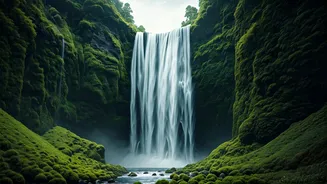
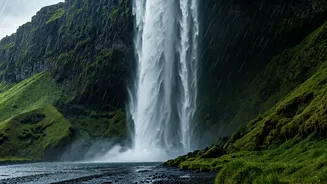
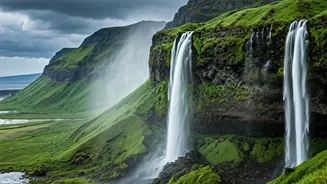
We learn a simple rule in school: what goes up must come down, and water flows downhill. But at certain spots along the Sahyadri mountain range, the monsoon winds are so powerful that they defy this basic principle. At places like Naneghat near Pune or in the Malshej Ghat region of Maharashtra, a bizarre spectacle unfolds. As water from a seasonal waterfall cascades over a cliff edge, ferocious winds gusting upwards at high speeds catch the droplets and spray them back up and over the precipice. It creates the stunning illusion of a 'reverse waterfall,' where gravity seems to have lost the battle. This isn't magic, but a powerful demonstration of meteorology and topography working in tandem to create a truly mind-bending visual.
The Frog That Lives a Secret Life
For 364 days a year, it doesn't exist. At least, not to us. The Indian Purple Frog (Nasikabatrachus sahyadrensis) is a living fossil, a reclusive burrower that spends almost its entire life underground. With a bloated purple body and a distinctive, pig-like snout, it’s unlike any frog you’ve ever seen. Then, for just a few days at the onset of the monsoon, it emerges from its subterranean solitude for one purpose: to mate. Males call out with a unique squawk from beside streams, and after a brief, frantic breeding period, they disappear back into the soil for another year. This incredible life cycle, discovered relatively recently in the Western Ghats, is a stark reminder of the evolutionary marvels hidden right beneath our feet, waiting for the trigger of the first rains.
A Flower That Waits Eight Years
Patience is a virtue, but the Karvi plant (Strobilanthes callosa) takes it to an extreme. For seven long years, it remains a simple, unassuming shrub on the hillsides of the Western Ghats. Then, in the eighth year, something extraordinary happens. Timed with the monsoon, entire hillsides erupt in a synchronized mass blooming of purple and blue Karvi flowers. This rare phenomenon, known as masting, is a survival strategy. By flowering all at once, the plants overwhelm seed predators, ensuring that enough seeds survive to create the next generation. For locals and nature enthusiasts, it’s a once-in-a-decade festival of nature, painting the landscape in vibrant hues and attracting a riot of bees and butterflies.
A Symphony of Synchronised Light
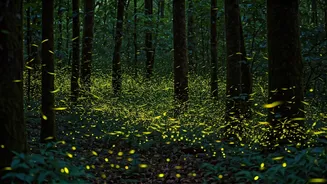
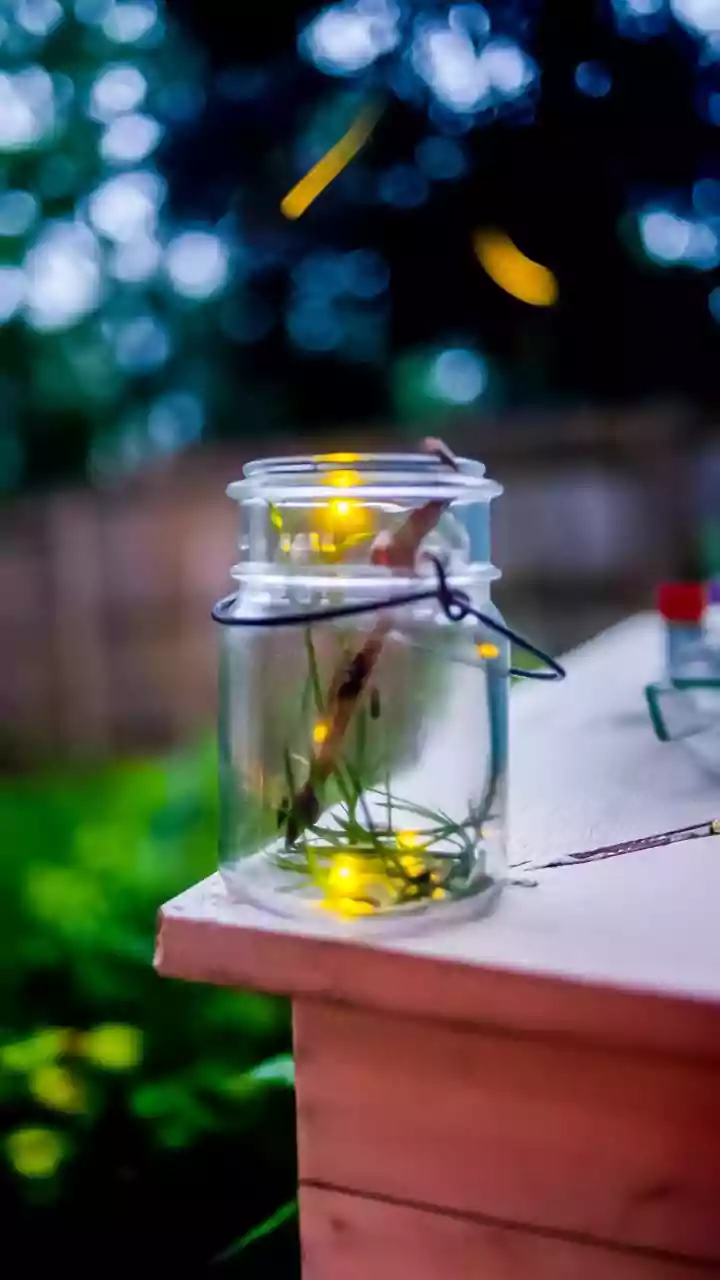
Just before the monsoon fully arrives, another magical event takes place in the firefly hotspots of India, such as Purushwadi in Maharashtra. It’s not just the presence of fireflies, but their coordination that feels like a glitch in the natural world. Thousands of male fireflies gather on trees and begin to flash their lights in perfect unison, creating waves of pulsating light that ripple through the darkness. This is no accident; it’s a highly sophisticated mating ritual. By synchronising their flashes, the males make it easier for females to spot them and assess their fitness. The result is one of nature’s most enchanting light shows, a silent, rhythmic concert performed for an audience of two species: other fireflies, and the very lucky humans who get to witness it.