




The Sneaky Threat We're Missing
When we think of asteroid threats, we often picture a single, massive rock like the one that ended the age of dinosaurs. While scientists have successfully cataloged most of the truly enormous Near-Earth Objects (NEOs), a different kind of danger is now
taking center stage: small, fast-moving asteroids. Objects larger than 140 meters can cause regional devastation, leveling an entire city, and there are thousands yet to be found. Even an object just 50 meters wide can explode with the force of a powerful nuclear bomb, as witnessed over Tunguska, Siberia, in 1908. The challenge is that these smaller asteroids are incredibly difficult to spot. They are often very dark, reflecting little sunlight, and can approach from angles obscured by the sun's glare, making them nearly invisible to many ground-based telescopes until it's too late.
Expanding Our Eyes on the Sky
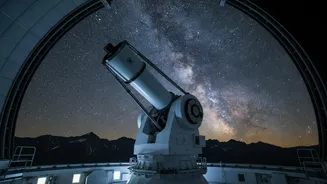
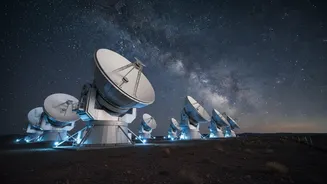
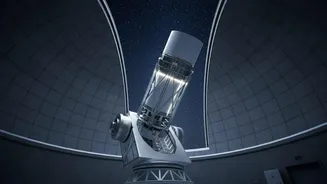
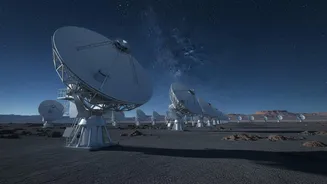
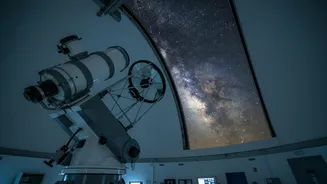
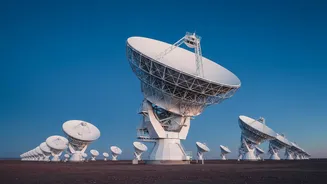
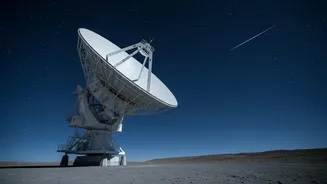
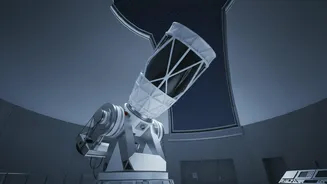
Recognizing this gap in our defensive capabilities, space agencies and research institutions around the world are significantly expanding their planetary defense networks. This isn't just about building more telescopes, but about creating a more coordinated and technologically advanced system. Existing surveys like the Asteroid Terrestrial-impact Last Alert System (ATLAS) have already expanded from their base in Hawaii to include telescopes in Chile and South Africa, providing nightly coverage of the entire observable sky. This global network approach is crucial. It fills blind spots, especially in the Southern Hemisphere, and ensures that if one observatory is hampered by bad weather, another can continue the watch. The goal is to move from spotting these objects days or weeks before a potential impact to having years or even decades of warning—enough time to actually do something about it.
A New Generation of Sentinels
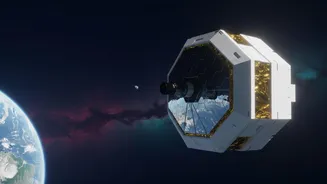
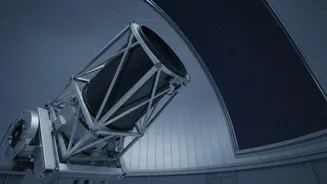
Two key projects are set to revolutionize our ability to detect these threats: the Vera C. Rubin Observatory and NASA's NEO Surveyor space telescope. The ground-based Rubin Observatory, located in Chile, boasts the world's largest digital camera and can scan the entire Southern sky every few nights. In early testing alone, it discovered thousands of previously unknown asteroids in just a matter of days, proving its immense potential for planetary defense. Launching no earlier than 2027, the NEO Surveyor will be a dedicated space-based hunter. By operating in infrared and positioned at a stable point between the Earth and the Sun, it will be uniquely capable of spotting asteroids that are either too dark or too close to the sun for ground-based optical telescopes to see. NASA expects NEO Surveyor to help meet the congressional mandate of finding over 90% of NEOs larger than 140 meters.
From Detection to Deflection
Finding a potentially hazardous asteroid is only the first step. The ultimate goal of planetary defense is to prevent an impact. The more warning time we have, the more options are available. This was powerfully demonstrated by NASA's Double Asteroid Redirection Test (DART) mission in 2022. The mission successfully slammed a spacecraft into the small asteroid moonlet Dimorphos, measurably changing its orbit. This proved that with enough lead time, a "kinetic impactor" could nudge a dangerous asteroid onto a safer trajectory. This is why the push to find smaller, faster asteroids is so urgent. Early detection provides the critical time needed to plan and execute a deflection mission, turning a potential catastrophe into a preventable event. The expansion of these networks is about giving humanity the tools to act, rather than simply react.