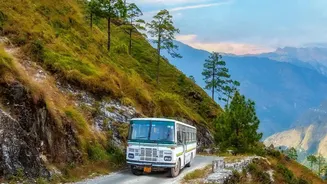







What is a Marshrutka?
A marshrutka is a shared minibus that operates on a fixed route, serving as the primary mode of intercity transport across Georgia. Unlike city buses, they don’t always follow a strict timetable; instead, many leave when they are full. This makes them
a flexible, if sometimes unpredictable, way to travel. For any backpacker looking to experience the country like a local and stick to a daily budget of around 80-120 GEL ($30–$45), mastering the marshrutka is non-negotiable. They are significantly cheaper than private taxis and connect nearly every town and village, from the shores of the Black Sea to the peaks of the Caucasus.
Finding Your Ride
In major cities like Tbilisi, marshrutkas depart from large, chaotic stations. The most important one is Didube Station, which serves most destinations to the north and west, including Kazbegi, Gori, and Kutaisi. For destinations in the eastern Kakheti region, you'll need Ortachala Station. At the station, finding the right van can feel overwhelming. Most destinations are written only in Georgian script on signs propped in the windshields. Don't hesitate to ask for help. Say your destination aloud, and drivers or other passengers will almost always point you in the right direction. For shorter trips or along major highways, you can also hail a passing marshrutka from the side of the road.
Paying Fares and Budgeting
Payment is almost exclusively done in cash, paid directly to the driver. You might pay when you board, or you might pay when you get off; just follow the driver's lead. Fares are very affordable and fixed for everyone, so there's no need to worry about 'tourist pricing'. As of 2026, you can expect to pay around 15 GEL for the popular Tbilisi to Kazbegi route, 20 GEL for Tbilisi to Kutaisi, and up to 30-40 GEL for longer trips to Batumi or Svaneti. Shorter trips between nearby towns can cost as little as 2-5 GEL. Always carry small denominations of Georgian Lari (GEL), as drivers may not have change for large bills.
Luggage and Seating
Backpacks are a common sight on marshrutkas, but space is limited. There's no formal luggage hold; bags are typically squeezed into the back of the van, placed on an empty seat, or held on your lap. It’s best to pack light. Seating is first-come, first-served, and there's no standing room allowed on intercity routes. For popular routes, it's wise to arrive 30-40 minutes before the scheduled departure to secure a seat, as vans often leave early once they fill up. Don't be surprised if the front seats are already claimed; they are often reserved in advance by regulars.
Onboard Etiquette and The Journey
Riding a marshrutka is an experience in itself. The driving can be fast and feel adventurous to newcomers. If you need to get off before the final destination, simply call out “ga-a-che-ret” (stop). It’s also common practice for passengers in the back to pass their fare money forward through a chain of fellow riders to reach the driver. Don't be shy; it's part of the communal nature of the journey. While there aren't many strict rules, offering your seat to the elderly is expected on city transport but less applicable on intercity vans where everyone has a seat. For any long journey, grabbing some fresh Georgian bread (shotis puri) beforehand makes for a perfect snack.