




Imagine your land yielding not just crops, but clean energy and a second income stream. This is the promise of agrivoltaics, or solar farming, and the Indian government is offering significant incentives to help farmers make it a reality.
What is Agrivoltaics?
Agrivoltaics
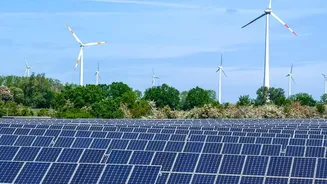
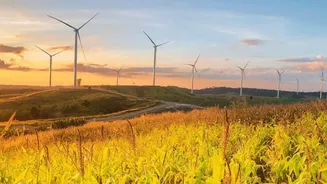
is the practice of using the same piece of land for both agriculture and solar power generation. Solar panels are mounted on elevated structures, high enough to allow crops to grow underneath while capturing sunlight to produce electricity. This innovative approach addresses two of India's critical needs: food security and clean energy. The shade from the panels can help protect crops from extreme heat and reduce water evaporation, potentially improving yields for certain shade-tolerant plants. For farmers, it unlocks the potential to earn a dual income from their land: one from their crops and another from generating power.
The Main Government Scheme: PM-KUSUM
The Pradhan Mantri Kisan Urja Suraksha evam Utthaan Mahabhiyan (PM-KUSUM) is the flagship central government programme designed to help farmers adopt solar energy. Launched by the Ministry of New and Renewable Energy (MNRE), its primary goals are to reduce agriculture's dependence on diesel, provide farmers with a reliable power source for irrigation, and create an opportunity for them to earn extra income by selling surplus power to the grid. The scheme is broadly divided into three components, allowing farmers to install standalone solar pumps, solarize existing grid-connected pumps, or even set up small solar power plants on their land.
Financial Benefits and Subsidies
The most significant advantage of the PM-KUSUM scheme is the substantial financial support. For installing solar pumps, farmers can receive a subsidy of up to 60% of the cost, which is typically split between the central and state governments. This means the farmer only needs to bear a fraction of the initial cost, which can often be covered through bank loans. In certain regions, including North-Eastern states, Jammu & Kashmir, and Himachal Pradesh, the subsidy can be even higher. By generating their own power, farmers can eliminate fuel bills for diesel pumps and reduce their reliance on often-unreliable grid electricity, leading to significant long-term savings.
Who is Eligible to Participate?
The PM_KUSUM scheme is designed to be inclusive. Eligibility is open to individual farmers, groups of farmers, Farmer Producer Organisations (FPOs), cooperatives, and panchayats. A key requirement is that the applicant must own agricultural land or have clear leasing rights. While not mandatory, priority is often given to small and marginal farmers, as well as those who have adopted micro_irrigation systems, to ensure the benefits reach those who need them most. Under Component A, farmers can even use barren or uncultivable land to set up a solar plant and generate a steady income.
How to Apply for the Scheme
The application process is managed online through designated state_level portals. The first step is to visit the official PM_KUSUM website or the portal of your state's nodal agency (like MEDA in Maharashtra or GEDA in Gujarat). You will need to register an account, typically using your Aadhaar_linked mobile number. From there, you will fill out an online application form with personal details and information about your land. You'll also need to upload digital copies of required documents, which generally include an Aadhaar card, land records (like Khasra Khatauni), and a bank passbook. After submission, authorities will verify the application, and upon approval, you can proceed with the installation through a certified vendor.
State_Level Initiatives and Variations
While PM_KUSUM is a national framework, several states offer additional incentives or have their own specific agrivoltaic policies. For example, states like Rajasthan, Gujarat, and Maharashtra have been particularly active in promoting solar farming through dedicated schemes like the Suryashakti Kisan Yojana (SKY) in Gujarat or the Mukhyamantri Saur Krushi Vahini Yojana (MSKVY) in Maharashtra. Some states also offer a 'top_up' on the central subsidy, further reducing the farmer's financial contribution. It is always best to check your specific state's renewable energy agency portal for the most accurate and localized information.