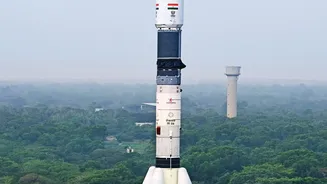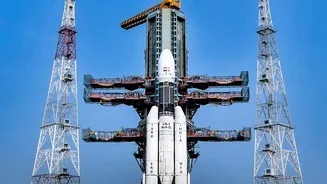




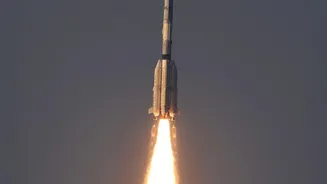
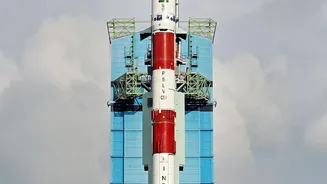

Opening the Final Frontier for FDI
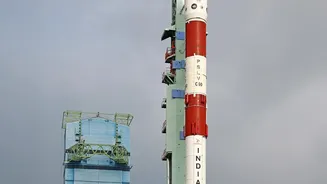
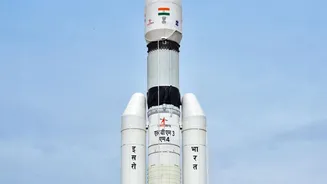
For decades, India's space programme was the near-exclusive domain of the Indian Space Research Organisation (ISRO). That architecture has now fundamentally changed. The government has liberalised its Foreign Direct Investment (FDI) policy, creating a tiered
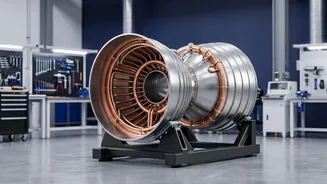
system to attract global capital and technology. Under the new rules, up to 100% foreign investment is permitted via the automatic route for manufacturing components and sub-systems. For creating launch vehicles and spaceports, the cap is 49% through the automatic route, while satellite manufacturing and operations can receive up to 74% automatically. This move is designed to integrate Indian startups and companies into the global aerospace supply chain, transforming them from domestic suppliers to global players.
A Constellation of New Job Roles
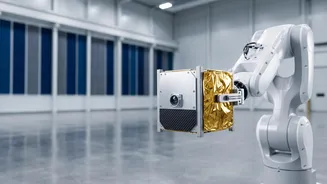
The infusion of foreign capital is expected to create a massive wave of new employment opportunities, far beyond the traditional role of an ISRO scientist. The growth is projected to be structural, not just incremental, creating over 200,000 new jobs by 2033. While aerospace, satellite, and propulsion engineers are in high demand, the ecosystem needs a much wider array of talent. Companies like Skyroot Aerospace and Agnikul Cosmos are hiring manufacturing engineers, avionics specialists, and flight software engineers. The expansion also creates demand for mission control specialists, robotics engineers, and quality assurance managers who understand global compliance.
Powering the Downstream Data Economy
Not all space jobs involve building rockets. A significant area of growth is in the downstream applications of satellite data. Companies like SatSure focus on turning vast amounts of satellite imagery and signals into actionable business intelligence. This creates a high demand for data scientists, machine learning engineers, GIS analysts, and remote sensing experts. These professionals work on solutions for diverse sectors, including agricultural lending, infrastructure monitoring, environmental management, and defence analytics. This opens the door for professionals from non-traditional space backgrounds to enter a high-growth industry.
Fueling Startups and Ancillary Industries
The liberalised FDI policy is a massive boost for India's burgeoning ecosystem of over 400 space startups. With access to global capital, these agile companies can accelerate research, development, and commercialisation. This growth has a significant ripple effect. It stimulates a network of Micro, Small, and Medium Enterprises (MSMEs) that manufacture everything from precision components to specialised materials. The policy helps these MSMEs upgrade their infrastructure to meet global aerospace standards, enabling them to become exporters. This creates a robust, multi-layered industrial base, generating employment not just in major hubs but also in smaller cities and industrial corridors.
The Skills for a New Space Age
This rapid expansion necessitates a workforce equipped with new and diverse skills. Beyond core engineering disciplines, the industry now demands expertise in AI and machine learning, robotics, fuel chemistry, and telecommunications. There is a growing convergence between the space sector and other high-precision industries, creating pathways for professionals to transition into space-specific roles. To meet this demand, educational institutions and training programmes will play a crucial role in upskilling the workforce. The future of India's space economy will depend not just on attracting investment, but on cultivating the human capital required to build a globally competitive and self-reliant ecosystem.