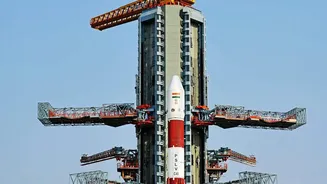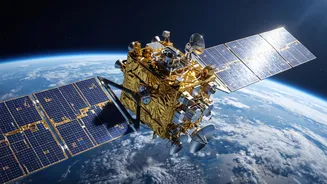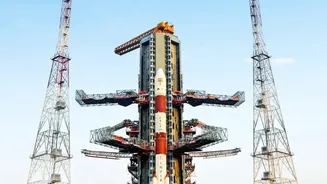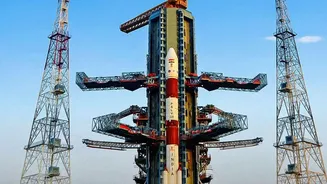






The Indian Space Research Organisation (ISRO) is bolstering the nation's self-reliant navigation capabilities with the NVS-03 satellite. This launch marks a critical step in modernising the Navigation with Indian Constellation (NavIC) system.
A New Generation for Indian Navigation
The NVS-03
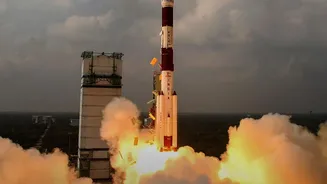
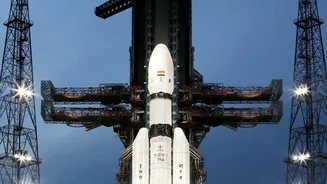
is the third satellite in a planned second-generation series designed to strengthen and ensure the continuity of India's homegrown navigation system, NavIC. This new series is progressively replacing the original Indian Regional Navigation Satellite System (IRNSS) satellites, some of which were hampered by failing imported atomic clocks. Launched aboard a GSLV-F18 rocket, the 2,250 kg NVS-03 is engineered for an operational life of 12 years, a significant upgrade over the 10-year lifespan of its predecessors. This initiative is part of a series of five new satellites (NVS-01 to NVS-05) intended to secure and enhance India's independent positioning services.
The Heart of Precision: Indigenous Atomic Clocks
At the core of any navigation satellite is its atomic clock, which provides the ultra-precise timing data needed for ground receivers to calculate their exact position. A major enhancement in the NVS series is the inclusion of an indigenously developed Rubidium atomic clock. This was a crucial innovation spurred by the malfunctioning of imported clocks on several first-generation satellites. Developed by ISRO's Space Applications Centre, this 'Made in India' technology not only demonstrates increasing technological self-reliance but is also fundamental to the long-term stability and accuracy of the NavIC system.
Unlocking Mass Adoption with the L1 Band
Perhaps the most significant upgrade for civilian users is the inclusion of the L1 frequency band, which is used globally by other navigation systems like GPS. Older NavIC satellites broadcast on the L5 and S bands. The addition of the L1 band makes new NavIC satellites compatible with a much wider range of commercial devices, including smartphones, wearables, and other Internet of Things (IoT) gadgets that use low-power navigation chips. This interoperability is a game changer, poised to accelerate the widespread public adoption of NavIC and reduce the technical barriers for manufacturers to integrate it into consumer products.
Why NavIC is a Strategic National Asset
While NavIC offers numerous civilian applications—from vehicle tracking and disaster management to precise timing for financial services—its strategic importance cannot be overstated. The development of an independent regional navigation system was driven by the need for guaranteed access to positioning data, a lesson learned when access to foreign systems was restricted during past geopolitical conflicts. NavIC provides two tiers of service: a Standard Positioning Service (SPS) for all users and an encrypted, more accurate Restricted Service (RS) for the armed forces and other authorised agencies, ensuring India maintains control over critical navigation capabilities.
Restoring and Expanding the Constellation
The successful launch of NVS-03 is vital for the health of the entire NavIC constellation. A minimum of four operational satellites are required to provide an accurate position fix, and technical issues had recently brought the number of fully functional satellites down to just three. The NVS-03 brings the constellation back to operational strength. Following a setback with the NVS-02 satellite, which failed to reach its final orbit, the success of NVS-03 is a crucial step. ISRO plans to continue strengthening the system, with NVS-04 and NVS-05 launches expected to follow to complete the second generation constellation.