



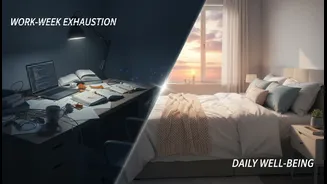


The Modern Cycle of Sleep Debt
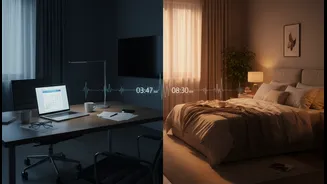
In today’s fast-paced world, especially with long commutes, demanding work schedules, and constant digital engagement, many people sacrifice sleep during the week to meet deadlines. This creates a state known as 'sleep debt'. It's more than just feeling
tired; it’s a cumulative deficit that impacts your body on a biological level. When you consistently get less than the recommended seven to nine hours of sleep, crucial restorative processes are cut short. This can lead to subtle but significant consequences like poor concentration, slower reaction times, irritability, and impaired memory within just a few days. Over time, this chronic shortfall is linked to more serious health risks, including weight gain, a weakened immune system, and an increased risk of chronic diseases. The common solution for many is to try and 'catch up' over the weekend, but research shows that while a couple of long nights of sleep might make you feel more alert temporarily, it often isn't enough to fully reverse the underlying physiological effects of a week of poor sleep.
The Power of Exercise as a Countermeasure
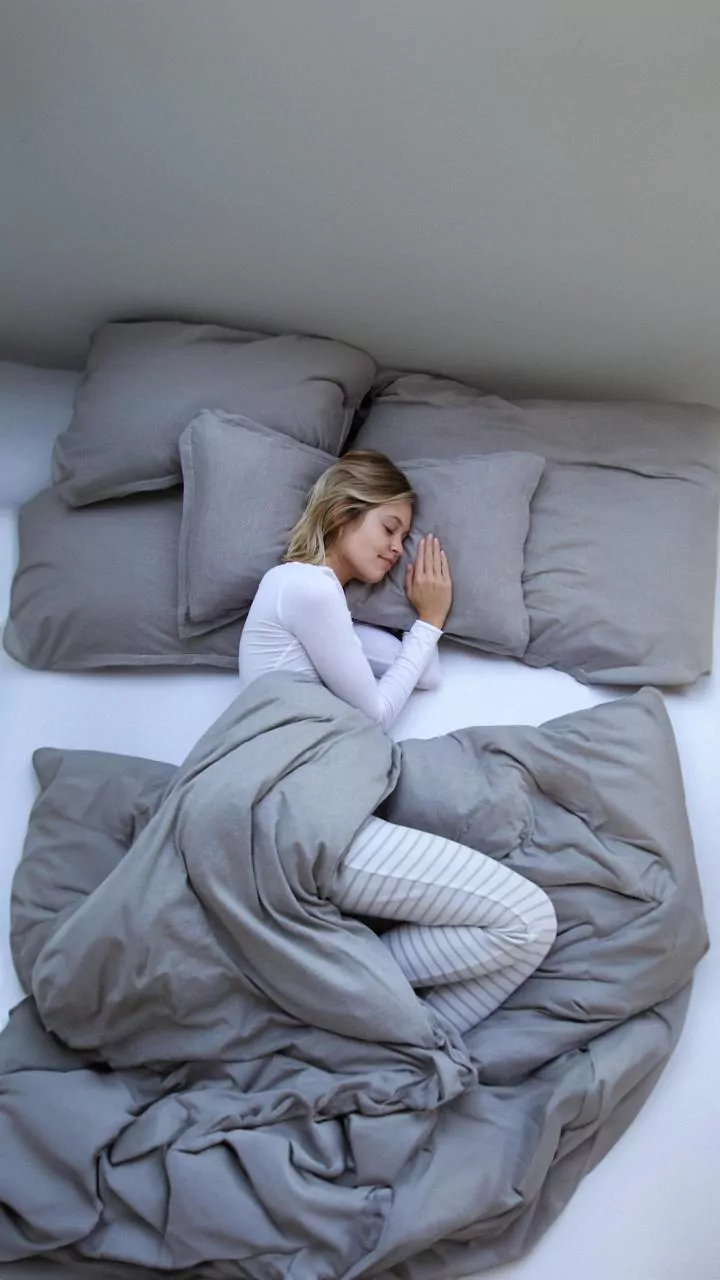
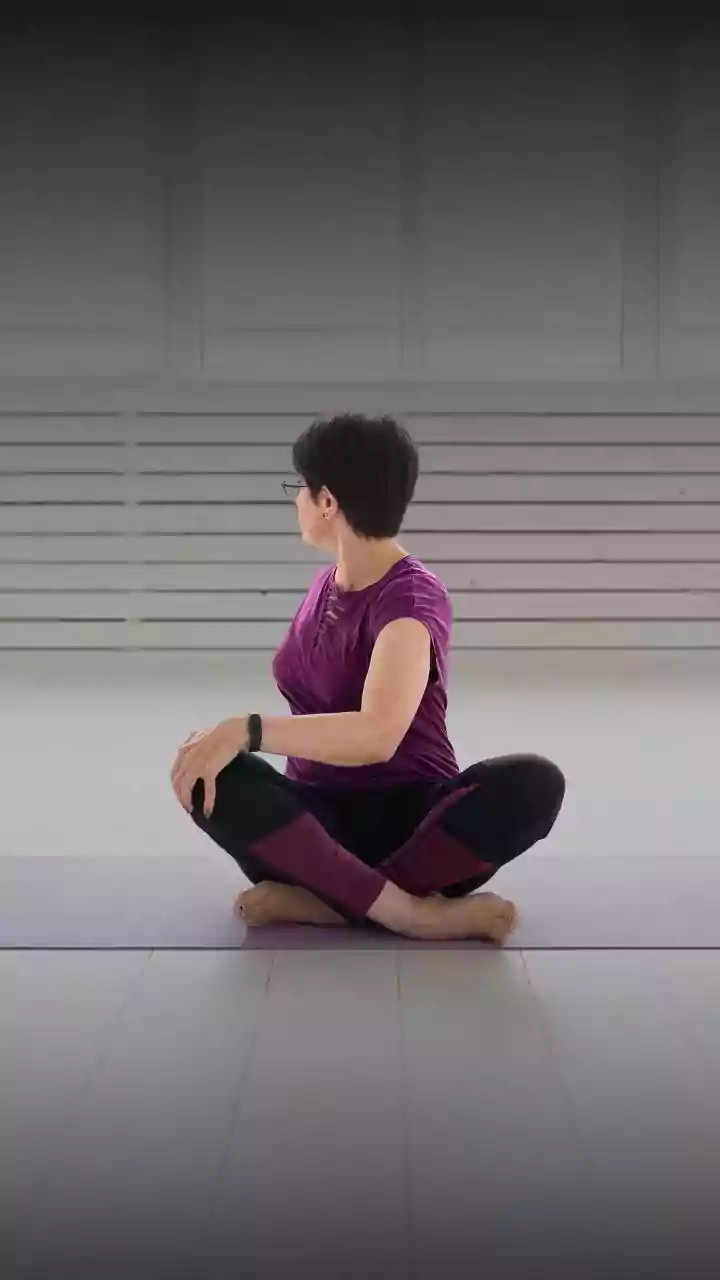
This is where exercise enters the picture as a powerful tool. Many who can't get more sleep turn to fitness, hoping to offset the negative effects. The good news is that physical activity does provide significant benefits. Studies have shown that getting enough physical activity can weaken the mortality risks associated with both short and long sleep durations. Vigorous exercise, in particular, may counteract some of the harmful metabolic effects that arise from sleep deprivation, such as reduced glucose tolerance. Even moderate-intensity exercise has been found to improve cognitive performance, even when someone is sleep-deprived. For those struggling with sleep itself, regular exercise can be a fantastic aid, helping people fall asleep faster and improving the overall quality of their rest by increasing deep, restorative sleep. It also helps to decompress the mind and stabilize mood, which is crucial for naturally transitioning to sleep.
The Hard Limits: Why Exercise Isn't a Cure-All
Despite its many advantages, exercise is a partner to sleep, not a replacement for it. The scientific consensus is that physical activity cannot fully make up for sleep deprivation. While a tough workout might help with cardiovascular and metabolic health, it doesn't do much for other aspects affected by sleep loss, such as mental fatigue and low energy. Sleep performs critical functions that exercise cannot replicate, including the consolidation of memory, comprehensive tissue and cell repair, and the removal of metabolic waste from the brain. Furthermore, severe sleep deprivation can make intense workouts unsafe and less effective. A lack of sleep impairs judgment, slows reaction times, and can decrease your time to exhaustion, meaning your workout performance itself suffers. Trying to push through a high-intensity session after minimal sleep can also increase your risk of injury. Experts suggest that if you've had very little sleep, such as under three hours, you should avoid vigorous exercise altogether.
Finding a Sustainable and Balanced Approach
The ideal strategy is not to choose between sleep and exercise, but to integrate both into your life. Rather than viewing exercise as a way to erase sleep debt, think of it as a tool that enhances sleep quality and builds overall resilience. If you must occasionally shorten sleep for a workout, science suggests it shouldn't be a major issue. However, if it becomes a regular pattern, prioritising sleep will be more beneficial in the long run. Aim for consistency. A regular exercise routine, even moderate activity like a brisk walk, has been shown to relieve insomnia and improve sleep quality over time. The timing of your workout also matters. For many people, exercising too close to bedtime can be disruptive due to the release of endorphins and a rise in core body temperature. It’s generally recommended to finish your workout at least one to two hours before you plan to go to sleep.