

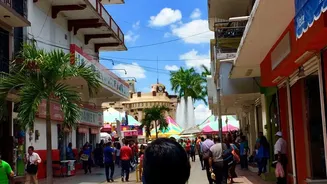
The Art of the Portuguese Street
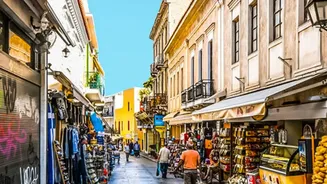
To walk through a Portuguese village is to walk through an open-air gallery. The nation's iconic 'Calçada Portuguesa'—a traditional style of pavement using small, flat pieces of black basalt and white limestone—is a celebrated art form. While famous in large
city squares, its simpler, more rustic origins can be found in the countryside. Here, the streets are often made of rugged granite setts or well-worn cobblestones, flanked by whitewashed houses with colourful borders of blue and yellow. These streets tell a story of practicality and beauty, shaping the identity of the villages they run through and inviting a slower, more deliberate pace of exploration.
Monsanto: The Village Built Among Boulders
In the Beira Baixa region, near the Spanish border, lies Monsanto, a village so unique it seems born from a fantasy novel. It is not built on a mountain, but rather into it. Gigantic granite boulders, weighing hundreds of tons, serve as the walls, floors, and even roofs of 16th-century stone houses. Narrow lanes twist between these colossal stones, with some homes carved directly into the rock. The most famous example is the Casa de Uma Só Telha, or the 'House of One Tile', which uses a single massive boulder for its entire roof. Awarded the title of 'the most Portuguese village in Portugal' in 1938, Monsanto is a protected living museum where geology and architecture are one.
Óbidos: A Medieval Town Within the Walls
An hour north of Lisbon, the town of Óbidos is a perfectly preserved medieval jewel. Once a wedding gift from a king to his queen, the entire village is still contained within its original 12th to 14th-century walls. Entering through the main gate, Porta da Vila, you step into a maze of winding cobblestone streets. The main artery, Rua Direita, is lined with bookshops, artisan stores, and stalls selling 'ginjinha' (sour cherry liqueur) in chocolate cups. But the real magic lies in the quiet perpendicular alleys, where whitewashed houses draped in bougainvillea create a timeless atmosphere. A walk along the ramparts offers stunning views over the red-tiled roofs and the surrounding countryside.
Marvão: The Eagle's Nest on the Frontier
Perched on a granite crag high in the Alto Alentejo region, Marvão is a formidable sight. This fortified village, surrounded by 13th-century walls, offers breathtaking panoramic views across the plains toward Spain. Inside the walls, the atmosphere shifts from exposed grandeur to intimate charm. Narrow, steep streets of whitewashed houses with distinctive Alentejo-style white paint lead upwards to the impressive castle. The pleasure of Marvão lies in this contrast—moving from the expansive vistas on the castle ramparts to the enclosed, quiet lanes of the village, where every granite-framed doorway feels like a piece of history.
Piódão: The Schist Village in the Mountains
Deep in the Serra do Açor mountains, the village of Piódão cascades down a steep hillside like a nativity scene, an effect that has earned it the nickname 'crib village'. What makes Piódão so distinct is its uniformity; nearly every building, wall, and street is constructed from schist, a dark, slate-like stone abundant in the region. The only contrast comes from the brilliant blue or white paint on the doors and windows. For centuries, Piódão was incredibly isolated, which helped preserve its medieval character. Its winding, narrow streets and staircases are a testament to a life adapted to the ruggedness of the mountains, offering a glimpse into a truly remote and resilient Portugal.