





Choose Your Platform Wisely
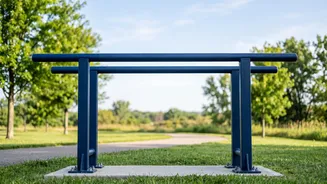
The first step is selecting your 'box'. In a playground, this is likely a sturdy bench or a low, stable platform. Before you begin, check that the surface is completely stable and won't wobble or tip. It should also be dry and non-slip. The ideal height
is one where your thigh is roughly parallel to the ground when you place your foot on it, creating about a 90-degree angle at the knee. Starting with a lower step, around 4 to 8 inches, is safer for beginners. A step that's too high can force you to use momentum or round your back, increasing injury risk and reducing the exercise's effectiveness.
Master the Basic Form First
Before exploring variations, nail the standard step-up. Stand facing your chosen platform. Place one entire foot firmly on the surface, ensuring your heel isn't hanging off the edge. Leaning slightly forward from the hips, drive through the heel of your elevated foot to lift your body straight up. The goal is for your front leg to do all the work. Bring your other foot to meet it on the platform, standing tall and squeezing your glutes at the top. To descend, step back down slowly and with control, letting the top leg manage the movement. This controlled lowering, or eccentric phase, is a crucial part of the exercise.
The Most Common Mistake to Avoid
The single biggest error in step-ups is pushing off with the back foot. When you use your trailing leg to bounce or propel yourself upward, you're taking the load off the working leg, which defeats the purpose of this unilateral exercise. It essentially turns a targeted strength move into a less effective cheat rep. To fix this, focus entirely on driving force through the heel of the foot that's on the bench. If you find it impossible not to push off, it's a clear sign that your platform is too high. Lower the step until you can perform the movement using only your front leg.
Other Key Form Checks
Beyond the push-off, watch for other common faults. Keep your torso upright and your core braced; avoid leaning excessively far forward to use momentum. Your knee should track in line with your foot and not cave inward, a mistake known as knee valgus which puts stress on the joint. If you notice your knee collapsing, it could indicate weakness in your hip abductors, so lower the step and focus on controlled movement. Finally, don't just drop back down. The descent should be controlled over one or two seconds, as this builds strength and stability.
Simple Variations to Try
Once you've perfected the basic step-up, you can introduce variations to challenge your muscles in new ways. A lateral step-up, where you stand beside the bench and step up sideways, targets your glutes and inner thighs differently. Another option is the crossover step-up: stand to the side of the platform and cross your outside leg over your body to step up, which further engages the hip stabiliser muscles. For a power focus, you can perform the step-up more explosively, driving your back knee up into a high-knee position at the top. These variations make the exercise a versatile tool for building well-rounded lower-body strength.