







A New Era for Indian Space Tech
For decades, the Indian Space Research Organisation (ISRO) was the sole custodian of India's celestial ambitions. This model yielded incredible results, including the Mars Orbiter Mission and the Chandrayaan program, which made India the first nation
to soft-land near the lunar south pole. These missions became legendary not just for their scientific achievements, but for their astonishing cost-effectiveness, often completed for budgets smaller than Hollywood blockbusters. Building on this legacy, the Indian government has opened up the space sector, creating a fertile ground for private innovation. A 2023 policy shift paved the way for startups to participate in everything from satellite launches to deep-space exploration, heralding a structural and economic revolution in the nation's space industry.
The Challenge: Making the Moon Affordable
Landing and operating on the Moon is incredibly difficult. The lunar surface is a hostile environment, with a vacuum, extreme temperature swings, and abrasive dust. Developing technology that can survive these conditions is a monumental engineering task that has traditionally cost billions. The key to unlocking the next phase of lunar exploration is not just overcoming these challenges, but doing so affordably. This is where India's unique brand of 'frugal innovation' comes into play. By reusing proven designs, focusing on tightly scoped missions, and leveraging advanced digital simulations to reduce the need for expensive physical prototypes, ISRO created a cost-conscious engineering culture. This philosophy is now being adopted and accelerated by a new generation of private companies.
Meet the Trailblazers
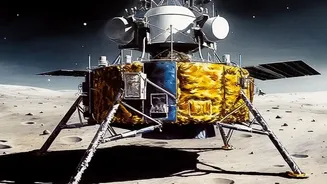
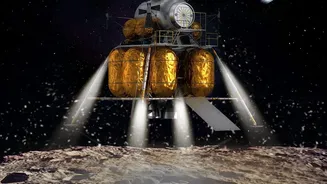
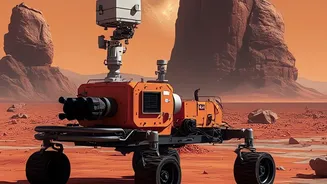
While the headline speaks of lunar rovers, the innovation extends across the entire space ecosystem. Companies like Skyroot Aerospace and Agnikul Cosmos are developing launch vehicles, aiming to make access to space cheaper and more frequent. In fact, Skyroot became the first private Indian company to successfully reach space in its first attempt with its Vikram-1 launch in July 2026. Other startups like Noida-based Omnipresent Robot Technologies have already contributed crucial software for ISRO's missions, developing the Perception Navigation Software for the Pragyaan rover in the Chandrayaan-3 mission. The journey of TeamIndus, a Bengaluru-based startup that was a finalist in the Google Lunar XPRIZE, laid crucial groundwork. Although the prize went unclaimed, TeamIndus demonstrated that a private Indian team could design a lunar lander and rover, securing a launch contract with ISRO and inspiring a wave of entrepreneurs.
The 'How' of Low-Cost Innovation
The secret to low-cost tech isn't about cutting corners; it's about being smarter with resources. Indian startups are leveraging several key strategies. One is miniaturisation—building smaller, lighter spacecraft and components, which drastically reduces launch costs. Another is the use of 3D printing, which allows for the rapid prototyping and manufacturing of complex engine parts, as demonstrated by Agnikul Cosmos with its single-piece semi-cryogenic engine. Furthermore, a focus on software and AI-driven analytics, as seen with companies like Pixxel, allows for the extraction of immense value from satellite data without needing overly complex hardware in orbit. This emphasis on modular, iterative design and leveraging India's world-class software talent creates a powerful competitive advantage, enabling the development of sophisticated technology at a fraction of traditional costs.
India's Role in a Collaborative Future
This boom in private space technology is not happening in a vacuum. It aligns perfectly with a global trend towards more collaborative and commercial space exploration. NASA has formally invited ISRO to participate in its Moon Base programme, which aims to create a sustained human presence on the Moon. This programme explicitly involves partnerships with private industry. With ISRO and Japan’s JAXA already collaborating on a joint lunar polar exploration mission (LUPEX) that will pair an Indian lander with a Japanese rover, the opportunities for Indian startups are immense. They are positioned to become key suppliers not just for India's national missions, but for a global ecosystem of countries and companies looking to explore the Moon and beyond. As India aims to grow its share of the global space economy, these startups are its primary engine.