




What Is Surya Namaskar?
Surya Namaskar is a foundational yoga practice comprising a sequence of twelve distinct postures performed in a continuous, flowing motion. The name translates from Sanskrit as 'salute to the sun', and the practice is traditionally performed in the morning
to greet the new day and harness its energy. It's considered a complete workout in itself, as it integrates asanas (poses), breathing, and movement. Regular practice can improve strength, flexibility, circulation, and mental clarity, making it a holistic exercise for both body and mind.
1. Pranamasana (Prayer Pose)
Begin by standing at the front of your mat with your feet together and weight balanced equally. As you exhale, bring your palms together in a prayer position at your chest. This initial pose helps to centre the mind and body, establishing a sense of calm and balance before you begin the flow.
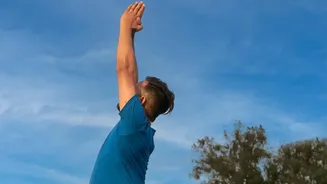
2. Hasta Uttanasana (Raised Arms Pose)
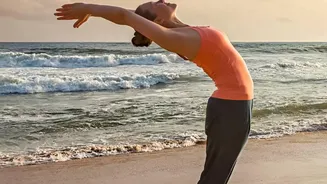
Inhaling deeply, raise your arms up and back, keeping them close to your ears. Gently arch your spine, pushing your pelvis slightly forward. The goal is to stretch the entire body from your heels to the tips of your fingers. This pose opens the chest and stretches the front of the body.
3. Hasta Padasana (Hand to Foot Pose)
As you exhale, hinge from your waist and fold forward, keeping your spine straight. Bring your hands down to the floor beside your feet. You can bend your knees if needed to allow your palms to touch the mat. This pose stretches the hamstrings and spine.
4. Ashwa Sanchalanasana (Equestrian Pose)
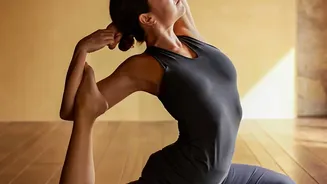
Inhaling, push your right leg back as far as you can. Bring your right knee to the floor and look up, arching your spine. The left foot remains between your palms with the knee bent at a 90-degree angle. This pose gives a deep stretch to the groin and hip flexors.
5. Dandasana (Stick Pose)
As you inhale, bring your left leg back to join the right, aligning your body in a straight line like a plank. Your wrists should be directly under your shoulders. Engage your core muscles to keep your back straight and prevent your hips from sagging.
6. Ashtanga Namaskara (Eight-Limbed Salute)
Gently bring your knees down to the floor and then exhale. Lower your chest and chin to the floor, keeping your hips raised. In this pose, two hands, two feet, two knees, your chest, and chin—eight parts of the body—should touch the floor.
7. Bhujangasana (Cobra Pose)
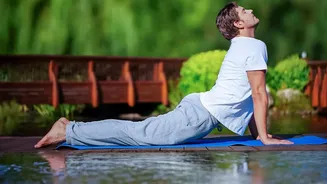
Slide forward and, on an inhale, raise your chest off the floor, keeping your pelvis on the ground. Straighten your arms, roll your shoulders back, and look up. This is a gentle backbend that strengthens the spine and opens the chest and shoulders.
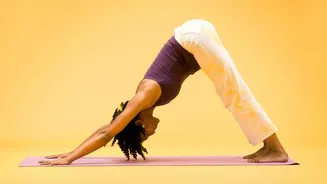
8. Adho Mukha Svanasana (Downward-Facing Dog)
Exhaling, lift your hips and tailbone up towards the ceiling, forming an inverted 'V' shape with your body. Keep your hands shoulder-width apart and feet hip-width apart. Press your heels towards the floor to deepen the stretch in your hamstrings and calves.
9. Ashwa Sanchalanasana (Equestrian Pose)
As you inhale, bring your right foot forward between your hands, returning to the Equestrian Pose. Your left knee should be on the floor. Look up, ready to move into the next posture. This step mirrors pose number four.
10. Hasta Padasana (Hand to Foot Pose)
Exhaling, bring your left foot forward to meet the right and return to the Hand to Foot Pose. Keep your palms on the floor and try to straighten your knees, deepening the forward fold.
11. Hasta Uttanasana (Raised Arms Pose)
Inhaling, roll your spine up. Raise your arms overhead and bend backward gently, arching your spine and opening your chest. This pose is a repeat of the second asana, bringing the sequence full circle.
12. Tadasana/Pranamasana (Mountain/Prayer Pose)
As you exhale, first straighten the body, then bring your arms down and join your palms in front of your chest in the starting prayer position. This completes one half-round. To complete a full round, repeat the entire sequence, this time leading with the left leg in steps 4 and 9.