


A Planet Etched by Wind
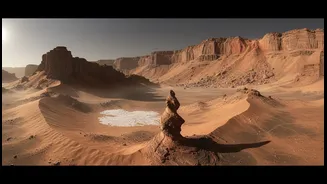
Mars is a world largely sculpted by wind. Though its atmosphere is just one percent as dense as Earth's, winds can reach speeds of up to 100 kilometers per hour, kicking up dust and slowly rearranging the surface. With no weather stations scattered across
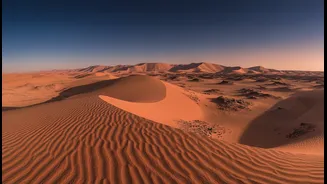
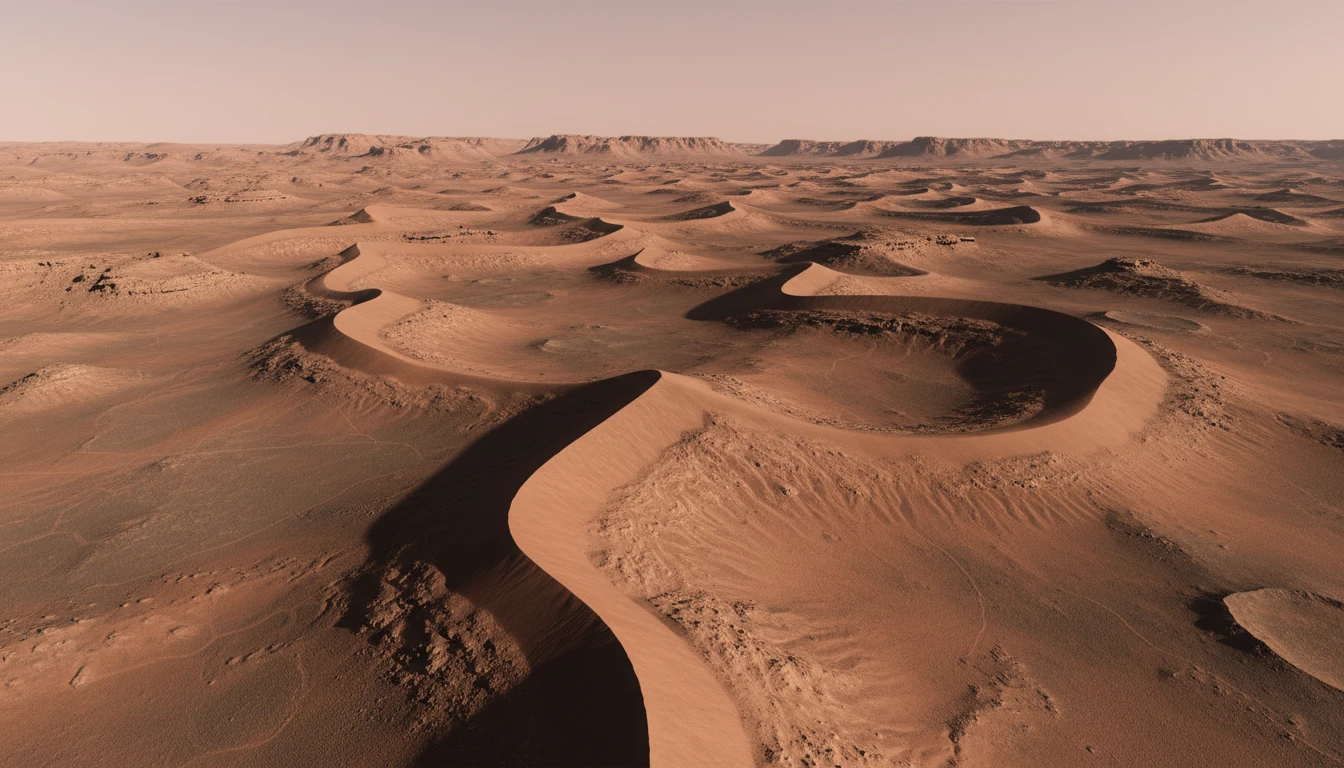
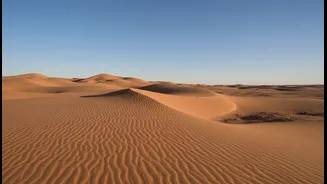
the planet, scientists must look to the landscape itself for clues about its climate. The most revealing storytellers are the planet’s enormous fields of sand dunes. These massive structures, which can be hundreds of feet tall, are not static; they are active, moving records of the Martian environment.
Reading the Shape of the Sand
Different types of dunes tell different stories about the winds that form them. One of the most useful is the barchan dune, a crescent-shaped mound whose two “horns” point in the direction the wind is blowing. By mapping the orientation of thousands of these dunes, scientists can create a global picture of prevailing wind directions. Other formations, like linear dunes, suggest winds that blow from two different directions, while more complex patterns can reveal how local topography like craters and canyons channels the airflow.
Satellites as Weather Forecasters
This research relies on powerful cameras aboard orbiters like NASA’s Mars Reconnaissance Orbiter (MRO) and ESA’s ExoMars Trace Gas Orbiter (TGO). Instruments like the High Resolution Imaging Science Experiment (HiRISE) and the Colour and Stereo Surface Imaging System (CaSSIS) capture incredibly detailed images of the surface. In some cases, scientists use machine learning to analyze hundreds of thousands of images, identifying and logging the orientation of dunes across the entire planet to build comprehensive wind maps. These images are so precise that they can show not just the overall shape of a dune, but also the smaller ripples on its surface, which indicate the most recent wind activity.
Strength, Not Just Direction
Beyond simply pointing the way, dunes also offer clues about wind strength. The size, shape, and spacing of dunes and the smaller ripples on their surface are related to the power of the winds that created them. On Earth, we can measure these factors directly, but on Mars, scientists compare the dune patterns to models and terrestrial examples to estimate the force required to move the sand. By repeatedly imaging the same dune fields over several Martian years, researchers can directly measure how far the dunes are migrating—sometimes just a couple of feet per year—and calculate the sand flux, which is the volume of sand being moved. This provides a quantitative measure of the wind's erosive power.
Why the Martian Winds Matter
Understanding Martian weather isn't just an academic exercise. A detailed map of wind direction and strength is crucial for future exploration. It helps mission planners select safe landing sites for rovers and, eventually, human missions, avoiding areas prone to high winds or shifting sands that could endanger a spacecraft. It also helps refine climate models, allowing scientists to better predict the massive dust storms that can engulf the entire planet. Furthermore, because the dunes migrate so slowly, they act as a snapshot of winds averaged over thousands of years, giving us a window into Mars’s past climate and how it has changed over time.