




The Balcony Gardener’s Dilemma
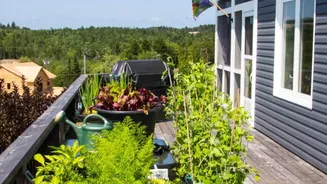
Container gardening on a balcony presents a unique set of challenges that can frustrate even the most dedicated plant parent. Unlike a garden bed, pots and containers have a limited volume of soil, which heats up and dries out much faster, especially
in direct sunlight. Balconies also create microclimates; one corner might be shady and damp, while another is blasted by sun and wind, accelerating evaporation. The traditional 'finger test' for soil moisture can be misleading, as the topsoil might feel dry while the root zone is still wet, or vice versa. This often leads to the two most common plant failures: overwatering, which causes root rot, and underwatering, which leads to wilting and stress. Keeping track of these fluctuating conditions for multiple plants, each with different needs, can feel like a full-time job.
Your Digital Assistant for Plants
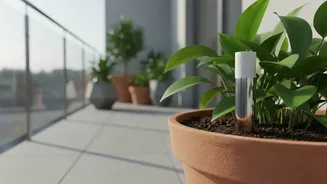
Enter the Internet of Things (IoT) soil sensor. Think of it as a small, smart probe that you place in your plant's pot. This device does one thing exceptionally well: it measures the key conditions affecting your plant's health and sends that data directly to an app on your smartphone. Instead of guessing whether your hibiscus needs water or if your tulsi is getting enough sun, the sensor provides real-time, accurate data. This technology takes the guesswork out of plant care, allowing you to respond to your plant's actual needs rather than relying on a generic watering schedule. It empowers you to make informed decisions, ensuring your plants get exactly what they require to flourish.
More Than Just Water Monitoring
While checking soil moisture is their primary function, many modern IoT sensors offer a much more comprehensive health check-up for your plants. They often come equipped to measure a range of crucial environmental factors. Light sensors can tell you if your sun-loving tomato plant is actually receiving enough direct light or if your shade-preferring fern is getting scorched. Temperature sensors monitor both the air and soil temperature, alerting you if root-zone temperatures get dangerously high on a hot afternoon. Some more advanced sensors can even assess soil nutrient levels, measuring things like nitrogen, phosphorus, and potassium (NPK), or the soil's pH and salinity. This multi-faceted data provides a holistic view of your plant's environment, helping you diagnose problems long before they become visible.
Data-Driven Care in Action
Imagine this scenario: You're at work, and your phone buzzes with a notification from your gardening app. It’s not a social media update, but an alert from the sensor in your curry leaf plant's pot. The app shows that the soil moisture has dropped to a critical low and the soil temperature is spiking due to reflected heat from the balcony wall. Armed with this information, you know to water it thoroughly as soon as you get home and perhaps shift the pot slightly to give it some afternoon shade. Without the sensor, you might have only noticed the wilting leaves a day later, when the plant was already stressed. This is the power of IoT sensors: they turn reactive plant care into proactive plant wellness, helping you prevent problems before they start.
Choosing the Right Sensor for You
Ready to bring a smart sensor into your balcony garden? Here are a few things to consider. First, think about connectivity. Bluetooth sensors are simple and connect directly to your phone when you're nearby, which is often sufficient for a balcony. Wi-Fi sensors connect to your home network via a hub, allowing you to check on your plants from anywhere. Next, consider the power source and battery life; many modern sensors can last for a year or more on a single battery. Also, look at the probe length to ensure it's appropriate for the size of your pots. Finally, evaluate the companion app. Is it easy to use? Does it provide clear recommendations? You don't necessarily need the most complex system; often, a reliable sensor that tracks moisture, light, and temperature is more than enough to create a thriving urban oasis.