







The Old Rule of Thumb
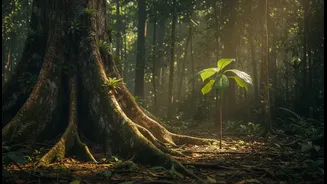
For decades, it seemed like a matter of basic physics. The taller a tree gets, the harder it has to work against gravity to pull water from its roots all the way up to its highest leaves. This effort becomes a critical weakness during a drought, when
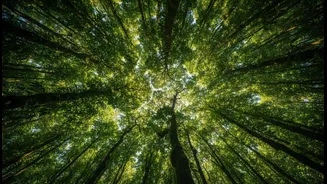
water is scarce. Scientists and climate models have long operated on this principle, predicting that as the world gets hotter and drier, the majestic giants of our tropical forests would be the first to fall. This assumption made intuitive sense and was embedded in forecasts about which ecosystems were most at risk from climate change. The logic was clear: greater height equals greater hydraulic stress, which in turn equals greater vulnerability.
A Surprising Discovery in Borneo
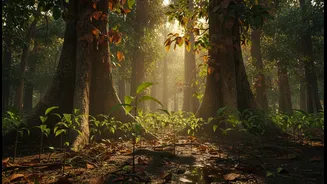
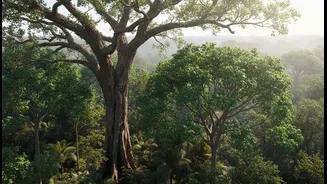
A recent study has fundamentally challenged this long-held belief. A team of researchers journeyed to the rainforests of Malaysian Borneo, home to some of the world's tallest tropical trees, known as dipterocarps. By working with expert climbers to scale trees over 200 feet tall, sometimes in the dead of night, they collected samples to analyse how these giants function. Their findings, published in a leading science journal, were astonishing. The study revealed that these towering trees have developed remarkable adaptations to move water efficiently through their trunks, effectively defying the disadvantages of their height. Instead of being more vulnerable, they appeared to have evolved a plumbing system that was more than a match for the challenge.
Why Height Isn't Everything
The secret lies in the tree's internal structure. Researchers found that as these dipterocarp trees grow taller, their internal 'pipes'—the xylem that transport water—also change. They develop wider conduits that allow for more efficient water flow, compensating for the increased height. It's like upgrading the plumbing in a skyscraper as you add more floors. This suggests that the relationship between height and vulnerability is not straightforward. Other factors, such as the species of the tree, wood density, the depth of its roots, and even the local soil conditions and topography, play a far more significant role than previously thought. A forest's response to drought is a complex symphony of different strategies, not a simple story of height.
Rethinking Forest Forecasting
This discovery has major implications for how we predict the future of tropical forests in a warming world. If the tallest trees aren't necessarily the weakest link, the models used to forecast climate impacts may need a significant update. These giants store a disproportionately large amount of carbon; the tallest one percent of trees can hold up to half of all the above-ground carbon in a forest. Their survival is crucial for regulating the global climate. Understanding their true resilience allows for more accurate predictions and helps conservationists focus their efforts more effectively. It forces a shift from a simple, height-based vulnerability assessment to a more nuanced approach that considers a diverse range of hydraulic traits and species-specific adaptations.
What It Means for India's Forests
This research is particularly relevant for India, home to diverse tropical forests in the Western Ghats, the Andaman Islands, and the Northeast. These regions face increasing threats from hotter temperatures and more erratic rainfall patterns. For instance, the Western Ghats, a global biodiversity hotspot, contains a mix of forest types, each with unique characteristics. This new understanding suggests that simply mapping the tallest trees may not be the best way to identify areas at risk. Instead, conservation strategies must dig deeper, examining the specific traits of dominant species and local environmental factors. By understanding the sophisticated ways different trees cope with drought, we can better protect these vital ecosystems and the immense biodiversity they support, ensuring their survival for generations to come.