



Not All Rain Is Created Equal
The monsoon is a vast, seasonal weather system that brings life-giving rain to the subcontinent. However, the rain you experience in a dense urban centre is often a very different beast compared to what falls over a rural farm. While the broader monsoon provides
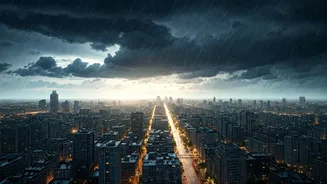
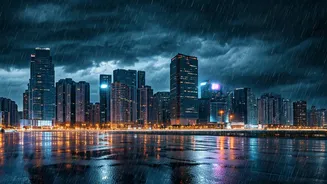
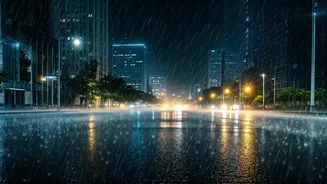
the moisture, the city itself acts as an engine that transforms it. Urban rainfall is frequently characterised by short, intense, and highly localised bursts, a phenomenon meteorologists sometimes call an urban precipitation anomaly. One part of the city might be flooded while a few kilometres away, it remains completely dry. This is fundamentally different from the widespread, steady rain often associated with the monsoon season.
The Urban Heat Island Effect
The main culprit behind this change is the 'urban heat island' effect. Cities, with their vast expanses of concrete, asphalt, and dark rooftops, absorb and retain significantly more solar radiation than green, rural landscapes. This makes urban areas measurably warmer than their surroundings. This pocket of warmer air is less dense, causing it to rise. As this hot air, full of moisture supplied by the monsoon, ascends, it cools rapidly, causing water vapour to condense into clouds. This process is often more vigorous over cities, leading to the formation of taller, more volatile convective clouds that unleash heavier, more concentrated downpours.
A Concrete Sponge That Can’t Absorb
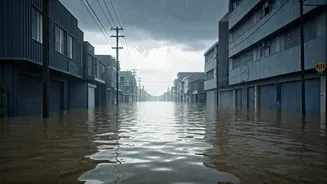
In a natural environment, a significant portion of rainwater is absorbed by the soil, recharging groundwater and nourishing plant life. Cities, however, are largely covered in impervious surfaces like roads, pavements, and parking lots. When an intense city shower hits, the water has nowhere to go. Instead of seeping into the ground, it becomes immediate surface runoff. This dramatically increases the volume of water that drainage systems must handle in a very short time. Studies show that urbanisation can increase flood peaks by up to eight times and flood volumes by up to six times compared to rural areas. This rapid accumulation is why waterlogging and flash floods are such common sights in Indian cities during the monsoon.
Outdated Systems Under Unprecedented Strain
Many of India’s major cities rely on storm drainage systems that were designed and built decades, if not a century, ago. These systems were engineered for a different era, with smaller populations and far less concrete. They were not built to handle the sheer volume and speed of runoff generated by today's megacities, let alone the increased intensity of rainfall amplified by the urban heat island effect. Compounding the problem are issues like inefficient waste management, which leads to drains clogged with plastic and silt, and uncontrolled construction that often encroaches on natural floodplains and water bodies, further reducing the city's ability to cope with excess water.
The Human Story of Urban Rain
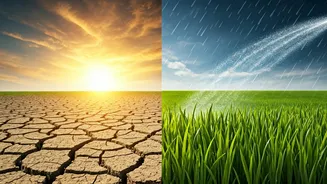
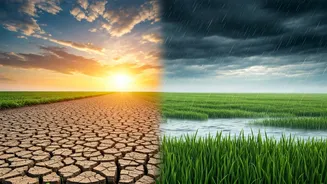
Beyond the science and infrastructure, the story of city showers is a human one. It’s about the daily commuter stranded in a waterlogged underpass, the small shopkeeper whose inventory is ruined by floodwaters, and the disruption of essential services. The combination of haphazard urban planning and a changing climate, where monsoons are becoming more variable with long dry spells broken by extreme downpours, puts millions at risk. The very development that defines our cities is paradoxically making them more vulnerable to the rain they so desperately need.