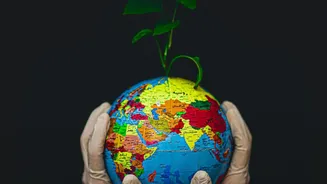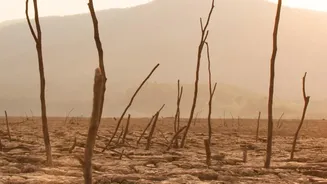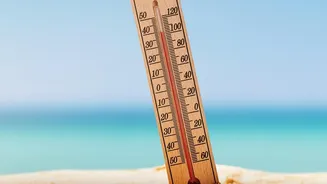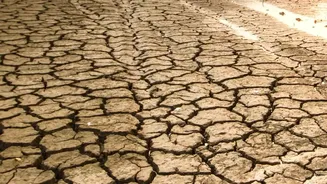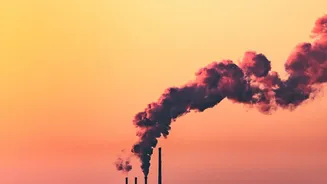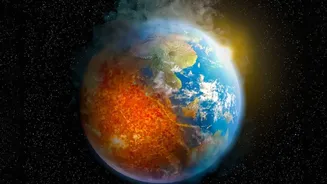




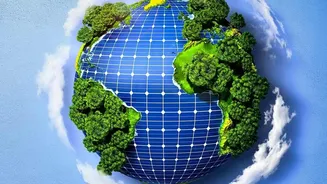
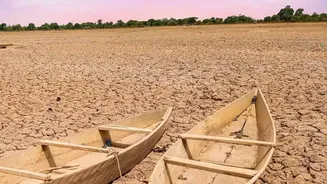
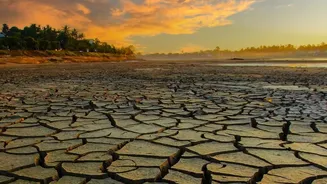
A stark new UN report confirms the world is on track to exceed the critical 1.5°C global warming limit. Released ahead of the COP31 climate summit in Antalya, Türkiye, it warns that years of insufficient progress have made this outcome unavoidable.
A Sobering Diagnosis for the Planet
The
United Nations Environment Programme (UNEP) has delivered a sobering assessment of global climate efforts in its latest Emissions Gap Report, titled 'The Point of Return'. The report, released in late October 2026, concludes that decades of inadequate action have effectively closed the window for limiting global warming to 1.5°C above pre-industrial levels without at least a temporary 'overshoot'. Current national policies put the planet on a trajectory for a dangerous 2.8°C of warming by 2100. Even if countries meet all their current pledges, known as Nationally Determined Contributions (NDCs), warming is projected to hit 2.6°C. The report serves as a critical, evidence-based backdrop for leaders gathering at the COP31 climate conference in Türkiye, underscoring the urgency of the negotiations.
What Is the 1.5°C Threshold?
The 1.5°C target is the cornerstone of the 2015 Paris Agreement, an international treaty aimed at preventing the worst consequences of climate change. This figure represents the increase in global average temperature compared to the pre-industrial era (1850-1900). Scientists have identified it not as a random number, but as a critical guardrail. Beyond this point, the risks of severe and potentially irreversible climate impacts—such as catastrophic coral reef die-off, irreversible ice sheet melt, and more frequent and intense extreme weather—increase dramatically. Every fraction of a degree matters. The difference between 1.5°C and 2°C of warming could mean exposing tens of millions more people to life-threatening heatwaves, greater water scarcity, and coastal flooding from sea-level rise.
Why Global Action Has Stalled
According to the Climate Action Tracker, an independent research group that contributed to the UN's assessment, collective climate action has essentially stagnated for five consecutive years. While there was significant progress in lowering long-term warming projections in the five years following the Paris Agreement, momentum has since flatlined. The UNEP report highlights an enormous 'emissions gap': the difference between the emissions cuts countries have promised and the far deeper cuts required. To have a chance of limiting the overshoot and returning to 1.5°C by the end of the century, global emissions must fall by 45% by 2035 compared to 2025 levels. However, current pledges are projected to achieve only an 11-15% reduction in that timeframe. Insufficient progress on phasing out fossil fuels and a massive shortfall in adaptation finance for developing nations are key areas of failure.
The Consequences for India
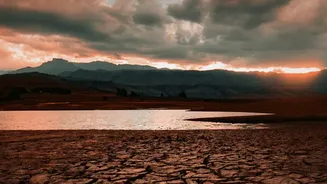
For India, exceeding the 1.5°C threshold is not a distant threat but a present and escalating danger. The country is already one of the most vulnerable to climate change, experiencing more frequent and intense heatwaves, erratic monsoons, and droughts. One study noted that uncompensable heat stress—conditions so extreme the human body cannot cool itself—is spreading across India. Warming also jeopardises the Himalayan glaciers, which feed India's major rivers and are crucial for water security. The rapid melting of these glaciers increases the immediate risk of devastating floods while threatening longterm water supplies for hundreds of millions. As warming continues, these impacts are projected to worsen, threatening food production, public health, and economic stability.
Is There a Path Forward?
While the report states that an overshoot of $1.5$°C is now unavoidable, it stresses that this is not a moment for surrender. The primary goal now shifts to minimising the extent and duration of the overshoot. The UNEP report outlines a 'lowest possible' overshoot pathway, where temperatures might peak around $1.7$°C to $1.8$°C mid-$century before being brought back down. Achieving this requires a monumental, immediate acceleration of climate action. This includes at least tripling renewable energy capacity, cutting coal-$fired$ power generation by at least $75$% by $2035$, and making deep cuts in methane emissions. UN Secretary-$General$ António Guterres emphasised that 'overshoot is not surrender', urging nations to pull out all the stops to make it as small and as short as possible.