

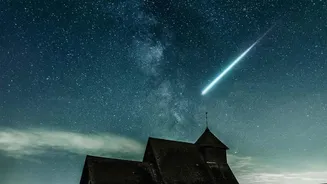
A Gift from Halley's Comet
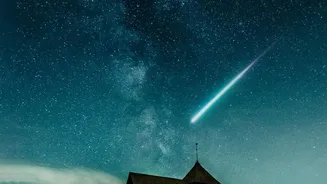
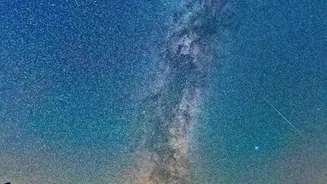
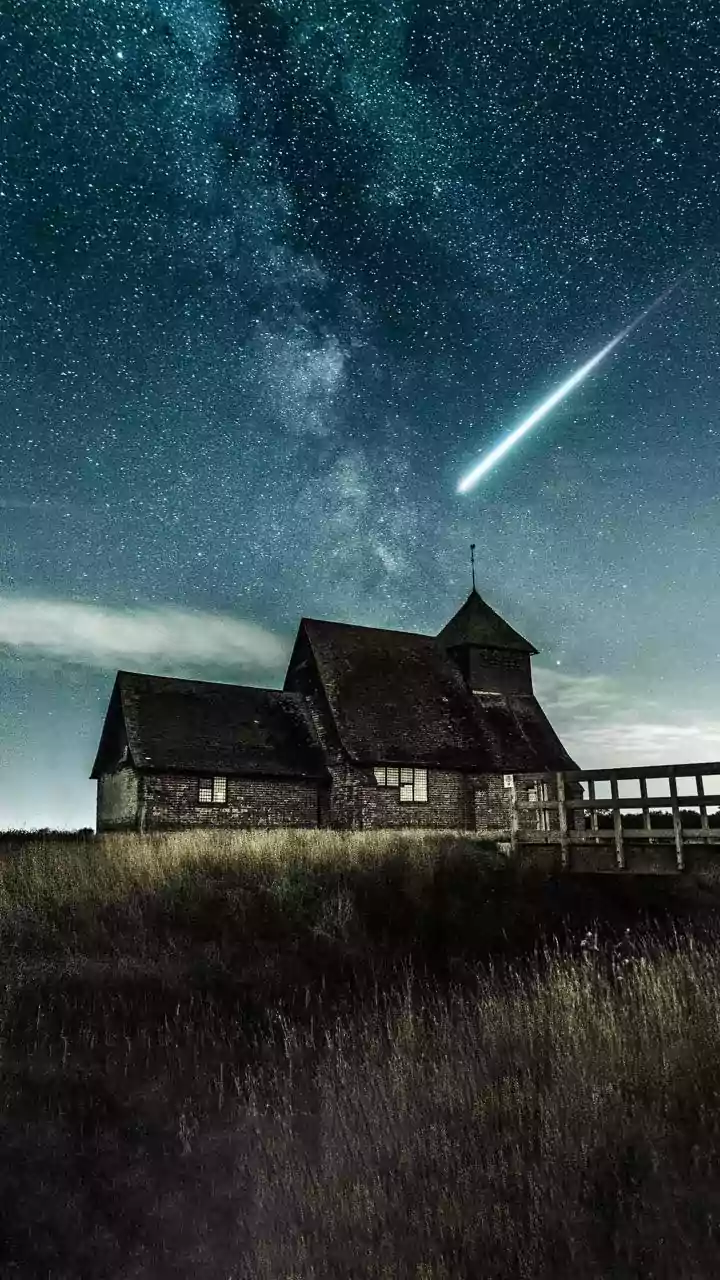
The Orionid meteor shower is one of the most beautiful celestial events of the year. These shooting stars are actually tiny fragments of dust and ice shed by the famous Halley's Comet. As Earth orbits the sun, it plows through this debris field annually,
causing these particles to burn up in our atmosphere at incredible speeds—about 66 kilometres per second. This high velocity often creates intensely bright meteors, which can leave glowing trails, or “trains,” that linger for several seconds.
Peak Viewing Times for 2026
The Orionids are active from early October to early November. However, the best time to watch in 2026 will be during the peak, on the night of October 21-22. The most crucial window for viewing is in the hours after midnight, from about 2 a.m. until dawn. This is when the shower's radiant point is highest in the sky, increasing your chances of seeing more meteors. While a bright waxing gibbous moon will be present during the 2026 peak, it sets around 3 a.m. local time, leaving a window of dark sky before sunrise. Under ideal dark-sky conditions, you might see 15 to 20 meteors per hour.
Finding Orion: Your Celestial Guidepost
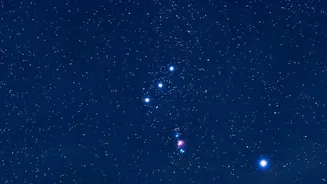
The shower is named after the constellation Orion the Hunter because the meteors appear to radiate from a point within it. To find Orion, you don’t need a telescope—just look for its most famous feature: Orion's Belt. This is a short, straight line of three bright stars that is one of the most recognizable patterns in the night sky. In October, Orion rises in the eastern sky after midnight. Once you've spotted the belt, you can easily trace the rest of the hunter's shape, including the bright reddish star Betelgeuse (his shoulder) and the brilliant blue-white star Rigel (his foot). While the meteors radiate from Orion, you don't need to stare directly at it. In fact, looking about 45 degrees away from the constellation can make the meteors appear longer and more dramatic.
Tips for Beating City Lights
Viewing a meteor shower from a city is challenging due to light pollution, which can obscure fainter stars. But it's not impossible. The key is to find the darkest possible spot available to you. Look for a large park, a sports field, or any open area that is shielded from direct streetlights or building lights. Even using the shadow of a building to block a bright light source can make a significant difference. Another critical step is to let your eyes adapt to the darkness. It takes about 20 to 30 minutes for your pupils to fully dilate, which will allow you to see much fainter objects. During this time, avoid looking at your phone screen, as its bright light will instantly ruin your night vision.
What to Bring (and What to Leave at Home)
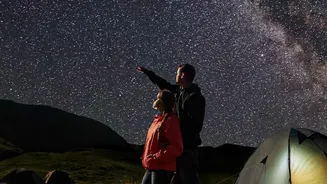
Comfort is essential for a successful night of stargazing. Since you'll be looking up for a while, bring a blanket or a reclining lawn chair to lie back on. Dress in layers, as even on milder nights, sitting still for long periods can get chilly. Patience is your most important tool, as there can be lulls between meteors. You do not need a telescope or binoculars. Because meteors streak across large swaths of the sky, your naked eyes provide the best and widest field of view to catch the action. Just lie back, look up, and take in as much of the sky as possible.