



A Breakthrough 40 Light-Years Away
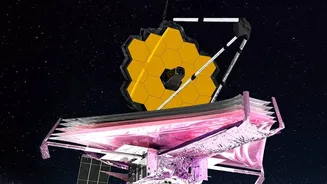
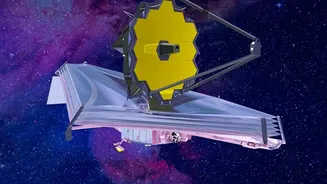
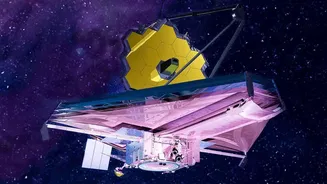
In a remarkable feat of astronomical detective work, scientists using the James Webb Space Telescope have announced the detection of a carbon-rich atmosphere on a planet in the TRAPPIST-1 system. Located approximately 40 light-years from Earth in the constellation
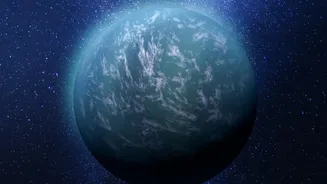
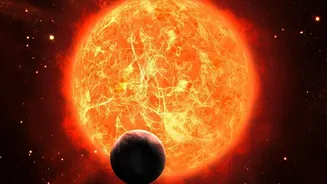
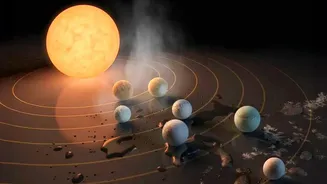
Aquarius, this system has been a prime target for astronomers since its discovery. The system is home to seven Earth-sized rocky planets orbiting a cool, dim red dwarf star. This latest finding focuses on TRAPPIST-1e, a planet orbiting within the star's habitable zone—the region where conditions could be just right for liquid water to exist on a planet's surface. The detection was made using a technique called transmission spectroscopy. As the planet passed in front of its star, the JWST carefully analyzed the starlight filtering through the planet's atmosphere, looking for the chemical fingerprints of different molecules.
What is 'Heavy Carbon' and Why Does It Matter?
The key detail in this discovery is the presence of "heavy carbon," specifically the isotope Carbon-13 (¹³C). On Earth, most carbon is Carbon-12 (¹²C), with about one in every 70 carbon atoms being the heavier ¹³C. Finding a higher-than-expected ratio of Carbon-13 in an exoplanet's atmosphere is a fascinating clue. Isotopes are versions of an element with different numbers of neutrons, and their relative abundance can tell scientists a great deal about a planet's history. For example, a high ratio of heavy carbon could hint at where in its star system the planet originally formed, as the composition of cosmic dust and ice can vary with distance from the star. Some processes, including certain types of biological activity, can also preferentially use one isotope over another, subtly changing the atmospheric composition over time.
A Promising but Complex Picture
While the presence of a carbon-rich atmosphere is exciting, it doesn’t automatically mean the planet is habitable. The TRAPPIST-1 star, being a red dwarf, is known for intense stellar flares, especially in its youth, which could have stripped away the early atmospheres of its planets. Previous JWST observations have already suggested that the innermost planets, TRAPPIST-1b and TRAPPIST-1c, have little to no atmosphere. Even TRAPPIST-1d, which is on the inner edge of the habitable zone, appears to lack a thick, Earth-like atmosphere. The latest data on TRAPPIST-1e rules out a thick, hydrogen-dominated atmosphere, which is a good sign, and suggests a 'secondary' atmosphere created by processes like volcanic outgassing. However, scientists are still debating between models, including a nitrogen-heavy atmosphere (like Earth's) or even the possibility that the signal is being obscured by thick clouds.
The Search for Another Earth Continues
This discovery is not a definitive confirmation of life, or even habitability. Instead, it is a crucial and tantalizing piece of the puzzle. The detection of heavy isotopes in an exoplanet atmosphere is at the very limit of our current technological capabilities, and it opens a new chapter in how we study these distant worlds. For years, TRAPPIST-1e has been considered one of the best candidates for a potentially habitable world beyond our solar system. The presence of carbon dioxide and other carbon-bearing molecules is a prerequisite for life as we know it. The specific isotopic ratio adds a new layer of data that planetary scientists will be analyzing for years to come. It helps constrain the planet's formation history and gives clues about the geological and potentially biological processes that could be shaping its environment.