

Batch cooking is a fantastic way to enjoy healthy, home-cooked vegetarian meals without the daily effort. But all that prep is only worthwhile if the food stays safe and delicious. Here’s how to store your culinary creations correctly.
The Two-Hour Rule
The most critical
step in food safety happens right after cooking. Cooked food should not be left at room temperature for more than two hours. If the ambient temperature is high, such as above 32°C, this window shrinks to just one hour. This is because bacteria multiply rapidly in the 'Temperature Danger Zone', which is typically between 4°C and 60°C. To prevent this, you must cool and refrigerate your food promptly. For large batches of dal, curries, or stews, speed up the cooling process by dividing them into smaller, shallower containers. This allows the heat to dissipate more quickly and evenly before you place them in the fridge.
Choose Your Containers Wisely
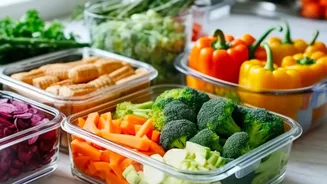
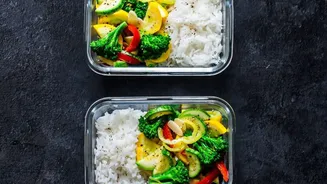
The right container is key to keeping food fresh. Airtight glass containers are an excellent choice. Glass doesn't stain or absorb odours, which is great for richly spiced Indian dishes, and it ensures a tight seal that protects food from cross-contamination and drying out. While many plastics are food-safe, glass can be a more durable and reliable long-term investment. Whatever you choose, ensure the lid is secure and leak-proof to lock in freshness and prevent spills. Labelling each container with the dish's name and the date it was cooked is a simple habit that will save you from guesswork later in the week.
Fridge Storage: A Guide for Common Dishes
Most cooked vegetarian dishes can be safely stored in the refrigerator for three to four days. Your fridge should be set to 4°C (40°F) or below. Here are some specific timelines: Dals and Lentil Curries: These staples generally last for three to four days, though some sources suggest up to five or six days if stored correctly. The gravy may thicken upon cooling, but the flavour should remain intact. Cooked Sabzis (Vegetable Dishes): Cooked vegetables, such as aloo gobhi or bhindi masala, are best consumed within three to four days. Root vegetables tend to hold up better, while softer, high-moisture greens may spoil sooner. Cooked Paneer: Paneer dishes, whether in a dry preparation like bhurji or a gravy like palak paneer, should ideally be consumed within one to two days for the best texture and safety. Storing paneer and gravy separately, if possible, can help maintain quality.
The Special Case of Cooked Rice
Cooked rice requires special attention. Uncooked rice can contain spores of a bacterium called Bacillus cereus, which can survive the cooking process. If cooked rice is left at room temperature, these spores can germinate and produce toxins that are heat-resistant, meaning even reheating won't make the rice safe. This can cause food poisoning with symptoms like vomiting and diarrhea. To avoid this, cool rice as quickly as possible (ideally within one hour) and store it in the fridge. It should be consumed within a day or two and reheated until it is steaming hot throughout.
Freezing for Longer Shelf Life
For longer storage, the freezer is your best friend. A freezer set at -18°C (0°F) or below will keep food safe almost indefinitely, though quality is best within three to four months. Dals, bean curries, and most sabzis freeze very well. Portioned meals in freezer-safe bags or containers make for quick, convenient future dinners. It's generally advised to avoid freezing cooked paneer dishes, as the texture can become hard and rubbery upon thawing. When you're ready to eat a frozen meal, it's safest to thaw it in the refrigerator overnight.
Reheating for Safety and Flavour
Proper reheating is the final step to ensuring your meal is safe. All leftovers should be reheated to an internal temperature of 74°C (165°F). Whether you use a microwave or the stovetop, make sure the food is 'piping hot' all the way through. When using a microwave, cover the food and stir it midway to eliminate cold spots where bacteria could survive. Soups and gravies should be brought to a rolling boil. It's also important to only reheat a portion once; reheating the same food multiple times increases the risk of food poisoning.