





The End of the Guilt-Driven Cycle
For years, the Indian festive calendar came with an unwritten rule: indulge without limits, then pay the price. The period from Dussehra through Diwali and onto Christmas was often a whirlwind of rich meals and sugar-laden mithai, followed by January
resolutions filled with crash diets, juice cleanses, and punishing workouts. However, a growing number of Indians are consciously breaking this pattern. Nutrition experts and health-conscious individuals are advocating for an end to this yo-yo approach, pointing out that the cycle of restriction and overeating is not only unsustainable but also detrimental to building a healthy relationship with food. The problem, they argue, was never the single modak or gulab jamun, but the guilt-driven pattern that surrounded it. The new philosophy suggests that consistent, healthy habits throughout the year matter far more than a few days of celebration.
Embracing 'Mindful Indulgence'
Replacing the old model is the concept of ‘mindful indulgence’. This approach isn't about deprivation but about awareness. It encourages savouring each bite, paying attention to the body's hunger and fullness signals, and truly enjoying festive specialities in moderation. Instead of mindlessly reaching for a third helping of biryani or another ladoo from a box left on the counter, the focus shifts to intentional eating. This means choosing the treats you truly love and enjoying them without distraction. This mental shift from seeing food as an enemy to be conquered to a pleasure to be managed is at the core of this evolving attitude. It’s about giving yourself permission to celebrate with food, but without losing sight of your well-being.
Smarter Choices, Not Sacrifices
This flexibility extends to the kitchen, where tradition is meeting innovation. Many are now opting for smarter swaps that retain festive flavours while boosting nutritional value. Baked or air-fried versions of snacks like gujiyas and samosas are gaining popularity over their deep-fried counterparts. Refined sugar is being replaced with natural sweeteners like dates and jaggery, and refined flour (maida) is giving way to whole grains and millets in everything from ladoos to mathris. This isn't about eating 'diet food' during festivals, but about making small, intelligent tweaks. As chef Sanjeev Kapoor has noted, the goal is to keep the soul of the dish intact while making it a bit lighter. These healthier alternatives allow for celebration without the subsequent sluggishness and discomfort.
Practical Strategies for a Balanced Plate
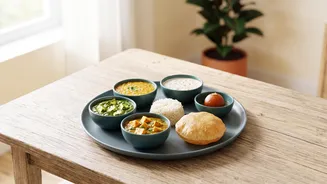
Nutritionists are offering practical, easy-to-follow guidelines that fit into the reality of social gatherings. One popular strategy is the 'plate method': filling half your plate with vegetables or salad, one-quarter with a protein source like dal or paneer, and the remaining quarter with carbohydrates like rice or roti. This ensures a balanced intake of nutrients and helps control blood sugar levels. Another widely adopted concept is the 80/20 rule, which allows for eating nutritious food 80 percent of the time while leaving 20 percent for festive treats. This framework provides structure without demanding perfection, making it a realistic and sustainable way to navigate the entire festive season, which can often stretch over weeks.
A Healthier Relationship with Food
Ultimately, this shift is about more than just managing weight; it’s about fostering a healthier, more joyful relationship with food and culture. The social and emotional aspects of festive eating are undeniable in India, where offering food is an expression of love and hospitality. By moving away from a mindset of dietary compensation, people are reducing the stress and anxiety often associated with festive meals. They are learning that it is possible to honour tradition, enjoy the company of loved ones, and take care of their bodies all at the same time. The focus is no longer on a post-festival 'detox' but on a continuous, balanced approach that turns celebrations into a source of nourishment for both body and soul.