


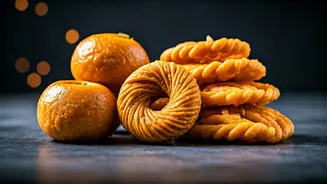


The Contenders Are Introduced
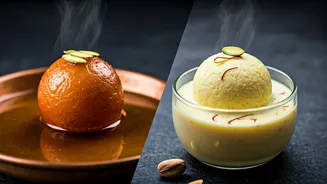
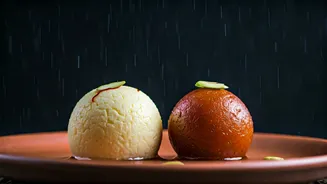
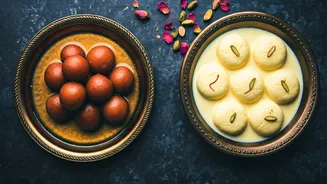
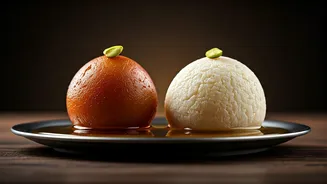
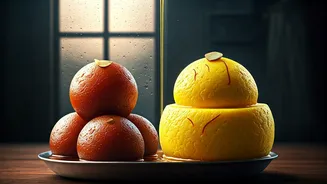
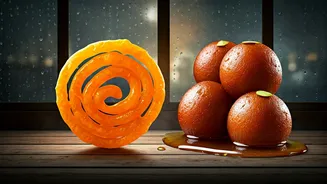
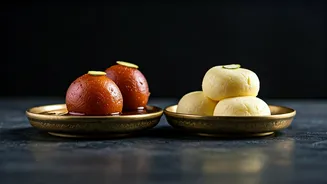
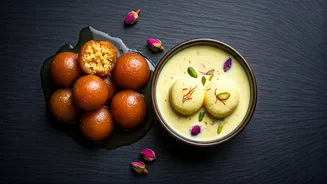
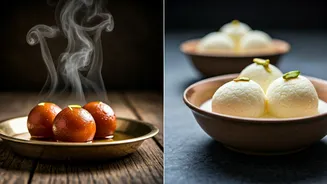
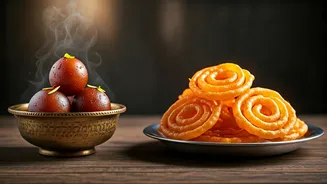
In one corner, we have the undisputed champion of comfort, the Gulab Jamun. These are soft, berry-sized balls made from milk solids (khoya) or milk powder, deep-fried to a gorgeous golden-brown, and then plunged into a fragrant sugar syrup. [3, 1] They
are dense, decadent, and universally beloved at celebrations across the Indian subcontinent. [2, 16] In the other corner stands the elegant and sophisticated Rasmalai. Its name literally translates to “juice” (ras) and “cream” (malai). [4, 11] This dessert features soft, flattened discs of chhena (a fresh, unripenen d cheese) that are gently boiled in sugar syrup before being soaked and served in a chilled, sweetened, and thickened milk flavoured with cardamom and saffron. [9, 1]
A Tale of Two Origins
The history of these two sweets tells a story of cultural fusion and innovation. Gulab Jamun's journey begins outside of India, with roots in Persian and Middle Eastern cuisine. [2, 6] It is believed to have been derived from a similar fried dough fritter that was introduced to India during the Mughal era. [3, 7] The name itself is a blend of the Persian 'gulab' (rosewater, for the syrup) and the Indian fruit 'jamun', which the sweet resembles. [2, 5] Rasmalai, on the other hand, is a proud native of the Bengal region. [4, 8] It is seen as an innovation that evolved from another Bengali classic, the Rasgulla. [8, 10] Confectioners took the concept of the spongy chhena balls from Rasgulla and elevated them by swapping the simple sugar syrup for a rich, creamy milk bath, creating an entirely new sensation. [8, 9]
The Texture and Taste Tussle
The defining difference for many fans lies in the texture. A perfectly made Gulab Jamun is fried slowly, allowing it to develop a very slight skin that gives way to a spongy, melt-in-your-mouth interior that has absorbed the maximum amount of syrup. [2] The experience is one of pure, unadulterated syrupy sweetness, with a rich, caramelised milk flavour from the fried khoya. Rasmalai offers a more complex textural experience. The chhena discs are light and porous, acting like little sponges for the flavoured milk. They are soft and delicate, yielding with the slightest pressure. The flavour profile is lighter and more aromatic than the Gulab Jamun's. The creamy milk, infused with saffron and cardamom and garnished with pistachios, provides a subtle, sophisticated sweetness that is more milky than sugary. [9]
The Crucial Temperature Test
As the headline suggests, the serving temperature is a key battleground. Gulab Jamun is traditionally served warm, often piping hot. [3] This warmth enhances its comforting qualities, making it a perfect dessert for a cool evening or after a hearty meal. The heat makes the syrup feel even more luxurious and the jamun itself impossibly soft. It’s often paired with a scoop of vanilla ice cream or kulfi for a delightful hot-and-cold contrast. [3] Rasmalai, by contrast, is almost always served chilled. [4, 12] The coolness makes it incredibly refreshing, a perfect antidote to the heat of a summer day or the spice of the main course. The cold temperature allows the delicate flavours of saffron and cardamom in the milk to shine without being overwhelming.
The Final Verdict: A Sweet for Every Season
So, who wins? Declaring one superior is an impossible and perhaps foolish task. The choice between Hot Gulab Jamun and Cool Rasmalai is not a matter of quality, but of mood and moment. Are you seeking deep, soulful comfort on a winter night? Do you want a dessert that feels like a warm, indulgent embrace? Then the Gulab Jamun is your undisputed champion. Or are you looking for a light, elegant, and refreshing end to your meal? Something to cool your palate and leave you feeling satisfied but not overly full? Then the cool sophistication of Rasmalai is the only answer. The truth is, these desserts aren't really rivals; they are two sides of the same celebratory coin, each representing a different facet of India's rich culinary heritage. [1]