





The Slow Strain of Sitting Still
Our bodies are designed for movement, but modern work often forces us into a static, seated position for hours on end. This prolonged sitting creates a predictable pattern of physical stress. Your hip flexors, the muscles at the front of your hips, shorten
and tighten. Your gluteal muscles weaken from underuse. Your shoulders round forward and your upper back stiffens as you hunch toward the screen, leading to poor posture. This combination doesn't just cause aches and pains; it can lead to reduced mobility, poor circulation, and an increased risk of musculoskeletal issues over time. The strain is gradual, building up day after day until you notice that you can't move as freely as you once could.
Why Small Movements Are Your Secret Weapon
The key to counteracting this daily strain isn't a punishing gym session after work; it’s the concept of active recovery applied throughout your day. Traditionally, active recovery refers to low-intensity exercise after a strenuous workout to help muscles heal. For desk workers, the principle is the same: using gentle movement to promote recovery from the 'workout' of sitting. These small movements, or mobility drills, increase blood flow, delivering oxygen and nutrients to tissues that have been compressed and inactive. They help lubricate your joints, wake up sleepy muscles, and gently guide your body out of the static 'computer posture,' effectively resetting your system throughout the day.
Your 10-Minute Mobility Toolkit
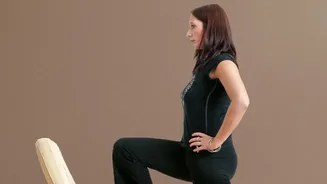
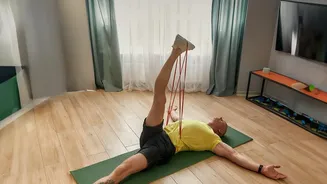
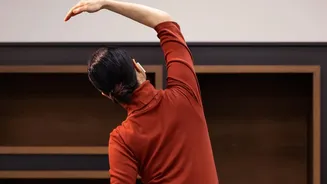
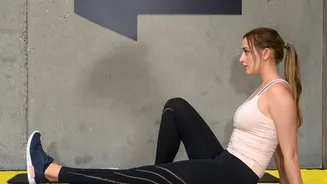
You don't need a lot of time or any special equipment to make a difference. The goal is frequency, not intensity. Try performing a few repetitions of these drills every hour or whenever you feel stiffness setting in. They can be done right at your desk or in a small open space. Seated Cat-Cow: While sitting tall in your chair, place your hands on your knees. As you inhale, arch your back and push your chest forward, looking slightly up (Cow). As you exhale, round your spine, tuck your chin to your chest, and gently pull your navel in (Cat). Repeat 8-10 times to mobilise the spine. Thoracic Spine Rotations: Sit at the edge of your chair. Place your right hand behind your head. Rotate your upper body to the right, trying to point your elbow toward the ceiling. Don't force the movement. Return to the start and repeat 8-10 times before switching to the left side. This helps un-slump your upper back. Standing Hip Flexor Stretch: Stand up and take a small step back with your right leg. Gently tuck your pelvis under and squeeze the glute on your right side until you feel a light stretch in the front of your right hip. Hold for 20-30 seconds. Avoid arching your lower back. Switch sides. This directly counteracts the shortening caused by sitting. Glute Bridge: Lie on your back with your knees bent and feet flat on the floor, hip-width apart. Press through your heels to lift your hips off the floor until your body forms a straight line from your shoulders to your knees. Squeeze your glutes at the top. Lower down slowly. Perform 10-15 repetitions to activate your dormant glute muscles.
How to Build a Lasting Habit
The most effective mobility routine is the one you do consistently. The key is to make these drills an effortless part of your workday. Try 'habit stacking': every time you finish a call or send a long email, do one of the stretches. Another popular method is to set a timer to go off every hour, reminding you to stand up and perform one or two movements. You could also link your mobility break to another daily habit, like getting a glass of water. Walk around the office, do a few shoulder rolls, and then a quick hip flexor stretch before you sit back down. The goal is to sprinkle these 'movement snacks' throughout your day, preventing stiffness from building up in the first place.