




The Perils of Spacewalking
Extravehicular activities (EVAs), or spacewalks, are among the most dangerous and physically demanding tasks an astronaut can undertake. Beyond the immediate risk of a suit puncture from micrometeoroids traveling at immense speeds, astronauts face extreme
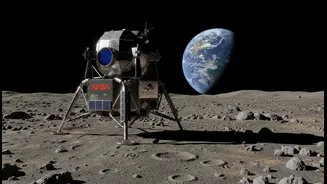
temperatures that can swing from 120°C in sunlight to -150°C in shadow. The suits themselves are stiff, pressurized balloons, and working in them for hours leads to exhaustion, injury, and even the loss of fingernails from the constant strain on their hands. These challenges are magnified in deep space, far from the relative safety of low-Earth orbit. During missions to the Moon or Mars, there is no quick return to Earth, and communication delays can stretch to 20 minutes or more, making real-time assistance from Mission Control impossible in an emergency. Future deep-space missions will also require more frequent and longer spacewalks, increasing the physical and mental toll on crews.
A New Generation of Robotic Mechanics
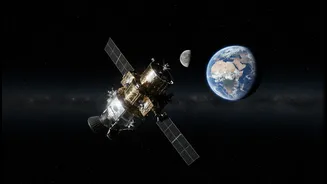
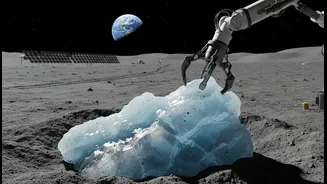
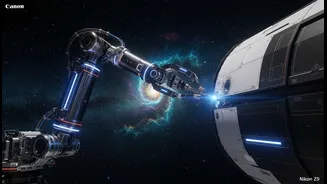
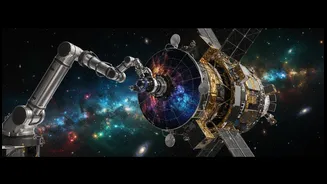
To solve this, NASA is leaning heavily into robotics. The agency's strategy for long-term exploration now fundamentally relies on In-space Servicing, Assembly, and Manufacturing (ISAM). This approach treats complex space assets not as disposable, single-use items, but as modular platforms that can be repaired, refueled, and upgraded by robotic servicing spacecraft. These robotic mechanics can perform delicate tasks in hazardous environments without risking human life. Just this month, a robotic servicing spacecraft named LINK was launched to rescue NASA's ageing Swift Observatory, a mission seen as a critical stepping stone for proving the technology is ready for more complex jobs. The goal is to create a solar system where valuable assets, from telescopes to habitats, can have their lives extended and capabilities enhanced by autonomous or remotely operated robots.
Building Bigger in Space
Robots won't just be for repairs; they will be essential for construction. Future ambitious projects, like the Habitable Worlds Observatory (HWO), are being designed from the ground up to be serviced by robots. This telescope, destined for a point 1.5 million kilometers from Earth, is simply too far away for human servicing missions like those that famously repaired the Hubble Space Telescope. Its critical components will be designed as standardized, line-replaceable units with docking interfaces and connectors optimized for robotic hands. Furthermore, robots could assemble structures in orbit that are too large to fit into any existing rocket fairing. This opens the door to building massive telescopes or spacecraft piece by piece in space, a task far too complex and dangerous for human astronauts to undertake on their own.
Enabling the Artemis Generation
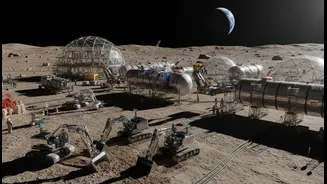
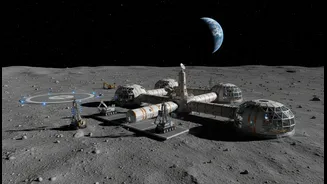
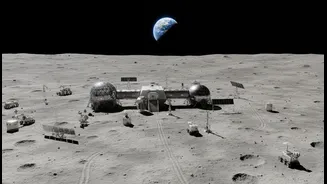
This robotic strategy is a cornerstone of the Artemis program, which aims to establish a sustainable human presence on the Moon and prepare for missions to Mars. While the program has faced setbacks, such as the cancellation of the OSAM-1 refueling demonstration mission due to cost and schedule challenges, the overall commitment to ISAM remains strong. NASA is actively seeking commercial partners to advance these capabilities, driving a new sector of the space economy. The Canadian Space Agency, for example, is providing advanced robotics for the Lunar Gateway, the planned space station that will orbit the Moon and serve as a staging point for surface missions. These robotic systems are critical for maintaining the outpost and assisting astronauts, allowing them to focus on exploration and science rather than routine maintenance.