









Rethinking the History Degree
For too long, the narrative around a history degree has been one of limited options. The reality, however, is that the study of history is not just about memorising dates and events; it's a rigorous training ground for high-level analytical and communication
skills. The ability to sift through vast amounts of information, evaluate sources for bias, construct a coherent argument, and present complex findings clearly is the core of a historian's toolkit. These are not just academic exercises; they are precisely the skills sought after by employers in government, public institutions, and policy-focused organisations.
What Are Public Research Roles?
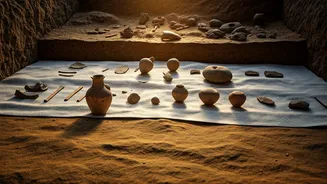
Public research encompasses a wide range of jobs within government bodies and publicly-funded institutions that involve investigation, analysis, preservation, and communication. In the Indian context, this includes roles like archivist, museum curator, policy analyst, and research associate. Organisations such as the National Archives of India, the Archaeological Survey of India (ASI), various national and state museums, and policy think tanks like NITI Aayog regularly seek professionals who can manage historical records, develop exhibitions, and analyse societal trends. These roles are critical for preserving national heritage and informing future policy.
The Historian's Skill Set in Action
A history graduate's resume is packed with transferable skills. 'Critical thinking' allows you to evaluate policy proposals or historical claims with a discerning eye. 'Research proficiency' is essential for an archivist preserving delicate documents or a policy analyst gathering data on a social issue. 'Effective communication' is key for a museum curator writing exhibit text that engages the public or an analyst presenting findings to government officials. Your degree teaches you to manage large projects, work independently, and appreciate diverse cultural contexts—all highly valuable attributes in the public sector.
Where to Find These Opportunities
The path to these roles begins with knowing where to look. Government job portals like the UPSC and state Public Service Commissions are primary sources for permanent positions. Keep a close watch on the websites of institutions like the Ministry of Culture, the National Museum, and various research centres like the Indian Institute for Human Settlements (IIHS) and the Centre for the Study of Developing Societies (CSDS), which often post contract-based research positions. Organisations like the National Gallery of Modern Art also advertise for roles such as curators. These opportunities might be listed as 'Research Assistant', 'Curator', 'Archivist', or 'Policy Analyst'.
How to Position Your Application
To stand out, you must translate your academic experience into professional strengths. Instead of simply stating you have a 'BA in History,' frame your skills actively on your CV. For instance, under 'Research and Analysis Skills,' describe your experience with primary and secondary source analysis from a major research paper. Highlight your ability to synthesize complex information and present arguments persuasively. For policy-focused roles, a Master's degree in a social science or public policy can be a significant advantage, as can experience gained through internships. Emphasise skills like data analysis, project management, and even digital tools for historical research (Digital Humanities) to show your versatility.