




The Dexterity Deficit
The paradox of modern robotics is that the 'easy' problems for humans are often the hardest for machines. A robot can perform complex calculations in an instant but fumbles when trying to pick a ripe tomato without crushing it. For years, most industrial
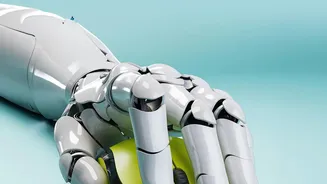
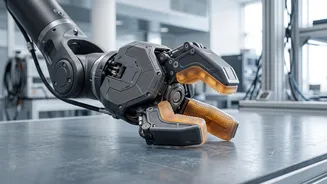
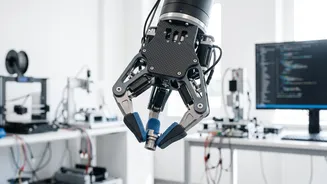
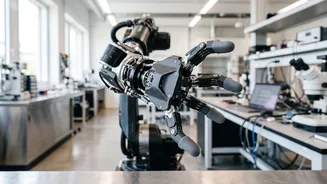
robots have used simple two-fingered grippers, which are effective for repetitive 'pick-and-place' actions on a factory line but lack the nuance of a human hand. This limitation, known as the dexterity deficit, has prevented automation from expanding into countless areas of manufacturing, logistics, and agriculture. The core of the problem isn't just the physical hand; it's the lack of sophisticated touch perception and adaptive control. Most robots operate 'blindly' from a tactile perspective, unable to sense pressure, slip, or texture, making them unsuitable for handling delicate, varied, or unpredictable objects.
Eka Robotics' Vision-Force-Action Model
Enter Eka Robotics, a startup that recently attracted significant investment for its fresh approach to this old problem. Instead of relying on vision alone, Eka has developed what it calls a 'Vision-Force-Action' (VFA) model. This system integrates computer vision with advanced force sensors built into the gripper itself. This allows the robot to not only 'see' where an object is but to 'feel' the interaction as it happens. It can detect if a grip is slipping or if an object is heavier than expected, and adjust its actions in real-time. This combination of seeing and feeling is crucial for solving what experts call the 'last millimeter problem'—the final, delicate phase of grasping an object securely.
Training Robots in a Virtual World
Another key part of Eka's strategy is how it teaches its robots. Instead of relying on a human to manually demonstrate a task thousands of times, Eka uses reinforcement learning in a physics simulator. In this virtual environment, the AI-powered robot can practice a task millions of times, encountering countless variations in object position, friction, and weight. This allows it to learn from failure and success far more rapidly than would be possible in the real world, generating thousands of hours of experience in just minutes. This method has proven incredibly effective in lab settings, with Eka's system achieving picking speeds of up to 1,500 objects per hour—more than double the average human rate of about 600.
Why Better Hands Matter for India
The quest for better robotic dexterity is not just an academic exercise; it has massive implications for industries central to India's economy. In manufacturing, dexterous robots could assemble complex electronics or handle delicate components, boosting production quality and speed. In the booming e-commerce and logistics sectors, they could sort a wide variety of parcels in warehouses, a task that currently relies heavily on manual labour. Even agriculture could benefit, with robots capable of harvesting soft fruits and vegetables without bruising them. As India's robotics ecosystem grows with companies like Addverb, GreyOrange, and others, the development of advanced manipulation skills is a critical next step for automating more complex and valuable work. Success for a company like Eka would represent a leap forward not just for the startup, but for the entire automation landscape.