





What Is This 'Blaze Star'?
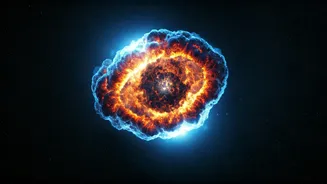
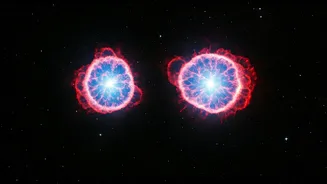
The event centres on a star system called T Coronae Borealis (T CrB), located about 3,000 light-years away. It isn't a single star, but a volatile pair. The system consists of a white dwarf—the dense, collapsed core of a dead star—and an aging red giant.
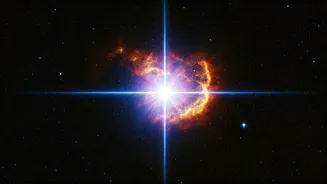
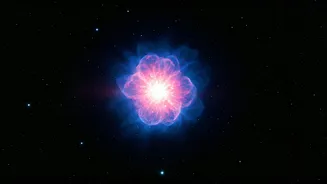
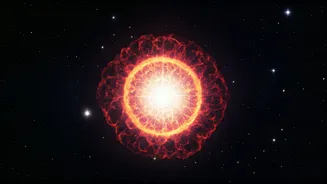
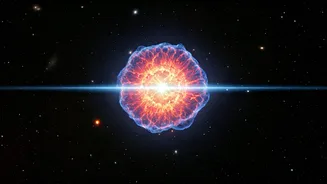
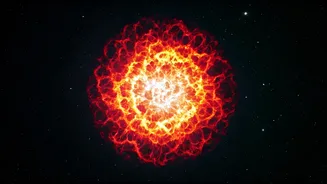
The white dwarf's immense gravity is constantly pulling material, mostly hydrogen, from its larger companion. This matter builds up on the white dwarf's surface like piling fuel on a fire. Roughly every 80 years, the accumulated layer of hydrogen becomes so hot and dense that it triggers a runaway thermonuclear explosion. This is a nova. The explosion causes the system to brighten dramatically, making it temporarily visible from Earth without a telescope.
A Once-in-a-Generation Spectacle
While novas happen frequently across the galaxy, most are too far or too faint to be seen without powerful instruments. T CrB is special because it's a 'recurrent nova' that is close and bright enough to be seen with the naked eye. The last time it erupted was in 1946, making this year's event the first opportunity for most people alive today to witness it. This celestial outburst will make T CrB shine as brightly as Polaris, the North Star. For a few days, it will look as if a brand-new star has suddenly appeared in the sky before it begins to fade back into obscurity for another 80 years. This predictability and brightness make it one of the most anticipated astronomical events of the decade.
When and How to Look
Here's the exciting and tricky part: no one knows the exact date. Astronomers predict the nova will occur sometime between now and September 2024. The key is to be prepared and look often. The best time to observe from India will be late at night, after midnight, when the relevant constellation is high in the sky. When the eruption happens, it will be sudden. The star system will go from being invisible (magnitude +10) to brilliantly visible (magnitude +2) in a matter of hours. The peak brightness will likely last for only a few days, so regular sky-watching is your best bet to catch it. You can follow astronomy news sites or social media accounts from organizations like NASA for real-time alerts.
Finding the Northern Crown
To find T CrB, you don't need to be an expert. You just need to find its home constellation, Corona Borealis, also known as the Northern Crown. It’s a small, C-shaped arc of stars. The easiest way to locate it is to first find two of the brightest stars in the night sky: Vega (in the constellation Lyra) and Arcturus (in Boötes). Corona Borealis is situated in the patch of sky almost directly between these two celestial giants. Look for a faint semicircle of stars that resembles a tiara. When the nova occurs, a 'new' bright star will appear within this arc, temporarily becoming the brightest point in the constellation. This is what you're looking for. Stargazing apps on your phone can be a huge help in pinpointing the constellation's exact location.
What Equipment Do You Need?
The best part about this event is its accessibility. You won't need an expensive telescope. At its peak, T CrB will be bright enough to be seen with the naked eye, even from areas with moderate light pollution. However, to get the best experience, try to find a spot away from bright city lights. Give your eyes at least 15-20 minutes to adjust to the darkness. While not necessary, a simple pair of binoculars will dramatically enhance your view. Binoculars will help you appreciate the star's brightness more clearly and make it easier to distinguish from its neighbours within the Northern Crown. They will also help you continue to track the star as it slowly fades over the week following its peak.