




A Frozen Treasure Chest
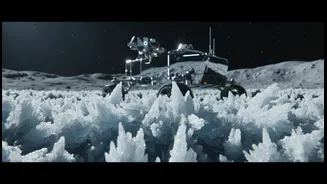
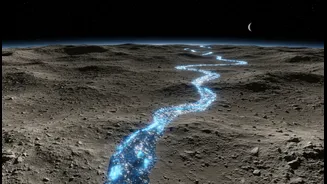
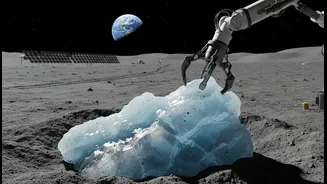
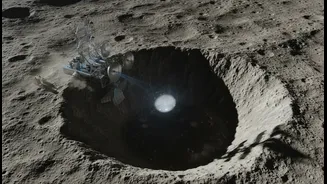
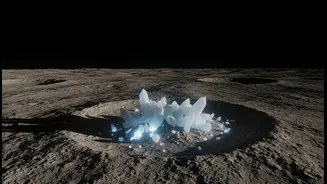
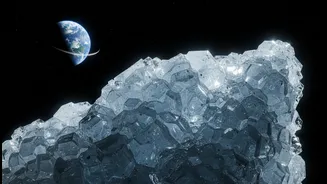
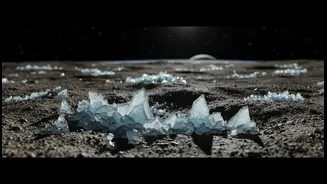
For a long time, astronauts and landers mostly visited the Moon's equator. The South Pole, however, is where the real excitement is now. Why? In a word: water. But not liquid water—water ice. This ice is hidden in permanently shadowed craters, places
where sunlight has not reached for possibly billions of years. These craters are like deep-freezes, preserving ancient ice that could be a game-changer for space exploration. This water isn't just for drinking. It can be split into hydrogen and oxygen. That means we could potentially create breathable air for astronauts and, even more excitingly, rocket fuel right on the Moon. Making fuel on the Moon would be much cheaper than launching it all from Earth, making future missions to Mars and beyond much easier.
The New Global Space Race
The potential of the South Pole has kicked off a new, friendly space race. Space agencies from around the world are all aiming for this valuable lunar real estate. NASA's ambitious Artemis program plans to land astronauts near the South Pole, with Artemis IV aiming for a crewed landing. They are working with commercial companies like Blue Origin and Astrobotic to send a series of robotic landers, rovers, and even drones to scout the area first. China is also a major player, with its Chang'e missions. Chang'e 7 is planned to explore the South Pole in late 2026. These missions show that exploring this region is a global effort, with many countries contributing to the next giant leap for humanity.
India's Southern Triumph
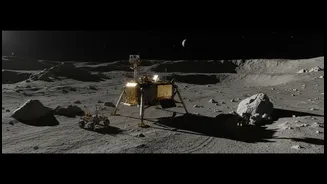
India made history and national headlines when its Chandrayaan-3 mission successfully made a soft landing near the lunar South Pole on August 23, 2023. This achievement made India the first country ever to land in this challenging region and only the fourth country to land on the Moon at all. The mission's lander, Vikram, and rover, Pragyan, conducted experiments on the lunar surface, studying the soil's composition and temperature. The success of Chandrayaan-3 was a massive moment for ISRO and has cemented India's position as a leading power in space exploration. The program is not stopping, with future missions like a collaboration with Japan called LUPEX and a potential sample-return mission, Chandrayaan-4, in the works.
The Challenges of a Polar Landing
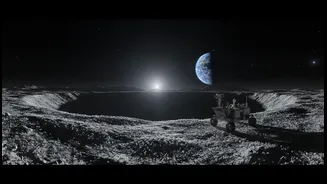
Landing at the South Pole isn't easy. It’s one of the most difficult places to land on the Moon. The terrain is rugged, full of deep craters and high mountains. The biggest challenge is the lighting. The Sun is always low on the horizon, creating long, dark shadows that can hide dangers and make it hard for solar-powered robots to charge up. Temperatures are extreme, swinging from scorching in the sun to colder than Antarctica in the shadows. The lunar dust is another problem; it's sharp and abrasive and can damage sensitive equipment. Overcoming these challenges requires incredibly precise navigation and resilient technology.
What to Watch For Next
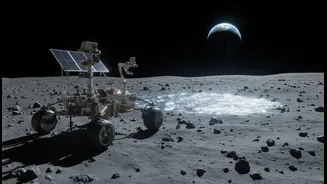
So, what should you keep an eye on? First, watch for the upcoming uncrewed missions from NASA's commercial partners. Missions like Blue Origin's 'Moon Base I' are scheduled to launch as soon as late 2026, carrying scientific instruments and rovers to scout the area. Keep an eye on news about NASA's VIPER rover, which is specifically designed to hunt for water ice. Of course, the biggest events will be the crewed Artemis missions. While initial landings might happen around 2028 with Artemis IV, you'll hear lots of news about the program's progress, including tests and astronaut announcements. And don't forget to follow ISRO for updates on their next lunar plans, building on the success of Chandrayaan-3. The story of the lunar South Pole is just beginning.