

The Philosophy of a Balanced Sadya
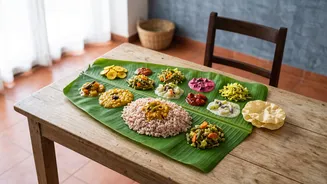
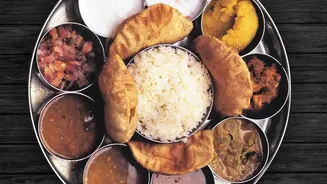
A traditional Onam Sadya is a vegetarian feast that masterfully incorporates the six fundamental tastes, or 'Shad Rasas', as defined in Ayurveda: sweet, sour, salty, bitter, pungent, and astringent. This concept ensures a meal that is not only delicious
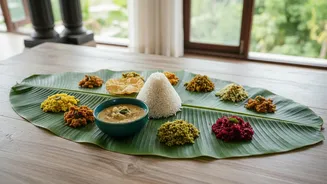
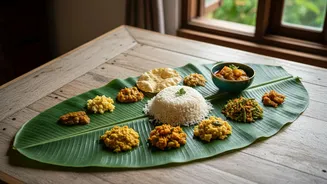
but also holistic and easy to digest. The goal is to create a symphony of flavours where no single taste overpowers the others. Dishes are arranged and served in a specific order on a banana leaf to guide the diner through this sensory journey, starting with simple flavours and moving toward more complex ones before concluding with dessert.
The Foundation: Rice and Lentils
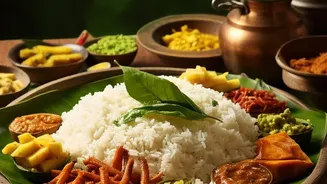
At the centre of the Sadya is rice, traditionally the semi-polished red Matta rice of Kerala. The meal officially begins when a spoonful of Parippu, a simple but comforting curry made from moong dal (small lentils), is served over the hot rice along with a dollop of pure ghee. This mild and nourishing combination prepares the palate for the array of dishes to follow. Diners typically mix this first course with a piece of crispy pappadam for added texture.
The Main Curries: Sambar, Rasam, and Pulissery
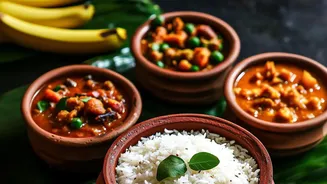
After Parippu, the 'Ozhichu Curries' (curries to be poured) are served. Sambar, a tangy and spicy lentil-based stew with a medley of vegetables like drumsticks, yam, and tomatoes, is a cornerstone of any Sadya. Following this is Rasam, a thin, peppery, and tamarind-based soup that acts as a digestive aid. The savoury courses often conclude with a yoghurt or buttermilk-based curry like Pulissery or Kalan. These curries, often made with pineapple or yam, offer a delightful sour and sometimes sweet flavour that cleanses the palate.
The Vegetable Sides: Thoran and Avial
A Sadya's complexity comes from its numerous side dishes. Thoran is a dry stir-fry of finely chopped vegetables like cabbage or beans mixed with grated coconut, chillies, and spices. Avial is another essential item, a thick mixture of various vegetables cooked in a coconut and yoghurt gravy. Other important vegetable dishes include Erissery (pumpkin and black-eyed peas in a coconut paste) and Olan (ash gourd and beans in a delicate coconut milk stew).
The 'Thottu Kootan': Pickles and Relishes
These are the accompaniments you touch and mix in small quantities. They provide sharp, concentrated bursts of flavour. Key among them is Inji Curry (also called Puli Inji), a sweet, sour, and spicy relish made from ginger, tamarind, and jaggery that is said to be equivalent to 101 curries. Achar (pickles), typically mango and lime, add a pungent and salty kick. You will also find Kichadi, a yoghurt-based side often made with cucumber or bitter gourd, and Pachadi, a sweeter yoghurt-based counterpart usually featuring pineapple.
The Crunch and the Sweet Finish
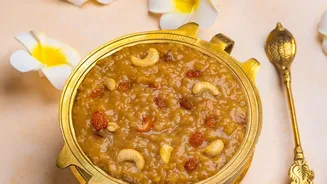
No Sadya is complete without crunchy elements. These include Pappadam (lentil wafers) and Upperi (banana chips), often salted. Sharkara Varatti, a chunkier version of banana chips coated in jaggery and spiced with ginger, provides a prelude to the dessert course. The feast culminates with Payasam, a sweet pudding. There are many varieties, but two popular ones are Palada Payasam (made with milk, sugar, and rice flakes) and Parippu Payasam (made with lentils, coconut milk, and jaggery).