





An Unexpected Disconnect in the Brain
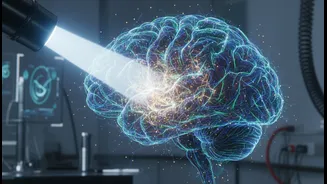
A recent discovery from neuroscientists is shaking the foundations of how we understand the cerebellum, the brain region long credited as the master of motor control. Researchers have found a surprising disconnect between two key types of cerebellar brain cells:
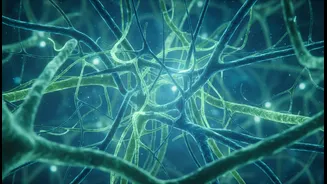
Purkinje cells and deep cerebellar nuclei cells. For decades, the assumption was that these cells worked in a predictable, linear relationship; Purkinje cells were thought to directly suppress the activity of the deep nuclei cells. Because of this, scientists often used the more accessible Purkinje cells as a proxy to understand the entire circuit. However, new research published in the Journal of Physiology shows this relationship is not so simple. Studies found very little predictive power between the activity of the two cell types, suggesting that much of the previous research into cerebellar-related movement disorders like ataxia and tremor might have been based on an incomplete picture.
Rewriting the Textbooks on the 'Little Brain'
This new finding is part of a larger, decades-long shift in understanding the cerebellum's role. Traditionally, it was seen solely as a motor-reinforcing organ, responsible for coordinating balance, posture, and fine movement. This view dates back to early neurologists who observed patients with cerebellar damage stumbling as if intoxicated. But a growing body of evidence from anatomical, clinical, and neuroimaging studies firmly establishes that the cerebellum is also involved in a host of non-motor functions, including cognition, emotion, language processing, and social behaviour. The cerebellum, it turns out, is densely connected to brain regions associated with higher thought, such as the prefrontal cortex. This has led to the radical but increasingly accepted idea that we need to rewrite the textbooks.
The Heart of the Scientific Debate
The core of the current debate is not if the cerebellum contributes to cognition, but how. One school of thought champions the idea of a 'universal cerebellar transform'. This theory suggests that the cerebellum’s unique and highly uniform internal circuitry performs a single, fundamental computation that is applied to motor and non-motor information alike. In this view, just as the cerebellum coordinates muscle movements to be smooth and accurate, it also coordinates thoughts, emotions, and perceptions, acting as a master modulator for the rest of the brain. Evidence for this comes from the fact that damage to the posterior, or 'cognitive cerebellum,' can lead to deficits in executive function, language, and visuospatial skills, a condition sometimes called 'dysmetria of thought'.
A Call for More Nuanced Models
However, other scientists argue for a more cautious and nuanced interpretation. They contend that while the cerebellum is clearly involved in cognition, the idea of a single, uniform function might be too simplistic. The debate is complicated by findings that the cerebellum's influence seems to differ depending on the task and the brain system it's interacting with. The recent discovery about the Purkinje and deep nuclei cells adds fuel to this side of the argument. It suggests that the internal workings of the cerebellum are more complex and less predictable than previously thought, challenging the neatness of a universal computation theory. These researchers argue that to truly understand diseases, we must look directly at the output neurons—the deep cerebellar nuclei—and not just their more famous Purkinje cell cousins.
Future of Brain Health and Disease
Why does this debate matter outside the lab? The implications for human health are enormous. The cerebellum has been linked to a surprising range of conditions, from movement disorders like ataxia and dystonia to neurodevelopmental disorders like autism spectrum disorder and schizophrenia. Understanding the precise role of different cerebellar circuits could unlock new therapeutic targets. For example, if specific cerebellar cells are involved in cognitive and emotional regulation, it could lead to novel treatments for psychiatric conditions. The ongoing debate is a sign of a healthy, vibrant field pushing its own boundaries. Settling it will not only deepen our fundamental knowledge of the brain but could also pave the way for medical breakthroughs that were unimaginable when the cerebellum was considered just a motor-control device.