






The Dawn of a New Era
The term “pan-Indian” film refers to a movie strategically designed, marketed, and released simultaneously in multiple languages to appeal to audiences across the country. While dubbed and remade films have existed for decades, this new phenomenon is different.
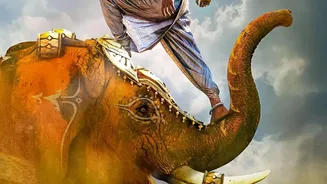
It began in earnest with S.S. Rajamouli's epic, Baahubali: The Beginning (2015). The film, originally in Telugu, was not just dubbed; it was presented as a national event. Its unprecedented success, followed by its even more monumental sequel, Baahubali 2: The Conclusion (2017), proved that a story rooted in one region could captivate the entire nation if the vision was grand enough. This shattered the long-held belief that Hindi-language cinema, or Bollywood, was the only true national cinema.
The Blueprint for a Blockbuster
The success of pan-Indian films is not accidental; it is built on a specific formula. These films are characterized by massive budgets, larger-than-life heroes, and high-octane action sequences that provide a spectacular theatrical experience. Thematically, they often draw from universally resonant ideas like mythology, history, and nationalism, which helps them connect with diverse audiences. A crucial element is the meticulous attention to high-quality dubbing in several languages, including Hindi, Tamil, Kannada, and Malayalam, making the viewing experience seamless for audiences everywhere. This is combined with aggressive, nationwide marketing campaigns where stars tour multiple cities, creating a unified buzz that transcends regional boundaries.
One Nation, One Box Office
The most significant norm shattered by films like KGF: Chapter 2, RRR, and Pushpa: The Rise is the language barrier. For years, regional box office markets were largely distinct. Pan-Indian blockbusters demonstrated that audiences are more interested in compelling content and grand spectacle than the language of origin. The Hindi-dubbed versions of these southern films have not just competed with but have often outperformed major Bollywood releases. For instance, Pushpa 2: The Rule and KGF: Chapter 2 rewrote box office records, becoming some of the highest-grossing films in India, proving that star power is no longer confined to a single industry. The result is a more integrated and competitive national box office where films from any language can achieve number-one status.
Bollywood's Identity Crisis
The pan-Indian wave has forced the traditionally dominant Hindi film industry into a period of introspection. While Bollywood has struggled with a series of high-profile box office disappointments, South Indian industries have delivered consistent mega-hits. This has sparked a debate within Bollywood about its creative choices, with many arguing it has lost touch with mass audiences. In response, Bollywood is now actively embracing the pan-Indian model itself. This is visible in recent trends of cross-industry casting, with stars like Shah Rukh Khan collaborating with Tamil talents Nayanthara and Vijay Sethupathi in Jawan, and filmmakers attempting to create their own large-scale spectacles to compete.
The Future Is a Shared Screen
The pan-Indian trend is more than just a passing phase; it represents a fundamental restructuring of the Indian film industry. It has democratized cinema, proving that a blockbuster can come from any region. However, the model is not foolproof. The immense pressure to deliver a nationwide hit has led to a focus on massive budgets and spectacle, sometimes at the expense of storytelling, with several big-budget pan-Indian films failing to meet expectations. As digital streaming platforms further blur linguistic lines, the focus will continue to be on stories that are both culturally specific and universally appealing. The era of a single, dominant film industry is over; the future is a collaborative and highly competitive landscape where the best story wins.