





What Prompted the Action?
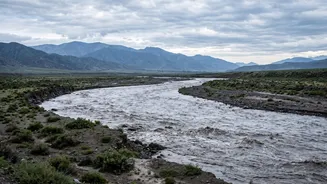
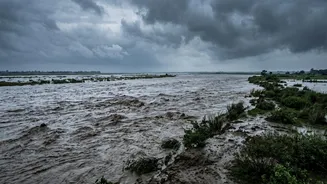
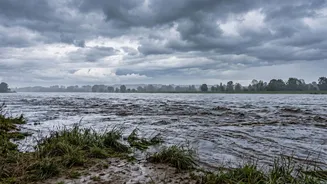
On Wednesday, authorities in Bihar responded to an urgent alert from Nepal concerning a massive surge of water in the Gandak river. This was a direct consequence of a catastrophic flash flood in central Nepal, reportedly triggered by an earthquake in Tibet
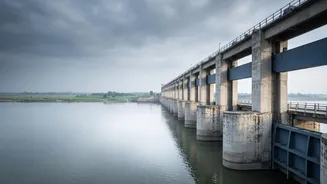
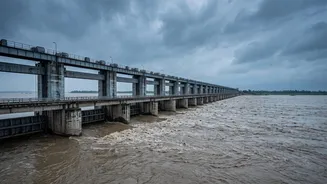
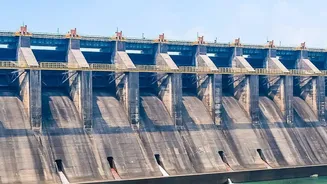
that may have caused a glacial lake outburst. The flood caused immense devastation in Nepal, and as the swollen rivers flow south into India, they pose a significant threat. The river, known as Narayani in Nepal, becomes the Gandak as it enters India through Bihar's northernmost district, West Champaran. To prevent a disaster and manage the high discharge, officials took the preemptive step of opening all 36 gates of the Valmiki Barrage located at Valmikinagar.
The Scale of the Water Release
By late Wednesday evening, around 1.50 lakh cusecs (cubic feet per second) of water had been released from the Gandak Barrage. While this was the highest discharge recorded that day, officials noted that it was still below the peak levels seen earlier in the year and in previous years. For context, the highest discharge in 2026 was 2.24 lakh cusecs on July 14, and a much larger 5.625 lakh cusecs was recorded in September 2024. Officials stated that while the situation was serious, it was expected to remain manageable, with water levels predicted to recede after reaching their peak. Despite the controlled nature of the release, the sheer volume of water necessitated a high alert across the region.
Which Districts Are on High Alert?
The release of water has put several districts in northern Bihar on heightened vigilance. The districts most at risk are those that lie along the Gandak river basin, including West Champaran, East Champaran, Gopalganj, Saran, Muzaffarpur, and Vaishali. Authorities in Sitamarhi and Sheohar have also been instructed to remain on alert. District administrations have been directed to monitor embankments and low-lying areas around the clock. Precautionary evacuations have already taken place, with around 5,000 people moved from vulnerable riverine areas in West Champaran. Public address systems are being used to issue timely warnings, and residents in low-lying parts of Bagaha and Vaishali have been urged to move to safer locations.
A Coordinated Response
The response has been swift and coordinated from the local to the central level. Bihar's Chief Minister, Samrat Choudhary, held an emergency meeting to review the situation, and a high-level team was formed to monitor developments. The National Disaster Response Force (NDRF) and State Disaster Response Force (SDRF) teams have been deployed to vulnerable areas, with teams stationed in Gopalganj and Bettiah and on standby in Muzaffarpur. Union Home Minister Amit Shah spoke with the Chief Minister, assuring all possible assistance from the central government. A technical team from the state's Water Resources Department was also deployed to the barrage to oversee the situation directly.
The Cross-Border Challenge
This event highlights the perennial challenge Bihar faces due to its geography. Many of its major rivers, including the Gandak and Kosi, originate in the Himalayas in Nepal. Heavy rainfall, glacial melts, or seismic events in Nepal's geologically young mountains can have immediate and severe consequences downstream in the densely populated plains of Bihar. This necessitates close cooperation between India and Nepal on water management and flood forecasting. Existing bilateral committees regularly discuss issues related to the Kosi and Gandak projects, sharing data to mitigate flood risks. This annual cycle of vigilance and response is a crucial part of life and governance in the region, turning every monsoon into a period of high alert.