
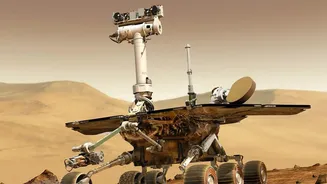
The Robotic Advantage: Tireless One-Way Pioneers
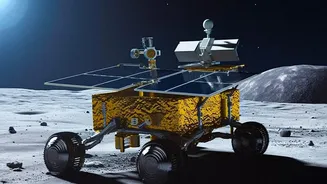
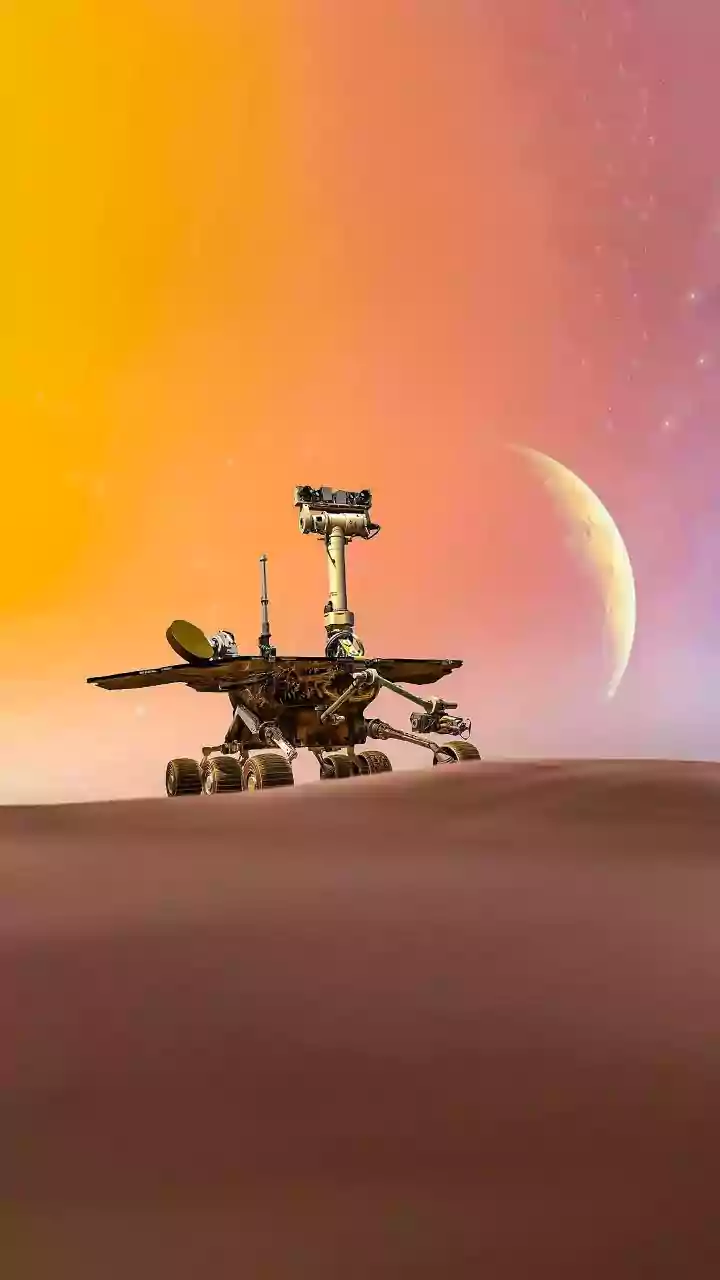
For decades, robotic explorers have been our eyes, ears, and scientific instruments on Mars. Rovers like Curiosity and Perseverance have revolutionized our understanding of the Red Planet, analyzing soil, mapping terrain, and searching for signs of ancient
life. These machines are marvels of engineering, capable of operating for years in a hostile environment. Their greatest advantage is their simplicity from a logistics standpoint. They don't need food, water, or breathable air. Crucially, they don't need a return ticket. This dramatically reduces mission complexity and cost, allowing for sustained, long-term scientific investigation without the immense burden of life support or the astronomical challenge of launching a vehicle off another planet.
The Human Element: Unmatched Adaptability
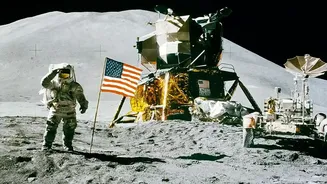
Despite the success of rovers, proponents of human missions argue that no robot can match the intuition and problem-solving skills of a person on the ground. An astronaut can perform complex tasks in minutes that might take a rover weeks, if it can do them at all. A human geologist could identify promising rock samples with a glance, make intuitive leaps, and adapt a mission's goals in real-time based on unexpected discoveries. This flexibility is something current AI and robotics cannot replicate. Furthermore, the inspirational value of sending people to Mars is immense, promising to ignite public interest and drive a new generation towards science and engineering in a way a robot, however capable, simply cannot.
The Return-Trip Conundrum
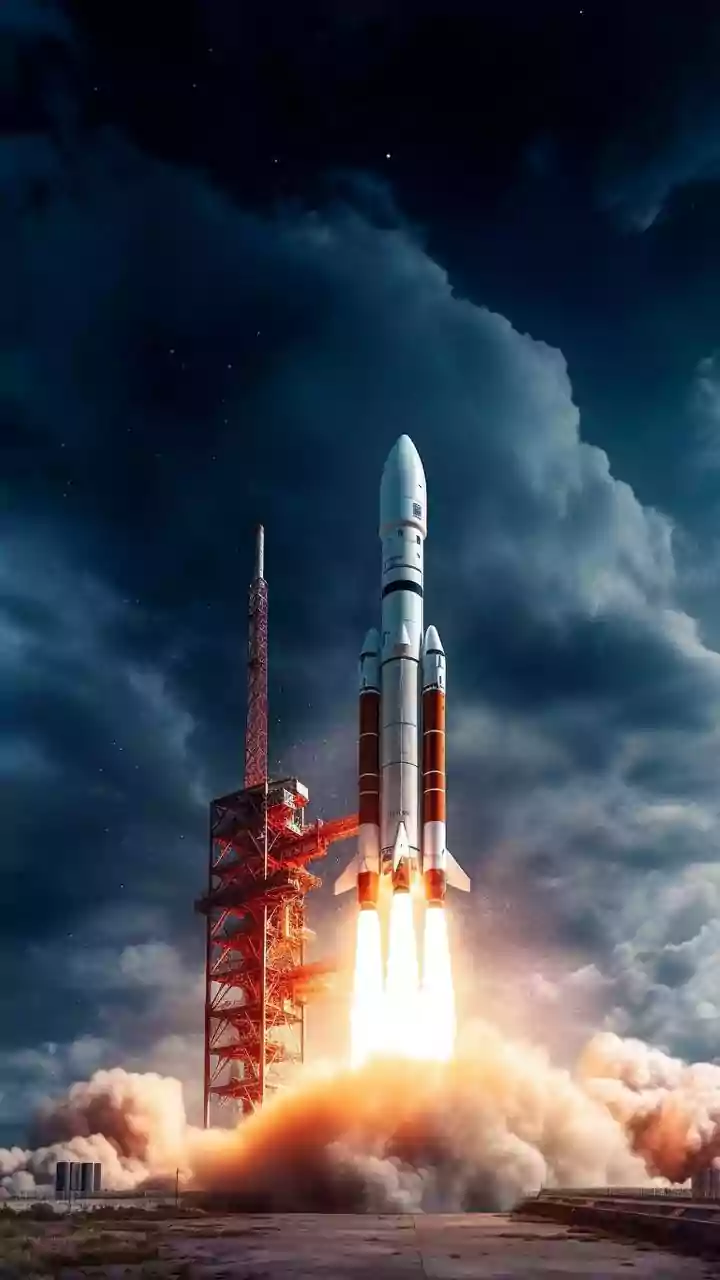
The single biggest obstacle for a human Mars mission is the journey home. A round trip could take nearly three years, including transit and time spent on the surface waiting for planetary alignment. Unlike robotic landers, which are one-way deliveries, a human mission must bring along a Mars Ascent Vehicle (MAV) – a rocket powerful enough to escape Martian gravity and get the crew back into orbit. This means landing a fully-fueled launch system on another world, a feat never before attempted. The mass required for the return vehicle, its fuel, and the crew's life support for the long journey home multiplies the mission's complexity and cost exponentially compared to a robotic probe.
Life Support: A Planetary Logistics Nightmare
Keeping astronauts alive and healthy for years is a monumental task. NASA has identified five major hazards: radiation, isolation, distance from Earth, altered gravity, and hostile, closed environments. The spacecraft and Martian habitat must be a self-contained biosphere, recycling air and water with near-perfect efficiency and protecting the crew from deadly cosmic radiation, which is much higher on Mars due to its thin atmosphere and lack of a global magnetic field. The psychological toll of confinement and isolation, coupled with communication delays of up to 22 minutes each way, means astronauts must operate with unprecedented autonomy, unable to rely on real-time support from Mission Control in an emergency. These are challenges a robot never has to face.
A Hybrid Future: Paving the Way for Humans
Ultimately, the choice may not be 'robots versus humans', but 'robots and then humans'. The most realistic strategies, like those proposed by NASA and SpaceX, involve a hybrid approach. Uncrewed cargo missions would go first, delivering habitats, power systems, supplies, and even the fuel-production equipment for the return journey. Robots would act as the advance team, preparing the landing site and deploying essential infrastructure. This model leverages the strengths of both approaches: the low-risk, high-endurance capabilities of robots to do the heavy lifting, followed by the arrival of highly skilled humans to conduct the complex science and exploration that only they can. Lessons learned from NASA's Artemis program on the Moon are seen as a critical stepping stone for this strategy.