





The Unbreakable Liquid Rule
The rule for carrying liquids, aerosols, and gels (LAGs) in your cabin baggage is a global standard, and Indian airports, under the Bureau of Civil Aviation Security (BCAS), enforce it strictly. The core principle is simple: all liquids must be in containers
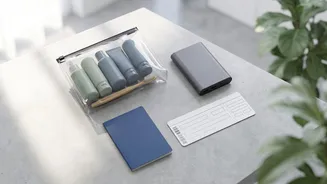
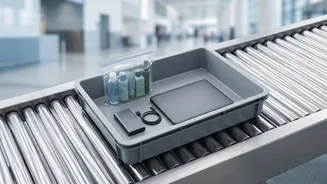
of 100ml or less. It's crucial to remember that this limit applies to the container's size, not the amount of liquid inside. A half-full 200ml shampoo bottle will be confiscated; the container itself must have a maximum capacity of 100ml. All these small containers must then fit comfortably inside a single, transparent, resealable plastic bag, typically with a capacity of about one litre. This bag often needs to be presented separately for screening, so keeping it accessible is a smart move.
Exemptions and Checked Baggage
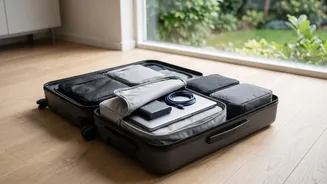
While the 100ml rule is firm, there are common-sense exceptions for essential items. Prescription medicines, life-supporting inhalers, and baby food are generally permitted in quantities needed for the duration of your flight. It is always wise to carry a doctor's prescription for any medication to avoid queries. You should declare these items to security officers at the checkpoint. For non-essential liquids in larger quantities, your checked baggage is the answer. Items like full-sized toiletries can be safely packed in your checked-in suitcase without the 100ml restriction, although there are limits on hazardous materials like high-proof alcohol.
Power Banks: Carry-On Only
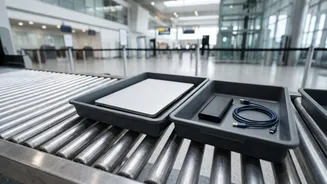
The rules for portable batteries and power banks are driven by a single, critical safety concern: fire risk. Lithium-ion batteries, which power these devices, can in rare cases overheat and catch fire in a phenomenon known as thermal runaway. A fire in the passenger cabin can be quickly detected and extinguished by the crew, but one in the unmonitored cargo hold could be catastrophic. For this reason, all power banks and spare lithium batteries are strictly forbidden in checked luggage and must be carried in your cabin baggage. Placing them in your checked bag will lead to them being removed by security scanners.
Understanding Watt-Hours (Wh)
Aviation regulators, including India's Directorate General of Civil Aviation (DGCA), measure a battery's capacity in Watt-hours (Wh), not the more commonly advertised milliamp-hours (mAh). This is the most important number to know. The rules are tiered: power banks up to 100Wh are generally allowed without airline approval. This covers most standard power banks up to about 27,000mAh. For larger power banks between 100Wh and 160Wh, you must get prior approval from your airline, and this is increasingly being refused. Any power bank with a capacity over 160Wh is completely banned from passenger aircraft. Ensure the Wh or mAh rating is clearly printed on the device, as security may confiscate it if the capacity cannot be verified.
New Rules for In-Flight Use
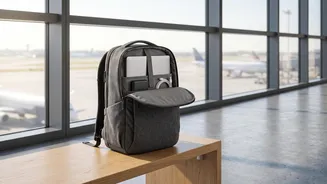
Following several incidents of batteries overheating on planes, the DGCA has also implemented strict rules for how power banks are handled during the flight. Passengers are now banned from using power banks to charge their devices—or charging the power bank itself from a seat's USB port—while on board. Furthermore, these devices should not be stored in overhead bins. The directive is to keep them within reach, such as in a seat-back pocket or under the seat in front of you, where any overheating can be immediately noticed. Cabin crew are instructed to make announcements regarding these rules and are trained to handle battery-related emergencies.