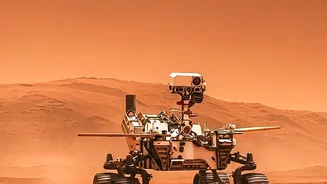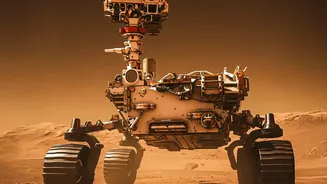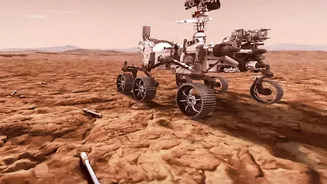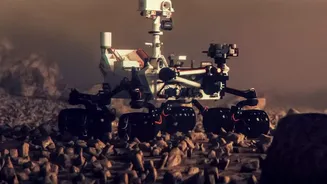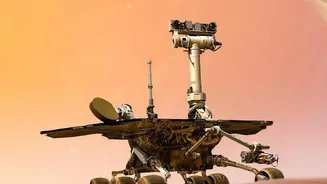




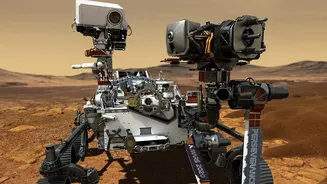

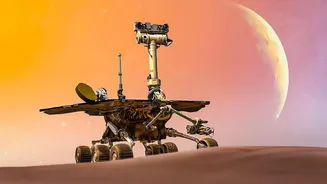
For years, the Perseverance rover has been dutifully collecting precious rock and soil samples on Mars. Now, the truly epic challenge begins: getting them home. Facing rising costs and complexity, NASA is kick-starting a fresh plan to make it happen.
The Billion-Dollar Delivery Problem
The Mars Sample Return (MSR) mission has long been a top priority for NASA and the international science community. The goal is to bring pristine samples from Jezero Crater—an ancient lakebed that may hold signs of past life—to be studied in advanced labs on Earth. However, the original multi-part plan, a joint effort with the European Space Agency (ESA), grew increasingly complex and expensive. An independent review revealed the projected cost had ballooned to as much as $11 billion, with a return date pushed to 2040. NASA Administrator Bill Nelson deemed this timeline 'unacceptable', prompting a major rethink. The mission, as first conceived, involved a Sample Retrieval Lander, a separate 'fetch' rover, a Mars Ascent Vehicle (MAV) to launch the samples into orbit, and an ESA-built orbiter to catch them and fly them to Earth. The sheer number of moving parts and unprecedented technological feats, like the first robotic launch from another planet, led to the unsustainable cost and schedule overruns.
Enter the PSRA: A Strategic Reset
In response to these challenges, NASA has initiated a new effort called the Perseverance Sample Retrieval Architecture, or PSRA. Announced in November 2026, this initiative is not a new mission design itself, but a strategic process to find a more streamlined and realistic one. The PSRA team is tasked with developing 'impartial recommendations' for a faster, more affordable way to retrieve the samples Perseverance has already collected. The core mandate for the PSRA is to review mission requirements, evaluate lessons learned from the previous plan's struggles, and explore all current capabilities, including those from commercial partners. A kickoff for this new strategy team is planned for January 2027, with a final report outlining the recommended path forward expected in the winter of 2027-2028. This represents a crucial pause and reset, aiming to put one of NASA's most important scientific quests back on a viable track.
What Could a New Plan Look Like?
While the PSRA team's final recommendations are still a year away, the discussions preceding its formation point toward simplification. One major change already incorporated into planning before the PSRA was to eliminate the separate 'fetch' rover. The new baseline assumes the Perseverance rover itself will drive its cache of samples directly to the lander. The next phase of simplification will likely focus on the lander and ascent vehicle. Industry partners like Lockheed Martin have already proposed concepts using smaller, lighter landers and leveraging flight-proven designs from previous missions to drastically cut costs. NASA had been weighing two main options: a proven 'sky crane' landing system like the one that delivered Perseverance, or a lander provided by a commercial partner. The PSRA will now take a comprehensive look at these and other options, balancing innovation with reliability to bring the price tag and timeline back to Earth.
The Stakes and The Road Ahead
The importance of returning these samples cannot be overstated. Scientists believe analyzing these rocks could revolutionize our understanding of Mars, its geological history, and whether the Red Planet ever hosted life. The mission is also a critical precursor for future human exploration, testing technologies needed to safely launch astronauts from the Martian surface. However, the path forward remains challenging. The PSRA must deliver a credible architecture that Congress is willing to fund. Meanwhile, other nations are moving forward with their own plans. China's Tianwen-3 sample return mission is slated to launch around 2028, potentially returning the first Mars samples to Earth before NASA does. For NASA and its partners, the PSRA is more than an internal review; it's a race to maintain leadership in planetary science and deliver on a decadesndated promise to unlock the secrets held within a few dozen tubes of Martian soil.