




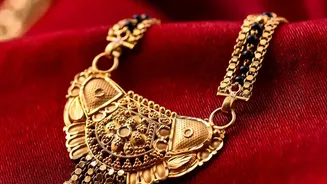
Verify Purity and Weight First
Before you even approach a jeweller, know what you have. The value of your old gold depends on two key factors: purity (measured in karats) and weight (in grams). 24-karat is pure gold, while 22K is 91.6% pure gold, and so on. If your jewellery is hallmarked,
this process is simpler. Since June 2021, all new gold jewellery sold in India must have a mandatory three-symbol BIS hallmark, including a 6-digit Hallmark Unique ID (HUID). This code allows for easy verification. If your gold is older and not hallmarked, jewellers will test it in-store, often using an X-ray fluorescence (XRF) machine, also known as a Karatmeter. Insist on this test being done in your presence. For pieces with stones, remember that the stones will be removed and their weight deducted before the gold is valued. It is best to exchange plain gold jewellery to avoid disputes over stone valuation.
Understand the Calculation
The basic formula jewellers use to determine the value of your old gold is straightforward: Net Weight (in grams) × Purity × Current Gold Rate (per gram). For example, if you have 10 grams of 22K (91.6% pure) gold and the 24K gold rate is ₹7,000 per gram, the 22K rate would be approximately ₹6,412. The base value of your gold would be 10g x ₹6,412, which equals ₹64,120. However, this is the gross value, not the final amount you will receive. From this amount, jewellers will make certain deductions. Always track the day's gold rate before visiting the store to have a clear benchmark.
Decoding the Deductions
This is where many customers lose value. Jewellers typically subtract charges for melting, refining, or wastage. These deductions can range from 2% to as high as 8% and are often the most negotiable part of the deal. 'Wastage' or 'making charges' from your original purchase are never refunded, as the jeweller is only interested in the raw gold content. Be wary of terms like 'melting charge' or 'processing fee,' as these are just different names for deductions from your gold's value. Always ask for a clear, written breakdown of every deduction being made. A transparent jeweller will have no problem providing this.
The Final Exchange Math
Once the final value of your old gold is determined after deductions, that amount is treated as a credit towards your new purchase. For example, if your old gold is valued at ₹50,000 and the new piece of jewellery costs ₹80,000 (including its own making charges and GST), you would pay the remaining balance of ₹30,000. It is crucial to ensure that the value of your old gold is deducted from the new item's price before value addition (VA) charges and taxes are calculated on the new piece. Cross-verify the maths on the final invoice to ensure everything is transparent.
Tips for a Smarter Exchange
To ensure you get the best possible deal, follow these simple rules. First, visit at least two or three reputable jewellers to compare offers; this will give you a good sense of the fair market value and typical deductions. Second, always carry the original invoice for your old jewellery if you have it, as it confirms the original weight and purity. Third, choose a jeweller who uses modern, transparent methods like a Karatmeter for purity testing. Finally, don't be afraid to ask questions and negotiate, especially on the making charges for the new jewellery and the deduction percentages on the old.