

The Sun’s Invisible Threat
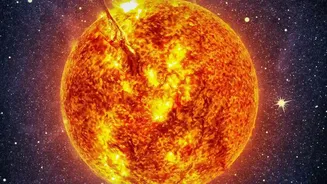
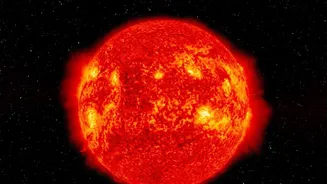
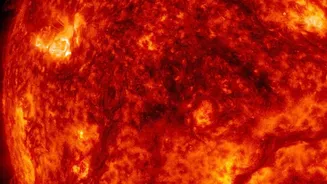
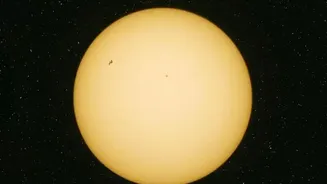
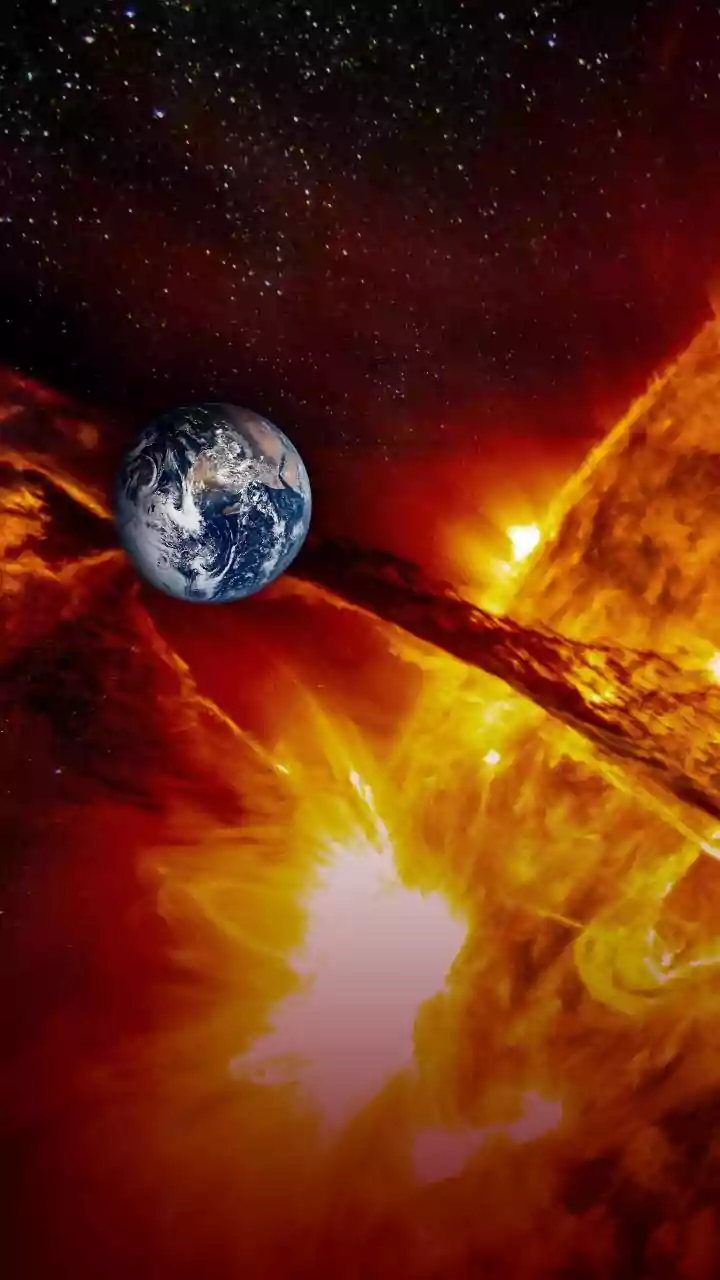
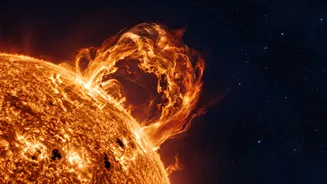
The Sun, our life-giving star, has a volatile side. It periodically erupts, blasting enormous clouds of charged particles and magnetic fields into space. Known as Coronal Mass Ejections (CMEs) or solar flares, these events can trigger 'space weather'.
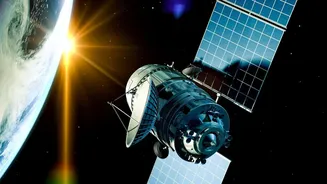
When Earth is in the path of one of these storms, the consequences can be severe. While our planet's magnetic field protects us on the ground, the hardware orbiting above is exposed. Satellites responsible for everything from GPS and banking to communications and weather forecasting are directly in the line of fire. A powerful solar storm can damage sensitive electronics, degrade solar panels, and even increase atmospheric drag, causing satellites to lose altitude and fall out of orbit prematurely.
India’s Eye on the Sun
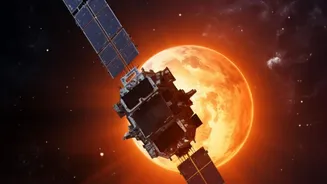
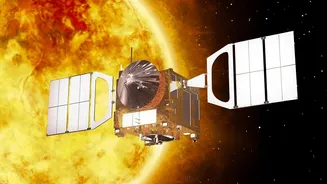
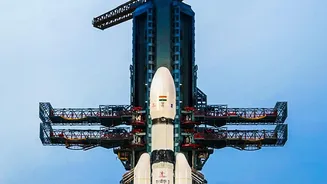
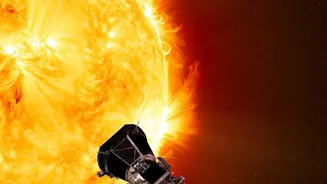
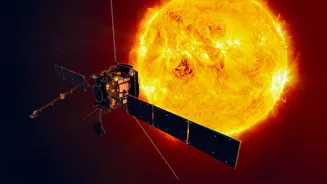
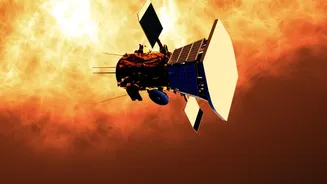
Enter Aditya-L1, the Indian Space Research Organisation's (ISRO) first dedicated solar observatory. Launched in 2023, it is strategically positioned at Lagrange Point 1 (L1), a gravitationally stable spot about 1.5 million kilometres from Earth. This unique vantage point gives it a continuous, uninterrupted view of the Sun. Unlike Earth-based observatories, it never has to contend with night or atmospheric distortion. Its primary mission is to study the Sun's atmosphere and provide early warnings of solar events, acting as a crucial space weather buoy for our planet.
How the Real-Time Alerts Work
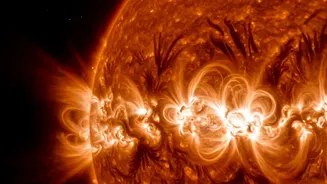
Aditya-L1 is equipped with a suite of seven advanced instruments designed to observe the Sun across multiple wavelengths. The key payload for storm detection is the Visible Emission Line Coronagraph (VELC). A coronagraph is a special telescope that blocks the overwhelming glare of the Sun's main disk, allowing it to see the much fainter outer atmosphere, or corona. The VELC can directly image a CME as it erupts from the Sun's surface. This visual data, combined with information from other instruments like the Solar Ultraviolet Imaging Telescope (SUIT) and X-ray spectrometers (SoLEXS, HEL1OS), provides a comprehensive picture of the impending storm. Because Aditya-L1 is so far from Earth in the direction of the Sun, it sees the eruption long before the storm itself reaches our planet, creating a vital warning window.
From Alert to Action
Once Aditya-L1 detects a potentially hazardous event, it transmits the data to ISRO's ground stations. Scientists analyse the trajectory and intensity of the CME to determine if it poses a threat to Earth. If it does, an alert is issued to satellite operators and other agencies. This warning, which can range from under an hour to a few hours, is precious time that was previously unavailable. Armed with this information, operators can take protective measures. They can command satellites to enter a 'safe mode', powering down non-essential and sensitive electronics to prevent them from being fried by charged particles. They can also reorient the spacecraft to protect delicate instruments or adjust orbits to minimise the effects of increased atmospheric drag.
The Economic and Scientific Payoff
The ability to mitigate solar storm damage is not just a scientific achievement; it has significant economic implications. The global satellite industry is worth hundreds of billions of dollars. Protecting these assets from premature failure extends their operational lifespan and ensures the continuity of the critical services they provide. By taking preventative action, operators can avoid costly damage and service disruptions. Furthermore, the continuous stream of data from Aditya-L1 is a goldmine for scientists. Recent findings have already used its instruments to identify small, pre-flare brightenings that could act as even earlier warning signs for major eruptions, moving us closer to truly predictive space weather forecasting. This enhances the safety of future space missions, including crewed flights like Gaganyaan, and protects critical national infrastructure on the ground.