







Anatomy of the 'Low' Fare
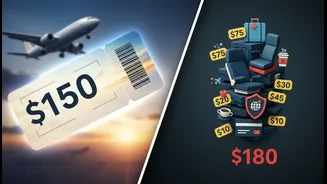
The initial price displayed by low-cost carriers in India is often just a starting point. This “base fare” typically covers only your transport from Point A to Point B with a small personal item. Essential services that were once standard are now unbundled
and sold separately. This includes everything from checked baggage and preferred seating to meals and travel insurance. A recent survey revealed that a staggering 80% of Indian flyers encounter these surprise charges that appear only at the final payment stage, a practice known as drip pricing. While technically not hidden, these fees are rarely included in headline prices, meaning the true cost of your journey only becomes clear at the end of the booking process.
The Baggage Burden
Baggage fees are one of the most significant contributors to a higher final ticket price. On most Indian low-cost carriers, the basic economy fare includes a 7kg cabin bag and a single checked bag of up to 15kg. Anything beyond this limit invites hefty charges. Exceeding the weight limit at the airport can cost you anywhere from ₹500 to ₹700 per extra kilogram. An overweight bag of just 5kg could add ₹3,000 to your cost. Pre-booking extra baggage online is a cheaper alternative, but still adds up. Some airlines offer 'Lite' fares that don't include any free checked-in baggage at all, requiring you to purchase the allowance separately. For instance, on some routes, adding a standard 15kg bag to a lite fare can cost ₹1500.
The Price of a Preferred Seat
Gone are the days of choosing your seat for free. Today, selecting a window, aisle, or emergency exit row seat with extra legroom comes at a premium. These fees can range from ₹200 for a standard seat to over ₹2,000 for a prime spot with more space. Some airlines have been known to charge as much as ₹2,700 for specific seats. If you choose not to pay, the airline will auto-assign you a seat during check-in, which is often an undesirable middle seat. Following passenger complaints, the government has directed airlines to make at least 60% of seats available for free selection, but airlines have warned this could lead to higher base fares to recover the lost revenue.
Is Travel Protection Worth the Cost?
During checkout, you will almost certainly be offered travel insurance. This add-on provides coverage for things like trip cancellations, medical emergencies, and lost baggage. While it offers peace of mind, the cost can add to your total fare. Premiums for domestic travel can be as low as ₹20-₹30 per day, but the final price depends on factors like your age, destination, and the extent of coverage. It's crucial to evaluate if you truly need it. Sometimes your credit card might offer similar travel benefits. Before you click 'add', compare the airline's offer with standalone policies from insurance providers, which might offer better coverage for a similar price.
The 'Convenience' Fee and Other Extras
Another common charge is the “convenience fee” or “service fee,” which is levied by both airlines and online travel agencies for the act of booking online. This can range from ₹250 to ₹500 per passenger. For a family of four, this alone can add up to ₹2,000 to the total. Beyond this, be mindful of charges for in-flight meals, priority boarding, and even fees for printing your boarding pass at the airport. Airlines also offer bundled packs that combine seats, meals, and sometimes extra baggage for a single price, which can sometimes be cheaper than buying each item separately. For example, a fare bundle upgrade might cost ₹500–₹1,500 over the base fare.