





What Is Space Weather?
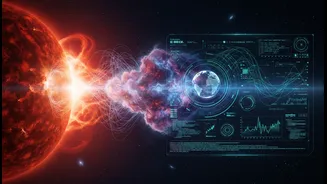
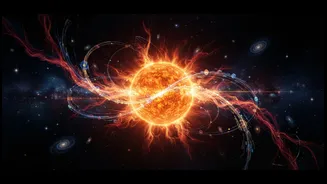
Forget about cyclones and heatwaves; space weather deals with phenomena on a cosmic scale. It refers to the changing conditions in space, primarily driven by the Sun. Our star isn't just a steady source of light and warmth; it's a dynamic, volatile ball
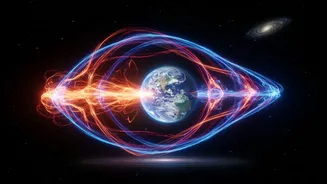
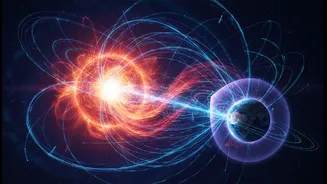
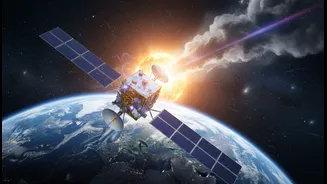
of hot gas that periodically erupts. These eruptions, known as solar flares and coronal mass ejections (CMEs), send massive clouds of charged particles and radiation hurtling through space. When this 'weather' reaches Earth, it can interact with our planet's magnetic field and atmosphere. Unlike terrestrial weather, you can't see it or feel it, but its effects on our modern, technology-dependent society can be profound.
Why It Suddenly Matters in India
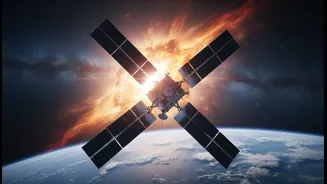
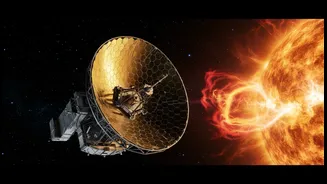
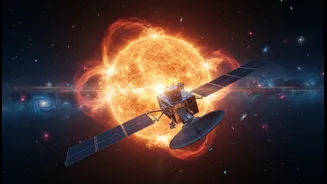
The urgency around space weather has grown exponentially with our reliance on technology. These solar storms can disrupt satellite operations, interfere with GPS signals, damage communication networks, and even threaten the stability of our national power grids. For a digitally transforming India, the stakes are incredibly high. The recent success of ISRO’s Aditya-L1 mission is a testament to this newfound focus. Positioned 1.5 million kilometres from Earth, Aditya-L1 provides India with an uninterrupted view of the Sun, acting as an early-warning system for potentially hazardous space weather events. The data it gathers is crucial for protecting our vital space assets and terrestrial infrastructure, creating a direct demand for experts who can interpret this information and provide timely forecasts.
The Academic Path: From Classroom to Cosmos
Recognizing this need, Indian academia is stepping up. The premier destination for aspiring space scientists is the Indian Institute of Space Science and Technology (IIST) in Thiruvananthapuram, established by ISRO to create a pipeline of talent for the Indian space programme. Beyond IIST, several other institutions offer relevant programmes. The Center of Excellence in Space Sciences India (CESSI), hosted by IISER Kolkata, offers a PhD programme dedicated to training the next generation of space scientists. Institutions like the Physical Research Laboratory (PRL) in Ahmedabad and the Indian Institute of Astrophysics (IIA) in Bangalore are also central to the nation's space science research. A career in this field typically begins with an undergraduate degree in Physics, Engineering, or Mathematics, followed by a Master's or PhD specializing in space science, astrophysics, or a related discipline.
The Job Market for Solar Forecasters
The primary employer for space weather professionals in India is, unsurprisingly, the Indian Space Research Organisation (ISRO). ISRO requires experts to analyse data from missions like Aditya-L1, develop predictive models, and issue warnings to safeguard its growing fleet of satellites. Job roles range from research scientists to data analysts. However, opportunities are expanding beyond the government. The growth of private space companies, the aviation sector (which needs to reroute flights during major solar events), and disaster management agencies are creating new roles. Research and academic positions at institutions like IIST, IISERs, and IITs are also on the rise, with projects often sponsored by ISRO itself. These roles involve fundamental research into understanding the Sun's behaviour and developing the technologies needed for future space exploration.