


Meet the Super-Earths
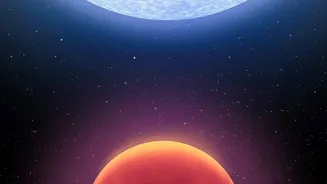
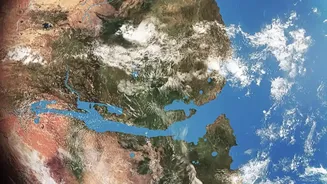
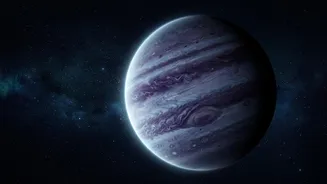
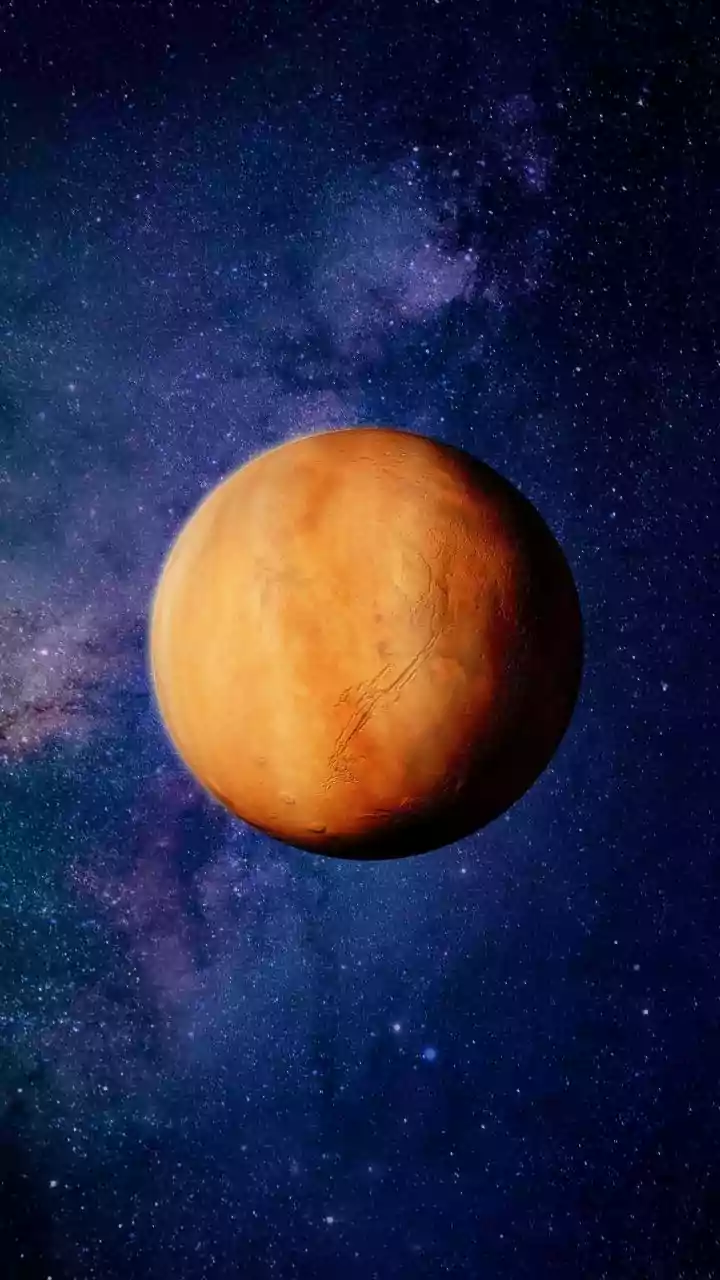
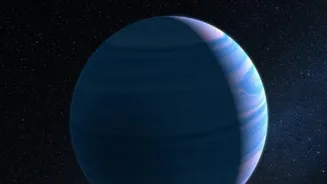
In the vast cosmic zoo of planets, one of the most common types is one our solar system completely lacks: the super-Earth. These are worlds larger and more massive than our own planet but smaller than icy giants like Neptune. They are incredibly common in our galaxy,
making up about a third of all known exoplanets. This abundance makes them prime targets in the hunt for Earth 2.0. For years, astronomers have been fascinated by these planets. Are they rocky worlds like ours, just scaled up? Or are they something else entirely, perhaps mini-gas giants with no solid surface? The answer, scientists believe, lies hidden in their atmospheres.
An Atmosphere's Hidden Clues
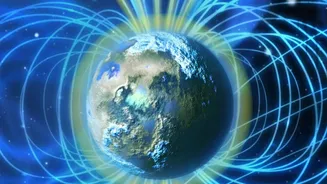
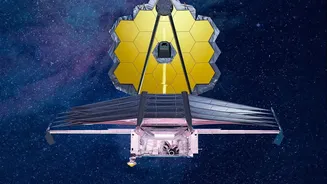
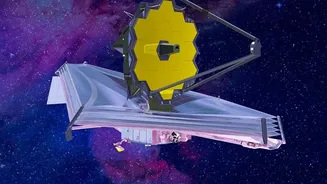
An atmosphere is like a planet's fingerprint. Its composition tells a story about the world beneath it—its climate, its geology, and most tantalizingly, its potential to support life. For a planet to be considered habitable, liquid water is a key ingredient. So, for decades, astronomers have been searching for the chemical signature of water vapour in the skies of distant exoplanets. Early detections, often made by the Hubble Space Telescope, were groundbreaking but often couldn't see past thick layers of clouds or haze that shrouded many of these worlds. This is where the unprecedented power of the James Webb Space Telescope (JWST) comes into play.
The Crucial Boundary Layer
The latest breakthrough isn't just about finding water; it's about where the water is found. JWST is capable of probing the planetary boundary layer (PBL), the lowest region of the atmosphere that directly interacts with the planet's surface. On Earth, this layer contains about 80% of our atmospheric water vapour and regulates the exchange of heat and moisture between the ground and the air. Detecting water vapour specifically within this boundary layer on an exoplanet is a monumental step. It suggests a more active water cycle and provides clues about the planet's surface conditions, moving beyond just a general atmospheric reading to something that feels much more like a weather report from another world.
Webb’s Powerful Infrared Gaze
The JWST achieves this by using its powerful infrared instruments to perform transmission spectroscopy. As a planet passes in front of its host star, the telescope observes the starlight that filters through the planet's atmosphere. Different molecules absorb light at specific wavelengths, leaving a unique chemical signature. JWST's sensitivity allows it to cut through the haze that stumped previous telescopes and detect the faint signals of specific molecules, including water vapour, methane, and carbon dioxide. On planets like GJ 1214 b, a super-Earth about 40 light-years away, JWST was able to peer through a thick, foggy veil and confirm the presence of a steamy atmosphere, fundamentally changing our understanding of that world.
From Water Vapour to New Worlds
It's important to note that the presence of water vapour, even in the boundary layer, does not automatically mean a planet has liquid oceans or life. Many of the super-Earths studied so far, like TOI-561 b or GJ 1214 b, are extremely hot, with surfaces that might be molten rock or under pressures that create exotic forms of water. The planet GJ 9827d, for example, is as hot as Venus; if its atmosphere is mostly water, it would be an inhospitable, steamy world. However, each detection is a crucial piece of the puzzle. By analysing these diverse atmospheres, scientists are refining their theories on how planets form and evolve. These observations help define the 'cosmic shoreline'—the boundary between planets that can hold onto an atmosphere and those that cannot.